Sightlines · a mini film course
The Question of Where You're Standing: A Dozen Ways to Film a Killer
Every film on this list has a murderer in it. Almost none of them care about the murder. What they care about — what connects a Japanese slow-burn, two identical Austrian provocations, a Hollywood puzzle-box, and a Batman movie — is the question of where the camera puts you while terrible things are near. Some of these films hold you at a distance and make you scan the frame for danger. Some press you so close you become a participant. Some hand you knowledge the characters don't have and let it curdle. All of them understand that dread isn't a thing you show; it's a relationship between the image and the person watching it. That's you. Bring a coat.
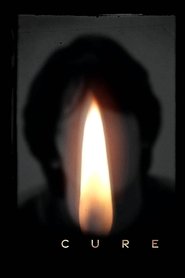
Cure (1997)
Notice how far away the camera stays. Kurosawa shoots in drained grays and sickly fluorescents, holding people in wide shots inside their environments rather than rescuing them with close-ups — a distance he learned from Mizoguchi's long, patient takes. Then notice the small hypnotic instruments — a lighter's flame, dripping water — and how the film frames them so you lean in too. This is a serial-killer film built by subtraction: no grand design, no charismatic mastermind theatrics, just a quiet voice asking a question that sounds like nothing at all.
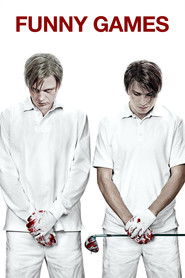
Funny Games (1997)
Haneke and cinematographer Jürgen Jürges strip out every visual pleasure the home-invasion thriller normally offers: no shock cuts, no dramatic shadows, just long static takes, frontal framings, and flat, even light. The violence stays largely off-screen; what the camera holds instead is duration — the aftermath, the waiting, the room. It's built as a deliberate rebuttal to films like Straw Dogs, refusing the cathartic payoffs that let audiences enjoy this genre with a clean conscience. Watch how often you want a cut, and how long you're denied one.
Funny Games (2008)
The same film, nearly shot for shot, translated into English with American stars — and the translation is the point. Darius Khondji, who gave Se7en its expressionist murk, here shoots pure neutrality: a sunny house whose geometry refuses to signal danger. Watch what Naomi Watts and Tim Roth mean before anything happens — a star you expect to survive, a father you expect to rescue — and watch the film handle those expectations like loaded objects. It knows you're watching, and once or twice it will let you know it knows.
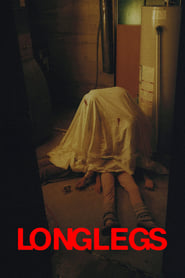
Longlegs (2024)
Watch the edges. Perkins and cinematographer Andrés Arochi build wide, symmetrical, half-empty frames — institutional grays, small figures marooned in negative space — and then place the threat where the frame barely holds it: top of the image, cut off, slightly soft. Your eye goes hunting before your mind admits it's afraid, and that hunting is the film. It inherits the profiler-versus-monster structure from The Silence of the Lambs and the analog-era procedural dread of Zodiac, but relocates the fear into composition itself.
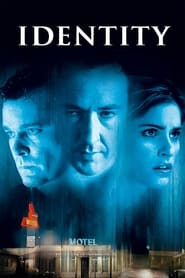
Identity (2003)
A storm, a Nevada motel, ten strangers, a countdown — the And Then There Were None engine rebuilt in sodium-amber and cold blue rain by Phedon Papamichael. Watch the space itself: the identical numbered doors, the wet reflective surfaces, a setting that feels deliberately stagey and sealed. Trust that feeling of artifice; it's not a budget limitation, it's a clue. This is the mainstream studio thriller at its most playful about what a location can secretly be.
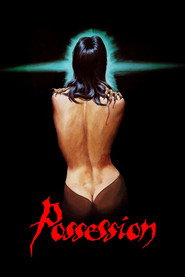
Possession (1981)
Bruno Nuytten's camera behaves like an anxious participant — wide-angle lenses squeezing domestic interiors into pressurized boxes, circling the actors, chasing sudden movement, refusing the calm grammar of shot-reverse-shot. Żuławski directed his performers to the edge of collapse, treating operatic hysteria as a deliberate system rather than excess: bodies here don't act on situations, they undergo them. A marriage falling apart filmed as cosmic catastrophe, in exile, in a walled Berlin. There is nothing else like it.
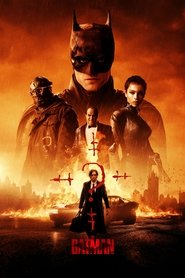
The Batman (2022)
Greig Fraser lights this like Gordon Willis lit The Godfather — radically underexposed, faces top-lit with eyes lost in shadow, every light source visible and practical. Watch how much of the film is simply watching: surveillance is the plot, and the detective is only the most patient watcher in a city full of them. The killer addresses his crime scenes directly to the hero, so you decode over Batman's shoulder — a serial-killer procedural in the Zodiac and Se7en mold that happens to be wearing a cape.
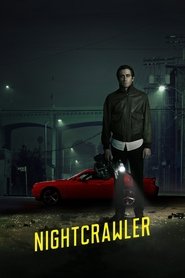
Nightcrawler (2014)
Robert Elswit shoots nocturnal Los Angeles as a glittering, depopulated grid — empty freeways, fluorescent convenience stores — and dares to make it genuinely beautiful. Watch Lou Bloom's relationship to his own camera, and notice the moment observation starts shading into authorship: when the man filming the news begins composing it. Descended from Ace in the Hole and Network, it's a media satire disguised as a thriller, asking what happens when appetite is wired straight to motion.
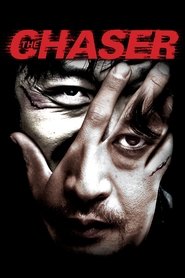
The Chaser (2008)
The chases here work because the space is real: Lee Sung-je shoots the steep, stepped alleys of Seoul's Mangwon-dong so you always know who is above, who is below, and how far there is to run. Watch how the film redistributes suspense — away from mystery and into geography, procedure, and the ticking clock — and how the true antagonist becomes the institutions themselves, corrupt, distracted, and hamstrung. This is the mature Korean thriller synthesis: Hollywood architecture, tonal whiplash, and a deep distrust of anyone in a uniform.
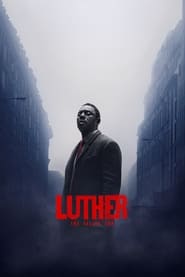
Luther: The Fallen Sun (2023)
Here's the counterexample the set needs: a film where the old machine runs at full throttle — a man sees the city terrorized and acts, with his hands, to fix it. Watch the coat: the rumpled tweed Luther inhabits like weather, a posture that announces a lawman the law expelled before he says a word. The photography extends the series' house style — sodium-lit rain, deep shadow, architectural night — against blinding white elsewhere. After Haneke's refusals, it's clarifying to feel how seductive the delivered-in-full thriller still is.
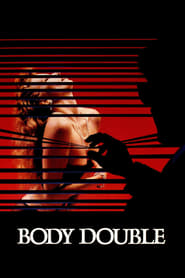
Body Double (1984)
De Palma rebuilds Rear Window and Vertigo in glossy, saturated L.A. light, and the key is that he never lets the act of looking dissolve. When Jake aims his telescope, the apparatus stays in the frame — the round vignette, the wobble of magnification — so you feel the lens as hardware and yourself as the person holding it. Watch for the split-diopter shots holding foreground face and deep background both knife-sharp, and for the way every element doubles: bodies, actors, films. Voyeurism as subject and method.
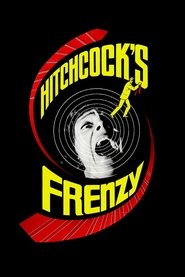
Frenzy (1972)
Hitchcock's return to London after two decades, and he films the working Covent Garden market as a world of dense, indifferent bustle where private