Sightlines · a mini film course
Momentum and the Long Look: Twelve Futures That Can't Decide Whether to Run or to Stare
Every film in this set is science fiction, but that's not really what binds them. What binds them is a choice each one makes — sometimes scene by scene — between two ways of filming a human being in trouble. One way is pure momentum: see the threat, move, cut, survive. The other is the long look: the camera stops chasing and starts watching, and a character who ought to be acting simply sees — a face, a city, a memory that may not be theirs. Some of these films are engines. Some are mirrors. The best ones are both, and the switch between the two modes is where their meaning lives. Watch for the moment each film decides which kind it is.
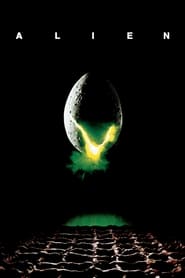
Alien (1979)
Notice how little Ridley Scott lets you see. Derek Vanlint lights the Nostromo like a real industrial workplace — partial, sourced, corridors dissolving into black — and the creature is almost never shown in full light. The camera drifts and probes rather than pointing at things, which makes the ship feel like a haunted house that happens to be in space (the film's honest debt to older monster movies and Gothic fiction). And notice what the film refuses to give its monster: a motive, a grievance, an inner life. It is pure appetite, and a thing with no argument to make is a thing you can't argue with.
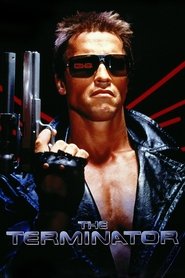
The Terminator (1984)
This is the momentum film at full throttle — see, run, fire, cut — with no dead time and no one pausing to contemplate anything. But it's dressed as a noir: Adam Greenberg shoots Los Angeles at night, rain-slicked and shadow-carved, and introduces the machine in fragments — a silhouette, a hand, a red glint. Watch how the film uses the slasher-movie grammar of the implacable stalker and grafts it onto science fiction, and how the stop-motion animation in the later stretches connects it straight back to Ray Harryhausen's fighting skeletons.
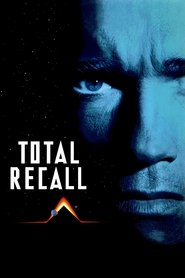
Total Recall (1990)
Paul Verhoeven built this film so that two completely incompatible explanations of what's happening are both internally consistent all the way down — and he never breaks the tie. There's a scene in a Martian hotel room, involving a red pill and a very reasonable man, that is the whole design in miniature: you have only what Quaid has, which is suspicion. Watch Jost Vacano's restless handheld camera (developed in the submarine corridors of Das Boot) keep you slightly off-balance, so the image itself never quite settles into "trustworthy."

Ghost in the Shell (1995)
Near the film's center, a counter-terrorism officer in the middle of a manhunt stops hunting and just looks — nearly three minutes of canals, rain, mannequins, and a stranger who could be her double, with no dialogue and no plot advanced. That pause is the key to Oshii's method: spectacle exists here to serve thought, not the reverse. Watch the low angles and deep vertical architecture that make the city itself a character, and notice how the flat, quiet performance style for artificial minds descends from 2001.
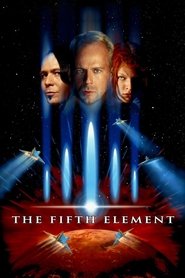
The Fifth Element (1997)
Besson comes out of French comic-book space opera and a French tradition that treats surface, color, and costume as the main event — Gaultier's clothes literally anchor the color of the frame. The film's signature move is to stop dead, mid-crisis, and present something gorgeous purely for its own sake: the blue diva's aria, a real Donizetti piece pushed past the ceiling of any human voice, intercut with mayhem. Most films touch that register of pure display and hurry back to the plot. This one lives there — dare yourself not to mind.

Dark City (1998)
Dariusz Wolski shoots this in near-total night, with hard, sourced light carving figures out of darkness like 1940s noir pushed toward the grotesque, and a restless, often tilted camera. Its visual ancestors are the German silents — Caligari's bent, painted spaces, Nosferatu's shadows-as-menace, Metropolis's miniature vertical city — and Proyas uses them to build a metropolis with no sun, no edge, and no history you can quite trust. Watch how space itself becomes the mystery: a city of mirrors, and one word — Shell Beach — that everyone can name and no one can find.
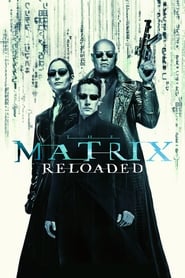
The Matrix Reloaded (2003)
The trick here is that the image becomes something you read rather than simply watch: Neo sees code where the world used to be, and the film keeps asking you to look through its own surfaces the same way. The green cast of the Matrix versus the firelit warmth of Zion isn't decoration — it's a reading instruction, one palette rendered, one real. And notice the film's nerve: it will stop an action blockbuster cold to make you sit in a room and think, which audiences in 2003 either loved or hated.
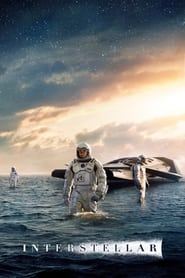
Interstellar (2014)
Built like an action movie so that time can ambush it. The docking sequence is momentum cinema at its most vertiginous — but the film's real weapon is relativity, which turns duration itself into the antagonist: an hour on one world costs years on another, and Nolan makes you feel the cost in a backlog of video messages. Watch Hoyte van Hoytema's warm, naturalistic photography ground the cosmic in dust and cornfields, and notice how much the film trusts you with images (falling dust, a bookshelf) long before you can read them.

Logan (2017)
The first thing this film tells you is a prop: reading glasses on a man who once healed from anything. Mangold shoots it as a Western — sun-bleached anamorphic widescreen, hard unromantic interiors, the aging-gunfighter lineage of Shane and Unforgiven — and the subject is a body that used to be a weapon and now keeps its wounds. Watch what happens when the see-threat-remove-threat reflex, the secret engine of every superhero film, finally seizes up.
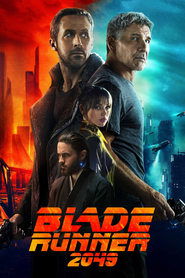
Blade Runner 2049 (2017)
Roger Deakins won his long-overdue Oscar for this, and you'll see why in the first ten minutes: bold, saturated fields of color — sodium-orange Las Vegas, sickly corporate green, cold blue rain — each place given one clean idea, with a human figure dropped in like punctuation. Watch how often K is filmed as a watcher rather than a doer, small at the bottom of enormous frames, and how the film lets shots run long enough that duration itself becomes the instrument. A detective story where the space refuses to become mere setting — it just goes on being itself.
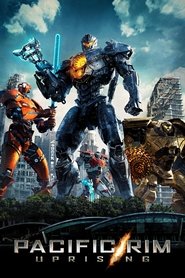
Pacific Rim: Uprising (2018)
Instructive precisely because it's the opposite choice: a deliberate return to bright, legible, full-throttle momentum after a moodier original. Dan Mindel's clean, high-key anamorphic photography prioritizes spatial clarity — you always know where the monster is. And watch the Drift, the neural bridge that fuses two pilots into one giant acting body: it's the perceive-and-act reflex of action cinema made literal, doubled, and put onscreen as the cockpit's central drama, with a lineage running from Toho's Godzilla through Evangelion.
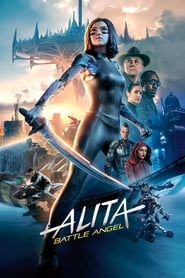
Alita: Battle Angel (2019)
Weta built Alita's eyes deliberately too large — a flagrant breach of the proportions every other digital-human project honors — and those eyes are the film's whole argument. Where most blockbusters cut away from a face as fast as possible, this one enlarges a face of pure astonishment until you can't look anywhere else, and the technical feat is transferring every flinch and involuntary tic of Rosa Salazar's performance onto a non-human face without losing the feeling. Watch, too, the vertical class geography — laboring city below, elite city floating above — quoted straight from Metropolis.
Watched together, these twelve films turn into a conversation. Metropolis and 2001 echo through nearly all of them; O'Bannon's fingerprints connect Alien to Total Recall; Ghost in the Shell feeds The Matrix; Blade Runner's neon geography maps onto 2049, Alita, and Dark City. But the deeper reward is learning to feel, in your own body as a viewer, the difference between a camera that chases and a camera that waits — between a film that converts every image into the next action and a film that holds an image until it starts asking you questions. Once you can feel that switch happening, you'll notice these movies making it constantly, deliberately, scene by scene. That's not trivia. That's the craft — and it will change how you watch everything else.