Sightlines · a mini film course
When Seeing Isn't Enough: A Course in Science Fiction's Broken Circuits
Twelve films, and one shared obsession: the gap between what a character can perceive and what they can actually do about it. The classic movie hero sees a problem and fixes it — perception flows into action, and the world bends. Every film on this list plays a different game with that circuit. Some sever it entirely: perception stops being trustworthy, or the threat has no motive you can argue with, or the space is simply too vast for any human gesture to matter. Others restore the circuit deliberately, lovingly, as if rebuilding an old engine to show you how it runs. Watch these together and you'll start to feel the machinery under every scene — the moment a film decides whether its people can act on what they see, or can only watch, decode, endure, and outlast.
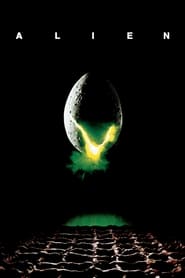
Alien (1979)
Notice how little you're allowed to see. Derek Vanlint's lighting is industrial and partial — backlit corridors dissolving into darkness, the creature almost never in full illumination — and the camera drifts and probes rather than chases. Notice, too, what the film refuses to give its monster: a plan, a grievance, an inner life. A villain can be out-argued; this is pure appetite, and that refusal is the film's most radical choice. And keep an eye on the crew — they're employees, not heroes, working people caught between a predator they can't name and a company that never intended to protect them.
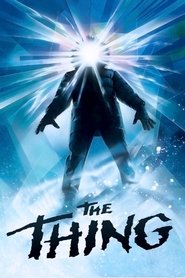
The Thing (1982)
Dean Cundey's wide, deep-focus frames keep multiple characters sharp at once — which sounds generous until you realize what it does: it denies you a single reliable point of view, trapping you in the same uncertainty as the men onscreen. This is a film where looking has stopped working, where the threat is a perfect forger of identity, and where the horror comes less from the creature than from watching a group rationally dismantle itself because trust has become impossible. Carpenter is quietly inverting the 1951 original, where professional teamwork saved the day. Here, the guns and flamethrowers remain — but every action is a guess.
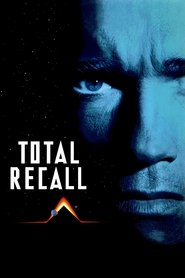
Total Recall (1990)
Watch for the double reading. Verhoeven arranged the entire film so that two mutually exclusive versions of events — a real conspiracy, or a fantasy package purchased and dreamed — remain coherent all the way down, and he never breaks the tie. Jost Vacano's restless handheld camera, developed in the corridors of Das Boot, keeps the ground unstable under your feet. There's a scene where a reasonable man calmly explains that nothing you've watched is real, and the film shoots it so you genuinely can't tell. That's the engine: not a puzzle to be solved, but doubt as building material.
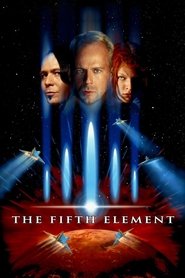
The Fifth Element (1997)
This is Hollywood spectacle filtered through French comics and haute couture — Gaultier's costumes literally anchor the color of the frame, all orange, yellow, and electric blue. Watch for the moments when the film simply stops to present something gorgeous: most famously, an opera aria that climbs past the ceiling of any human voice while the plot waits. Most films touch that register and hurry back to business. Besson lives there, and the dare — will you mind that beauty has interrupted the action? — is the whole sensibility.

Dark City (1998)
Dariusz Wolski shoots near-total night: hard, sourced light carving figures out of darkness, canted angles inherited straight from German Expressionism — Metropolis, Caligari, the hat-and-coat shadows of Nosferatu. Watch for how the city itself becomes the unreliable thing: a sealed world with no sun, no edge, no history you can verify, mirrors all the way down. And listen for one name — a sunlit place everyone remembers but nobody can give you directions to. That's the crack in the seal.

War of the Worlds (2005)
The design principle is a refusal: no generals at maps, no command centers, no orienting overview. The film never leaves one ordinary man's eye-line, and Janusz Kamiński shoots the catastrophe in bleached, ash-choked light. Spielberg — the great engineer of the heroic rescue — builds this film to break his own machine: watch how much the protagonist perceives and how little he can actually accomplish against it. It's the Independence Day formula with the triumphalism surgically removed, and the disaster imagery carries the unmistakable weight of a country processing September 11th.
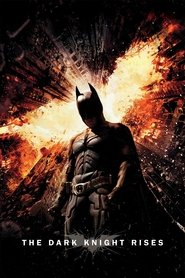
The Dark Knight Rises (2012)
Nolan builds spectacle the old way — thousands of real extras, practical locations, industrial grandeur — on the model of Lawrence of Arabia and Metropolis. Watch for how the film photographs Gotham as a real, weighted, inhabited city, and for the long central stretch where its hero can do nothing at all: an enormous action film whose deepest subject is a man learning how to act again. The image to hold: a hole in the earth, a circle of sky, a chant that means rise.
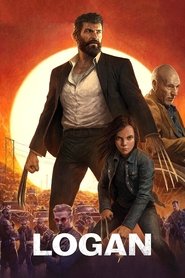
Logan (2017)
The first prop tells you everything: reading glasses on a man who once healed from anything. Mathieson's sun-bleached anamorphic frames and hard motel light deliberately evoke the aging-gunfighter Western — Shane is quoted on screen, Unforgiven is in its bones. Watch how the film makes the failing body its true subject: a hero whose whole identity was see-the-threat-and-erase-the-cost, now living in a world where every act of violence keeps its cost. It's what happens when the superhero engine seizes — and it's the more moving for it.
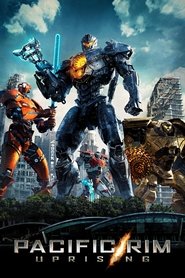
Pacific Rim: Uprising (2018)
Watch this one as a demonstration piece. Dan Mindel's bright, clean, spatially legible widescreen is the opposite of the murk elsewhere on this list — and that's the point. The Drift, the neural bridge fusing two pilots into one giant acting body, is the perception-to-action circuit made literal and visible, inherited from Japanese mecha anime by way of Evangelion. Where the original film was atmospheric, this sequel deliberately restores the old machinery of see-it, fight-it, win. After the broken circuits of the other films, you'll feel exactly what's been chosen.
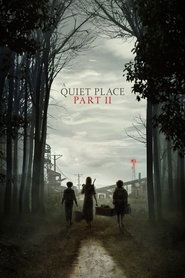
A Quiet Place Part II (2021)
The prologue is a small masterclass: golden Saturday light, a baseball game, ordinary American comfort — engineered entirely to be taken away, in the family-in-peril grammar of Spielberg's War of the Worlds. Watch how the franchise's silence-grammar works, especially the moments where the sound drops into the deaf daughter's point of view — and notice the film's central inversion, where what looks like vulnerability keeps turning out to be a resource. This is the survival thriller running its classic machinery in the open: an overwhelming situation demanding response, force against force, executed with real precision.
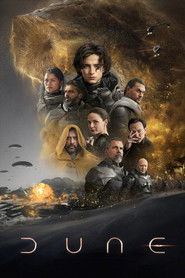
Dune (2021)
Greig Fraser's large-format photography places tiny human figures inside vast, bone-white frames and holds them — past the point where a studio note would cut — until the person stops reading as a person and becomes a unit of measurement. The lineage is Lawrence of Arabia and 2001: exposition subordinated to image and sound, science fiction as grave contemplation. Watch the famous rhythmless sand-walk: even the way a body may move belongs to the desert, not the walker. Space isn't terrain to be used here. Space is sovereign.
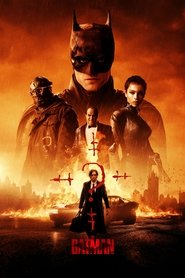
The Batman (2022)
Fraser again, in the opposite key: near-monochrome darkness, sodium orange, faces falling into shadow, in the underexposed tradition of Gordon Willis's Godfather photography. Watch how the film opens with watching itself — surveillance as the plot's very fabric — and how the killer's crime scenes are built to be read, clue by clue, with cards addressed to the detective. You decode over Batman's shoulder; the film makes you a third party to the correspondence. It's a comic-book film built on the bones of Zodiac and Se7en: an investigation, not a punch-up.
Watched together, these films become a conversation about what movie heroes are actually for. You'll see the circuit whole and gleaming (Uprising, A Quiet Place Part II), see it stressed and rebuilt (The Dark Knight Rises, The Batman), see it corroded by doubt (Total Recall, Dark City, The Thing), and see it break down entirely — before appetite (Alien), before scale (Dune, War of the Worlds), before time and the body (Logan) — with The Fifth Element off to the side, cheerfully asking why the plot should get all the attention anyway. Once you've felt the difference between a camera that chases and a camera that watches, between space as terrain and space as trap, you'll never see a "simple" genre film the same way again. That's the reward: not trivia, but a new sensitivity to how movies decide what their people — and their audiences — are allowed to do.