Sightlines · a mini film course
The Long Look of Love: Twelve Films Where the Heart Waits
Every film on this list is a love story, and almost none of them behaves like one. In the movies we grow up on, love is a problem to be solved — see the beloved, pursue, win or lose, cut to the next scene. These twelve directors, working across sixty years and half the globe, share a different conviction: that the deepest romantic experiences are the ones we cannot act on. So their cameras watch rather than chase. Time is allowed to stretch. Rooms become worlds. A glance held two seconds too long carries more plot than a chase sequence. What connects Copenhagen to Buenos Aires to Tokyo here is a shared bet that yearning — love felt at a distance, remembered too late, or renounced on principle — is best filmed not through what characters do, but through how long they are allowed to simply look. Watch these films for the looking.
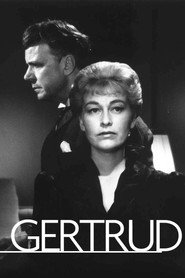
Gertrud (1964)
Dreyer's final film is built from astonishingly few shots — one of the longest average shot lengths in narrative cinema — so scenes unfold in real, unbroken stretches. Watch for the strange choreography of the conversations: two people sit on a sofa discussing love, and neither looks at the other. Gertrud gazes into the middle of the room, at something we can't see and she can't quite reach. Once you notice this repeated gesture, the film transforms — it becomes a portrait of where a person looks when she has stopped expecting the world to answer, and of a woman who will accept nothing less than absolute love, whatever the cost.
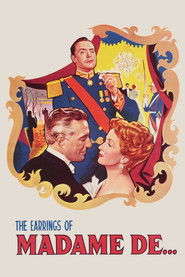
The Earrings of Madame de... (1953)
Where Dreyer holds still, Ophüls glides — the camera is in nearly perpetual motion, following characters through doorways and around ballrooms with a purposeful grace that seems to model fate itself. Watch the very first minutes: we meet Louise not as a face but as a reflection in her own mirror, a woman appraising the surface she has been taught to be. And track the earrings — a stolen-object plot in the Lubitsch tradition, where a small lie about a piece of jewelry sets an entire glittering, mirror-lined world spinning. The elegance is the trap.
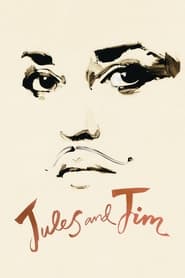
Jules and Jim (1962)
Truffaut's New Wave classic runs on freedom — handheld camera, literary voice-over, decades compressed into leaps — but its most famous gesture is a stoppage. Watch for the moment the film freezes on Catherine mid-laugh, holding her there while Delerue's theme swells, far longer than any living face would let you look. Truffaut stops the film not at an ending but in the middle of happiness, for no reason except love. Notice too how the two men make a pilgrimage to a photograph of a statue before they ever meet her: this is a film about falling in love with an image and then trying to live with a person.
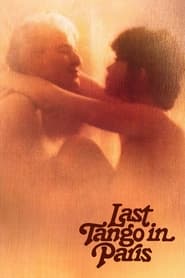
Last Tango in Paris (1972)
Start with the room: an unfurnished Paris flat the color of a bruise — amber, ochre, old varnish — a palette Bertolucci and Storaro lifted directly from Francis Bacon, whose canvases hang over the opening credits like an instruction. Watch how the space is deliberately stripped of everything that would tell us where we are or what to do here: no furniture, no history, no names, exchanged as a condition of meeting. The genuinely unsettling thing was never the sex; it's that the room declines to mean anything, leaving two grieving strangers with bodies and no situation.
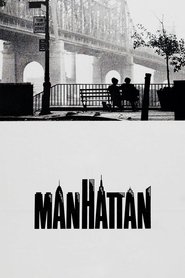
Manhattan (1979)
Gordon Willis — "the Prince of Darkness" — shot this in silvery widescreen black-and-white, letting faces fall into full silhouette (watch the planetarium sequence, where the lovers become shapes against the dark). But the real trick is in the first minute: Isaac dictating an opening line about New York, hearing the vanity in it, and starting over. Watch him revise the version of himself he can bear to live inside, in real time, while Gershwin swells. The film lets you see the flattering self-portrait being drafted — and trusts you to measure the gap between the narrator's rhetoric and his conduct.

Happy Together (1997)
Christopher Doyle's most claustrophobically intimate camerawork: extreme wide-angle lenses that press right up against faces, a Buenos Aires apartment that constricts until it suffocates. Watch for the cheap table lamp with a photograph of the Iguazú Falls on its shade — two men came to Argentina to see those falls together, and the lamp sits on the kitchen table like a destination you can hold in your hands and never reach. This is a film where the great verb is not do but wait, and where a home city, half a world away, haunts every frame precisely by its absence.
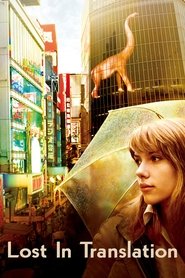
Lost in Translation (2003)
Watch the windows. Coppola keeps placing her two dislocated protagonists at the glass of the Park Hyatt, small figures against a Tokyo they can't read — telephoto shots that flatten the city into a wash of neon light behind them. Nothing "happens" in these shots; a woman sits on a sill and simply sees, and the film lets her, and lets us. It borrows the shape of a romance — meeting, closeness, parting — and then quietly declines the genre's usual payoffs, letting mood, silence, and the weight of a jet-lagged afternoon carry what plot normally would.
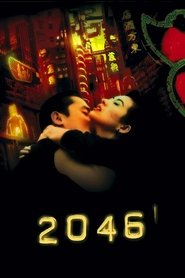
2046 (2004)
Wong Kar-wai's grammar at its most intense: telephoto compression flattening bodies against corridor walls, backgrounds dissolving into molten color, and step-printing — individual frames repeated two or three times — so that a single second of hesitation swells into something you can climb inside. Watch how the film turns between two faces of one stone: the amber hotel corridors of 1960s Hong Kong and the cold blue train of the science-fiction serial its writer-hero is composing. Names return attached to different faces; slatted partitions catch figures in reflection. It's a film about latency — love arriving a beat too late, replaying forever in the gap.
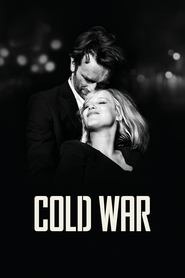
Cold War (2018)
Eighty-eight minutes, fifteen years, Warsaw to Berlin to Paris and back. Watch the cuts — or rather, watch what the cuts refuse to show you. A scene ends, the screen goes black, and when the picture returns a year has passed, a border has been crossed, and the lovers are older and more damaged. The ruptures all happen in the dark between shots. Watch too how Żal's tall black-and-white frames pin the small figures low beneath looming skies and ceilings, and how a single folk melody keeps returning, re-orchestrated by history — from peasant field song to state anthem to Paris jazz.
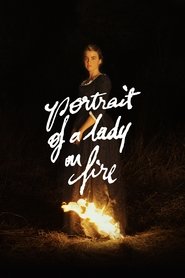
Portrait of a Lady on Fire (2019)
Sciamma and cinematographer Claire Mathon make looking itself the drama. Watch how often the camera frames someone in the act of watching someone else — the painter studying her subject on cliff walks, the subject watching the painter work — and watch for the pivot when the looking stops being one-way. The film's great revelation is structural: the model has been studying the painter all along, cataloguing her small tells. Held long enough, in this film, a still face becomes an event. It's a period romance where the gaze is not an authority but a circuit, running in both directions.
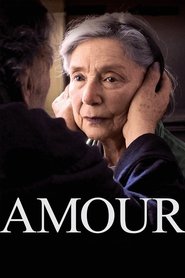
Amour (2012)
Haneke's camera sits still at a respectful middle distance and simply refuses to look away — meals prepared, a body lifted, in something close to real time, with light coming only from windows and lamps and no music to console you. Watch the early concert scene: the camera faces the audience instead of the stage, filling the screen with a hall of strangers, and makes you hunt for the two protagonists in the crowd. In finding them you've accepted the film's one assignment: to watch, patiently, without being let off. Its lineage runs through Ozu and Umberto D. — a portrait built from small daily gestures rather than incident.
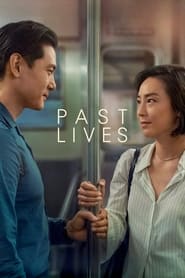
Past Lives (2023)
Song and cinematographer Shabier Kirchner treat the physical distance between bodies as the film's true subject — patient, often static compositions where a doorway or a stretch of bar counter says what dialogue can't. Watch the opening: three people in a bar, and offscreen strangers trying to guess who they are to each other — a couple? siblings? — while we overhear. Before we know a single name, we've been handed the film's real question, which is not who ends up with whom but how we weigh the lives we might have lived against the one we're living. Its ancestors are Brief Encounter and In the Mood for Love: romance as restraint, staged at thresholds and transit points.
Why watch these together? Because they teach each other. Dreyer's averted gazes prepare you for Sciamma's returned ones; Ophüls's gliding mirrors set up Wong's reflecting partitions; Truffaut's frozen frame and Pawlikowski's black gaps are two answers to the same question — what does a film do with a moment too precious or too painful to let pass at normal speed? Seen as a set, these twelve films form a single argument sustained across six decades: that cinema's most powerful tool for filming love is not the kiss or the chase but duration — the held shot, the patient distance, the cut that arrives too early or too late. They ask you to watch the way their characters watch: attentively, without the guarantee of resolution. Give them that attention and they give back something rare — the feeling of time itself, thick with longing, passing through a room.