Sightlines · a mini film course
The Space Between Stillness and the Strike
Every film in this set — from a 1950 forest mystery to a 2014 Boston thriller — is secretly about the same thing: what a body does before it acts, and whether the camera can be trusted to tell us what happened. These are films where the way a person sits is the drama, where a room's geometry writes out who holds power, where violence arrives not as spectacle but as a rupture in stillness — and where, sometimes, the image itself quietly stops being reliable. Watch them as a conversation about patience: cameras that watch rather than chase, time that's allowed to stretch, and the electric charge that builds in the gap between seeing and doing.
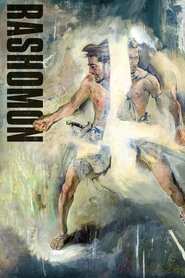
Rashomon (1950)
Begin here, with the film that taught cinema to lie beautifully. Kazuo Miyagawa aimed his camera straight up into the sun — something studio rules forbade — bouncing light off mirrors so the forest itself flickers, dazzles, and won't sit still. Four people describe the same crime, and each account is shot to feel completely, seductively coherent while you're inside it. Notice how the look of each telling persuades you before a single word does — this is a film arguing about truth using light.

Seven Samurai (1954)
Watch the opening chapters like an architect. Kurosawa frames samurai against sky and high ground, farmers clustered low to the earth — class difference written into the composition itself. And watch Kambei crouch and scratch a map of the village into the dirt: the coming battle exists first as a diagram, a problem to be solved, and the village is less a backdrop than an opponent — a landscape that presses on everyone in it. When combat comes, note how Kurosawa trades stylized swordplay for mud, fatigue, and speed.
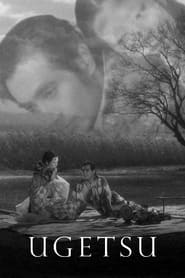
Ugetsu (1953)
Mizoguchi's camera glides where Kurosawa's cuts. Watch for the long, drifting lateral movements that carry whole scenes in a single unbroken breath — the camera as calm witness, surveying rather than penetrating. The film blurs the everyday and the dreamlike so gently that you often can't mark the moment you crossed over, and that seamlessness is the point: the camera's smooth, continuous movement lets two realities occupy the same frame. Let it work on you slowly; its greatest effects are achieved without a single trick you can catch.
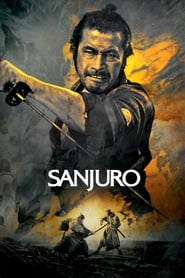
Sanjuro (1962)
The whole film is an argument conducted in posture. Nine young samurai kneel in perfect formation, spines like drawn bows — and the ronin they've bet their lives on slouches against a wall, yawning, picking at fleas. Watch how Kurosawa times each slump to puncture a nearby pomposity, and how Tatsuya Nakadai's antagonist answers with total, folded-up stillness. The comedy isn't decoration; how people carry themselves is the film's thesis about appearance versus genuine quality.
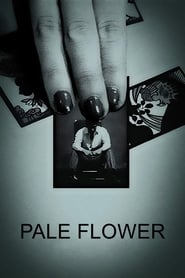
Pale Flower (1964)
A gangster film with the engine unplugged. Watch Saeko's face at the gambling table — winning, losing, nothing moves — and notice how the hanafuda card games run long, cut to the rhythm of the game rather than the needs of a plot. Shinoda's hero can see everything and act on almost nothing, and into that slackness pours pure mood: nocturnal, ritualized, exquisitely empty. This is Melville's cool transplanted to Japan, and one of the great films about watching as a way of life.
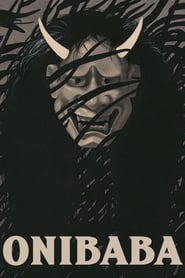
Onibaba (1964)
Before anyone speaks, there's the grass: a churning silver wall of susuki reeds filling the widescreen frame, shot from low angles so it closes over your head. Kuroda's camera treats the field as the main character — hungry, restless, indifferent — and Shindō keeps tearing the thin surface of society (war, trade, survival) to show raw appetite underneath. Watch how the film makes its people feel driven rather than wicked; the horror is in the landscape's pulse, not in any monster.
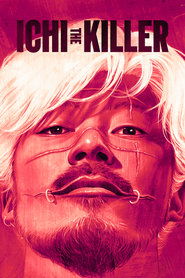
Ichi the Killer (2001)
Fair warning: this is the set's extreme edge. But watch what Miike is actually doing with his weeping killer — a man who cannot own his own violence, framed less as a person who chooses than as a place where compulsion erupts. Notice the lull-then-assault architecture Miike perfected in Audition: long restrained stretches detonated by clinically staged mayhem, with handheld jitter and industrial texture borrowed from Tetsuo. The gap between the atrocity and the sobbing boy who commits it is where the whole film lives.
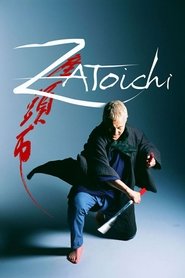
Zatoichi (2003)
Kitano stages his frames flat, frontal, and still — then lets violence erupt inside them like a struck match. But the real secret is rhythm: hoes striking wet earth fall into a beat, rain becomes percussion, labor keeps tipping shyly into music. Watch for how a blind hero who perceives everything moves through a world of people hiding behind masks and disguises. It's a classic two-gangs-and-a-drifter story (straight from Yojimbo) rebuilt as a piece of choreography.
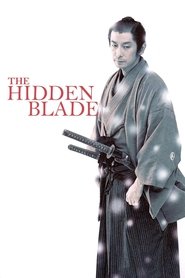
The Hidden Blade (2004)
Yamada's camera stays low, level with the tatami, often framing two people through the lattice of a sliding screen — so the empty space between their bodies becomes the most eloquent thing in the shot. Who may sit where, who may approach whom: the inches between two kneeling figures carry the entire weight of a class system the film wants to indict. Muted, earthen, patient, this is a samurai film where the arrangements matter more than the duels — and the real blade is what everyone leaves unsaid.
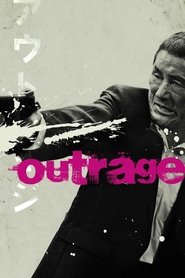
Outrage (2010)
Kitano again, colder. Rooms shot dead-on, men in dark suits seated at measured distances, hierarchy written into the furniture — and when a body drops, the camera doesn't flinch or move to catch it. Watch how Kitano keeps every gear of the gangster machine turning (people perceive, decide, kill) while draining out everything that usually makes it feel human: no motive close-ups, no psychology, no catharsis. Etiquette and murder on the same flat plane, at the same volume.
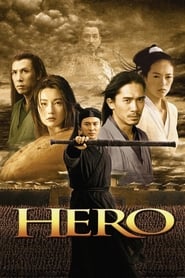
Hero (2002)
Christopher Doyle, famous for restless improvisation, submits here to a rigorously composed scheme: whole chapters of the story bathed in a single color, whole worlds swapped when the account changes. Watch the moment a grove of golden autumn leaves floods to red — nothing in the plot changes the leaves; a feeling does. The film tells and retells its central events in versions that can't all be true, and Zhang color-codes each so you feel the swap in your body before you reason it out.
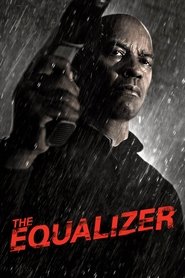
The Equalizer (2014)
The surprise of the set: a mainstream American thriller built on the same patience as the Japanese films around it. For most of the first act, McCall simply watches — the same diner, the same table, the napkin folded, the book squared, the camera finding him behind glass and in reflections, a man studying a world he won't yet step into. Notice how Fuqua holds on Washington's stillness in static, slowly drifting compositions, and how much charge accumulates before anything erupts. It's the ronin film and the lone-gunman Western in a Boston diner.
Watched together, these films train the same muscle: attention to the frame before the event. You'll start reading rooms the way these directors do — who sits where, what the distance between two bodies confesses, when a held shot is a promise and when it's a warning. And you'll notice a quiet argument threading from 1950 to 2014: that violence is the least interesting moment in a violent film, and that the deepest suspense cinema knows is a person who sees everything and hasn't moved yet. By the last of them, stillness will never look empty to you again.