Sightlines · a mini film course
When the Self Goes Missing: Identity, Memory, and the Architecture of Doubt
What pulls these twelve films together is a single, quietly terrifying question: what are you made of, and who put it there? Each film, in its own way, takes a character — or asks you, as a viewer — to stand in a room full of mirrors and find out which reflection is real. Some do it through bodies that have been rebuilt, implanted, or borrowed. Some do it through cities that rewrite themselves in the night. Some do it through memories that may have been manufactured, and selves that may have been assembled to order. The techniques vary enormously — one film drowns you in color and noise, another gives you only white walls and humming fluorescence — but the underlying unease is the same. These are films about the terrifying porousness of identity, made by filmmakers who understood that how you photograph that question is inseparable from what the question feels like.
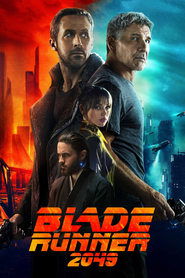
Blade Runner 2049 (2017)
Watch what Roger Deakins does with space. The rooms in this film are enormous and nearly empty — a shaft of amber light, a concrete floor that goes on forever, a human figure placed in the frame like a period at the end of a very long sentence. Rather than making K look capable, the camera makes him look small. Notice, too, how long Villeneuve holds a shot after you'd expect a cut: he lets duration settle on you, lets the architecture do the emotional work that a more conventional film would hand to action or dialogue. This is a detective film in which the detective rarely seems to be changing anything — he watches, waits, and endures, and the world mostly goes on being itself regardless. That patience is the film's argument, not a flaw in it.

Dark City (1998)
At midnight, the entire city rebuilds itself — towers screw upward out of the pavement, streets fold into new configurations, a skyline inhales and exhales while its inhabitants sleep standing up. Hold that image before the film explains it, because the visual language of Dark City is doing something German Expressionism pioneered in the 1920s: it makes the environment express the psychological state rather than the other way around. Watch the camera angles — Dariusz Wolski shoots from below, from odd tilts, through shadows carved by hard practical lamps — so that the city already feels geometrically wrong before you know why. And notice how the film handles the idea of "Shell Beach": a place everyone can name, no one can reach, and everyone needs. A word doing the work of a whole world.

Alita: Battle Angel (2019)
Start with the eyes. Weta Digital built Alita's eyes deliberately, flagrantly larger than any human face would hold, and the temptation is to read that as a compromise or an oddity. It isn't. Those eyes are built to do something specific: to hold feeling visibly, to be a surface on which wonder, confusion, and ferocity can register in close-up at a scale a human face simply cannot carry. Watch what the film does with those close-ups in its earliest scenes — the camera lingers on Alita's face longer than most blockbusters would dare, turning it into a kind of emotional landscape. Then pay attention to how the film shifts once action begins: the camera pulls back, the choreography of Motorball opens into spectacle, and you feel the gear-change between a film about interiority and a film about bodies in motion.
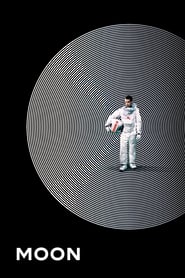
Moon (2009)
Duncan Jones gives you a lunar base that looks less like science fiction than like a particularly remote workplace — an oil rig, an Antarctic station, somewhere fluorescent and functional and far from home. Gary Shaw's cinematography refuses glamour: the whites are institutional, the depth of field is shallow, the editing takes its tempo from Kubrick's 2001 rather than from thriller convention. There's a half-finished scale model of a small town on the rec-room table — Sam Bell building a miniature of the home he believes is waiting for him. Keep that image in mind as you watch, because Jones is doing something careful with it. And when the film's central situation is revealed, notice that the camera doesn't accelerate — there's no thriller-jolt, no rush of cutting. The film keeps its measured pace, and that steadiness is a moral statement.
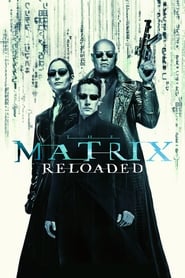
The Matrix Reloaded (2003)
Halfway through a fight sequence, Neo stops seeing bodies and starts seeing code — green cascading characters where men were standing a moment before. That perceptual shift is the key to everything Reloaded is attempting. Bill Pope's color-coding — the green cast of the Matrix versus the firelit warmth of Zion — isn't decorative. The film is teaching you to read its images rather than simply watch them: one palette is rendered reality, one is constructed, and Neo's expanding vision is an instruction to notice the difference. Then the film stops and gives you a white room full of monitors and a man who speaks in long, unwelcome paragraphs — and the audience reaction to that scene is itself the film's subject. What do you do when action isn't the answer?
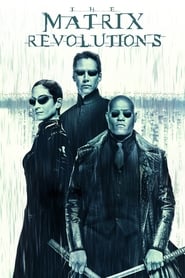
The Matrix Revolutions (2003)
This is the noisiest film in the set, and deliberately so: the defense of Zion is relentless, enormous, a war film conducted at deafening scale with human figures dwarfed by the machinery they operate. Watch how the APU sequences are framed — the pilots visible through cockpit glass, the reload mechanics staged with the attentiveness of a documentary, humans inside machines that are barely sufficient. Then notice what happens at the far end of all that action, when Neo's perception changes and the Machine City becomes visible as light — gold filaments, beauty, a world that only becomes legible when ordinary sight is gone. The film builds toward a reversal: its grandest action film becomes, quietly, a film about a different kind of seeing.

Total Recall (1990)
There is a scene midway through in which a man in a suit sits across from Quaid in a hotel room and explains, very calmly, that none of what we've been watching has been real. He may be right. Jost Vacano's handheld camera, restless and destabilizing throughout, doesn't settle here either — you have exactly what Quaid has, which is his gut feeling and no verification. Paul Verhoeven has said openly that he staged the film so that two entirely different explanations — real spy, dreaming customer — remain coherent and internally consistent all the way to the final frame. Watch for the moments when the film seems to tip toward one reading, then quietly tips back. The ambiguity isn't a puzzle with a hidden solution. It's the architecture.
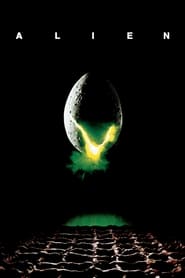
Alien (1979)
Derek Vanlint lights the Nostromo the way you'd light a working ship — partially, practically, with deep pockets of darkness that the camera drifts into without knowing what it will find. The guiding principle is productive obscurity: you rarely see the creature fully, the camera rarely arrives at a destination with confidence, and the editing gives you glimpses rather than revelation. Notice how much of the horror operates through architecture — the corridors, the vents, the scale of the derelict ship that makes human bodies look like intrusions. And pay attention to what the film withholds from the crew about their mission, because the terror has two layers: the creature moving through the dark, and the institution that sent them there knowing what might be waiting.
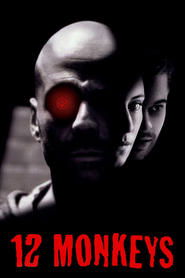
Twelve Monkeys (1995)
Roger Pratt shoots the future in cold, desaturated blues and greys, with compositions that press inward — vertiginous low angles, anamorphic lenses that distort the edges of the frame, spaces that feel like they're closing. The present is shot differently: warmer, more confined, psychiatric. That visual difference between time-zones isn't just atmosphere; it's a map of Cole's mental state, an external picture of what it feels like to be uncertain which reality you belong to. Watch how Gilliam handles Bruce Willis physically: he's built for action, and the film keeps stranding that physical authority in situations where action is useless. Cole can perceive what's coming — and cannot change a frame of it.
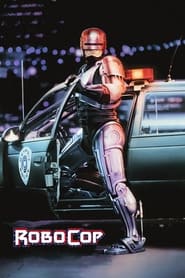
RoboCop (1987)
Verhoeven gives us Detroit through two kinds of vision: the warm, relatively naturalistic photography of Murphy's human scenes, and then — once he's rebuilt — the cold low angles, reflective surfaces, and targeting-reticle HUD of RoboCop's machine perception. Every time we drop into that visor, with its green grid and its printed names and its readout data, we're watching the question the film is actually asking: what remains of Murphy under the corporate chassis? Watch the media breaks too — the satirical newscasts and advertisements that puncture the film at intervals. They're not just comedy relief. They're another kind of image entirely, a world that exists as broadcast and slogan, and together with the HUD they make RoboCop a film that keeps interrupting itself to ask you to look at how it's showing you things.
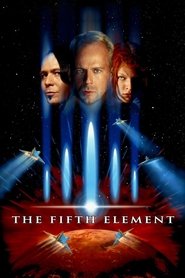
The Fifth Element (1997)
Thierry Arbogast and Jean-Paul Gaultier calibrate this film for density: every frame is crowded with color, detail, competing visual information, and the camera is rarely still. What to watch for is the film's pauses — moments when Besson stops the action not to advance the plot but to present something. The Diva's aria at Fhloston Paradise is the clearest example: an operatic performance intercut with a corridor fight, neither resolving until the music finishes. The film makes you wait for the plot while it shows you the spectacle, and that imbalance is a choice, not a miscalculation. Notice how Gaultier's costuming anchors each scene chromatically — the orange and yellow and electric blue aren't random; they're doing the work that in a quieter film dialogue or shadow would do.
Possessor (2020)
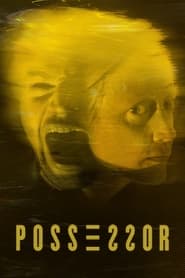
Karim Hussain reserves his most extreme visual effects — the in-camera dissolves and superimpositions where two faces bleed into each other — for the moments when Tasya Vos's grip on her own identity is loosening. It's worth watching for how the film looks when she's in control versus when she isn't: the clinical white of the firm's facilities, cool and legible, set against the increasingly unstable visual grammar of possession sequences where faces literally merge. Brandon Cronenberg does the practical effects — the gore, the physical violence — by hand, with prosthetics and tangible materials, in conscious rejection of digital smoothness. The violence is tactile, uncomfortable, resistant to the abstraction that would make it easier to watch. That resistance is the film's ethics made visible.
Watched in a single run or across a few evenings, these films reward the kind of attention you give them to each other. A technique you notice in Alien — the use of darkness as active, inhabited space — reappears, mutated, in Dark City and Possessor. The question Moon asks about manufactured memory echoes through Total Recall, Twelve Monkeys, and Blade Runner 2049, each film finding a different architectural answer to the same vertigo. And the color-as-information strategy that RoboCop uses for its HUD, The Matrix Reloaded extends into an entire grammar of reality versus simulation. These aren't films that simply share a theme — they're in conversation with each other about how cinema can make you feel the instability of the self, and watching them together is a way of hearing that conversation in full.