Sightlines · a mini film course
Machines That Dream, Cities That Lie: A Mini-Course in Tech-Noir and the Manufactured Self
Every film in this set asks a version of the same unsettling question: if your memories could be written by someone else, if your body could be built in a factory, if your city could be rearranged while you slept — what would be left that you could call you? These twelve films span thirty-five years, three continents of production, and every register from breakneck chase picture to near-silent meditation. But they share a family tree (watch how often Metropolis, Blade Runner, and La Jetée echo through them) and a shared obsession: identity under pressure from technology, corporations, and doubt. Some of these films answer with pure velocity — see the threat, run, fight. Others slow everything down until you're simply watching alongside a character who can no longer act on what he sees. The pleasure of this course is feeling the difference between those two speeds, and noticing what each one lets a film say.
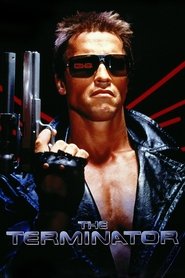
The Terminator (1984)
The purest chase movie here, and a masterclass in the cinema of pure momentum: someone sees, someone acts, nobody stops to contemplate, and there's no dead time anywhere. Watch how Adam Greenberg introduces the machine through fragments — a silhouette, a hand, a red glint of eye — noir shadow doing the work of dread. Notice too how the film borrows the slasher's grammar (an implacable killer, a hunted young woman) and welds it to science fiction. The whole picture is a slow striptease toward revealing what's under the human surface, and the stop-motion craft in the third act descends directly from Ray Harryhausen's animated skeletons.
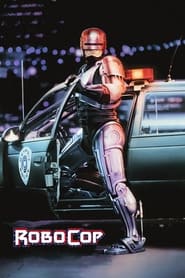
RoboCop (1987)
Verhoeven's Dutch outsider's eye turns an action premise into savage corporate satire. Watch for the moments you see through the machine — the targeting grid, the readouts, vision turned into data — and notice how that visor literally overwrites a man's human way of looking at the world. Watch also for the fake ads and newscasts that interrupt the story: they're not padding, they're a second film running inside the first, teaching you to read the images rather than just absorb them. Jost Vacano shoots the human material warm and the machine material cold, low, and reflective — the palette tracks the theme.
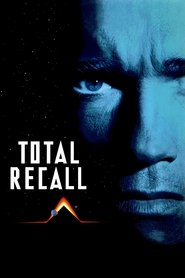
Total Recall (1990)
The same director and cinematographer, now armed with a Philip K. Dick premise and a restless handheld camera Vacano developed in the corridors of Das Boot. The genius move: Verhoeven deliberately constructed the film so that two mutually exclusive readings of everything you see are both coherent all the way down — and he never breaks the tie. Watch the hotel-room scene where a reasonable man offers a red pill, and notice that you have exactly as much evidence as the hero does: nothing but suspicion. This is a film that makes uncertainty itself the engine, not a puzzle to be solved.
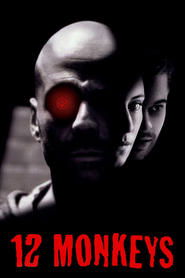
Twelve Monkeys (1995)
Gilliam takes Bruce Willis, an actor carrying all the physical authority of Die Hard, and spends the whole film disabling it — a large, capable man who can perceive everything and change almost nothing. Watch the distorting lenses, the low angles, the crowded and vertiginous compositions: the camera style is the character's mental state. Notice the fragment of memory the film keeps circling back to, like a scratched record; the entire looping structure is a machine built around one image. The narrative architecture is inherited from Chris Marker's La Jetée — worth knowing going in, worth seeking out after.
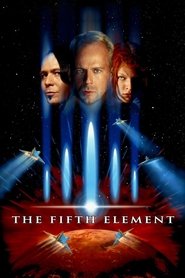
The Fifth Element (1997)
Besson's great heresy: an action blockbuster that keeps stopping, mid-crisis, to show you something gorgeous and dare you to mind. Watch the opera sequence — a real Donizetti aria pushed past the ceiling of any human voice — intercut with mayhem, three things happening at once and none of them advancing the plot. That's the film's whole sensibility: spectacle as an end in itself, drawn from French comics and haute couture (Gaultier's costumes literally anchor the color of the frame). Where most films rush back to business, this one lives in the pause.

Dark City (1998)
Watch the midnight scenes where the city rebuilds itself while its citizens sleep standing up — towers screwing out of the pavement, streets folding into new streets, and no one awake to witness it. Proyas builds a sealed world with no sun, no edge, and no history you can trust, borrowing the painted shadows and impossible geometry of silent German cinema (the looming figures in hats and coats descend straight from Nosferatu). Notice how one word — Shell Beach, a sunlit place everyone remembers and no one can find — functions as the only crack in the seal. Space itself becomes the trap here.
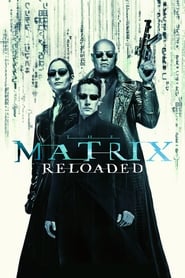
The Matrix Reloaded (2003)
The famous freeway chase is real, but the film's true subject is a hero learning to read the image he lives inside — watch the moment a fight dissolves into falling green code, the world dropping its costume. Notice Bill Pope's color scheme working as an instruction manual: green-cast simulation versus firelit, earth-toned reality. Then watch the film do the thing 2003 audiences fought over — stop dead in a white room walled with monitors and make you think. That stall is the key, not the flaw: this is an action film that keeps daring you to decipher its surfaces rather than just ride them.
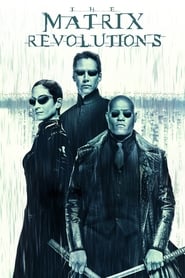
The Matrix Revolutions (2003)
For most of its length, this is the most relentlessly active film the Wachowskis made — the dock battle stages humanity's last city as a vertical industrial cathedral, bodies dwarfed by the machines they pilot. But watch for the reversal underneath the noise: a character who has spent two films looking — reading code, cracking systems — arriving at a mode of seeing that has nothing to do with eyes. Notice how the imagery draws directly from Japanese animation (Ghost in the Shell, Akira) and how the film treats blockbuster spectacle as a vehicle for genuinely mythic material: sacrifice, shadows, the possibility of peace between incompatible orders of being.
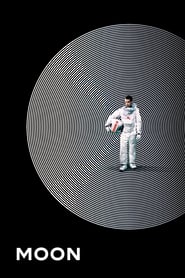
Moon (2009)
The chamber piece of the set. Gary Shaw shoots the lunar station like a remote oil rig — fluorescent, institutional, deliberately unglamorous — and the editing keeps a patient, architectural tempo borrowed from 2001. Watch the half-finished model town the hero whittles between shifts: a copy of a home its maker may never have stood in. Where other films in this lineage turn constructed memory into a thriller engine, Moon refuses to thrill; watch how quietly it treats its central disclosure, closer to a slow exhale than a snap. This film isn't interested in who did it. It's interested in what it feels like to be a self you can't verify.
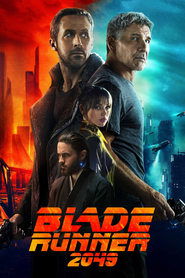
Blade Runner 2049 (2017)
Roger Deakins finally won his Oscar for this, and you'll see why in the first ten minutes: bold, saturated fields of color — sodium-orange dust, sickly corporate green, cold blue rain — each environment a distinct world. Watch how clean the frames are compared to the cluttered neon of the 1982 original: one shaft of light, a lot of emptiness, a human figure dropped in like punctuation, dwarfed by architecture out of Metropolis. And watch Ryan Gosling watching. This is a detective story where the camera lingers rather than chases, where the hero does the procedural work but is filmed as a man enduring rather than conquering, and where time is allowed to stretch until the spaces themselves become the subject.
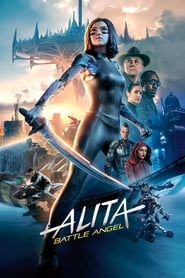
Alita: Battle Angel (2019)
Start with the eyes — built deliberately too large, a flagrant break from every rule of digital humans, and the film's whole argument. Watch how much time the movie spends simply holding on that face: wonder, feral curiosity, a being waking up in a world it can't name. Most blockbusters cut away from a face as fast as possible; this one enlarges it until you can't look anywhere else, and the technical achievement is transferring every involuntary flinch and glance of Rosa Salazar's performance onto a non-human face without losing the feeling. Notice too the vertical city — floating elite above, laboring underclass below — quoting Metropolis directly.
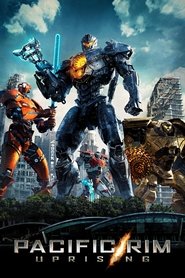
Pacific Rim: Uprising (2018)
The instructive counter-example: after a moodier original, this sequel deliberately restores pure action-machine cinema — clean, bright, spatially legible widescreen photography from Dan Mindel, built for maximum readability. Watch the Drift, the neural bridge that fuses two pilots into one giant acting body: it's the set's most literal image of perception wired straight into action, the very circuit that films like 2049 and Moon deliberately break. Its lineage is openly Japanese — Toho's kaiju, the giant-robot anime tradition — and its sub-bass sound design treats monsters as seismic events.
Why watch these together? Because the set becomes a conversation about speed and selfhood. Trace the family lines: Metropolis's towering city reappears in five of these films; the writers of Alien wrote Total Recall; La Jetée's time-loop seeds both The Terminator and Twelve Monkeys; Bill Pope shoots the Matrix films and Alita; Verhoeven directs two of them with the same restless German cameraman. Then trace the deeper argument: some of these films believe a person is what a person does — see, act, run, fight — and their cutting serves that faith. Others suspect that the self lives somewhere action can't reach: in a memory that might be implanted, a city that might be staged, a face held still long enough to register wonder. Watch them in any order, but watch for the moment in each when the film decides whether its hero gets to act on the world — or can only stand inside it, looking. That choice, more than any plot, is where each of these films tells you what it believes a human being is.