Sightlines · a mini film course
When the Gun Stops Working: A Short Course in the Western and Its Afterlives
There's an old promise at the heart of American movies, and the Western made it purest of all: a person sees trouble, acts on it, and the world answers. The town gets cleaned up, the score gets settled, the coach gets through. Every film on this list is in conversation with that promise. The earliest ones run the machine at full, glorious power. The later ones slow it down, stretch it, question it — letting the camera watch rather than chase, letting silence do the work a gunshot used to do, asking whether the deed ever really fixed anything or whether we just liked the story that said it did. Watched together, these twelve films become one long argument about action, myth, and what happens when a genre grows old enough to doubt itself.
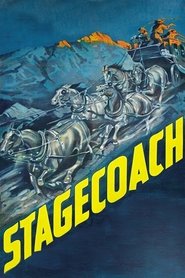
Stagecoach (1939)
Start here, with the machine in perfect health. Watch the shot that mints John Wayne as a star — the camera rushing in low as he twirls his rifle, buttes towering behind him — and notice how it announces a world where people press back against whatever presses on them. Notice too how the journey itself does moral work: shared danger strips away the passengers' social pretenses, and the film quietly argues that respectability and actual decency are two different things.
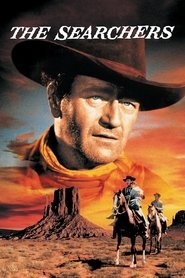
The Searchers (1956)
The film opens on black; then a door swings inward and the desert pours through it. Hold onto that doorway — inside versus outside, home versus wilderness, and a man who belongs fully to neither. Watch how Monument Valley stops being scenery and becomes something total, a force that shapes everyone in it, and how Ford — the genre's greatest builder — is here also its most searching internal critic, letting his hero's obsession darken the myth from within.
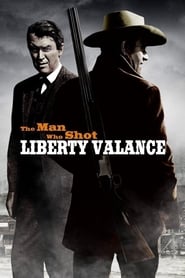
The Man Who Shot Liberty Valance (1962)
Ford again, but stripped down: black-and-white, interiors, a story told as memory inside a frame. Watch how the drama retreats from vistas into the saloon, the kitchen, the newspaper office — deep, theatrical staging in darkened rooms. This is a film about how a legend gets made and who pays for it, and it treats the gap between what happened and what gets remembered not as a puzzle to solve but as the very material of a nation's storytelling.
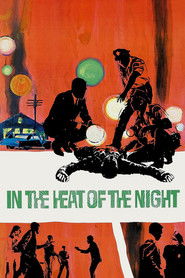
In the Heat of the Night (1967)
Not a Western, but the perfect hinge — a film where decisive action still works, and works electrically. Watch Haskell Wexler's hot, close, sweat-sheened photography and the way the investigation proceeds clue by clue: Tibbs reads a detail, acts on it, and each act discloses a little more of the town's rotten structure. Above all, watch the small confrontations over forms of address, physical space, the right to give orders — and one returned slap that lands like a thunderclap.
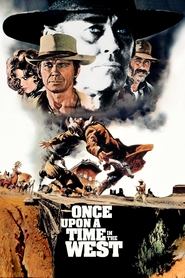
Once Upon a Time in the West (1968)
An Italian's meditation on American mythology, shot largely in Spain, planted deliberately in Ford's Monument Valley. The famous opening — a fly, a dripping water tank, cracked knuckles, near-total silence for what feels like a geological age — does something quietly heretical: it makes the most action-driven genre in Hollywood wait. Watch how extreme telephoto lenses flatten distance into abstraction, and how the film mourns the frontier even as the railroad, and capital, roll in to end it.
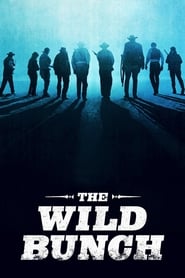
The Wild Bunch (1969)
The first image is children laughing over a scorpion swarmed by ants — hold it, because the film spends two hours explaining it. Watch how Peckinpah and editor Lou Lombardo build their revolutionary grammar of slow motion cut against fast montage (adapted from Kurosawa's telephoto battle coverage and Bonnie and Clyde's blood squibs), and how the wide frame arrays the aging outlaws as a group portrait of men who've outlived their world. Everything here drifts downhill, and the drift is the point.
Thelma & Louise (1991)
Watch what the frame does as the two women leave home: the cramped, grimy Arkansas kitchens open into vast, light-saturated horizontals, and the visual language of the mythic Western — tiny figures against mesa and sky, highways to the vanishing point — gets handed, for once, to two women in a teal Thunderbird. Then watch what their actions actually accomplish. The landscape keeps promising that a decisive deed will matter here; the film keeps testing whether the world will honor that promise for them.
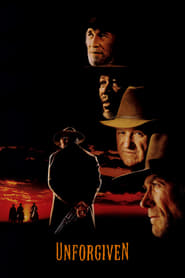
Unforgiven (1992)
It opens on a lone figure digging a grave at dusk, silhouetted against a burning orange sky — the Leone template Eastwood himself helped invent, turned toward burial rather than legend. Watch how the film keeps promising violence and withholding it, letting dread pool in the gaps where a genre cut should fall, and how when violence does arrive it comes dark, confused, unbeautiful. This is the Western auditing its own books: reputation versus reality, and what killing actually costs the killer.
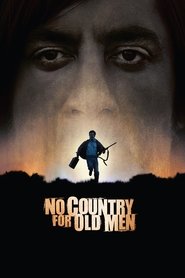
No Country for Old Men (2007)
Roger Deakins's photography is famous here for restraint, not showmanship: long lenses pressing figures flat against featureless desert, landscape as participant rather than backdrop. But the real innovation is sound — the rustle, the drone, the ambient hum doing the work a score usually does. Watch the gas-station scene, a coin on a counter and fluorescent light, and notice how you watch the way the owner watches: tension with nowhere to go, in a thriller that honors every mechanic of the genre and quietly asks whether the machine still delivers what it promises.
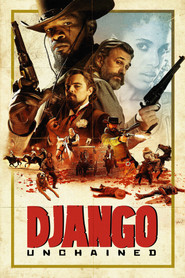
Django Unchained (2012)
Watch the clothes. After his first paid kill, Django gets to choose his own outfit — and picks something ridiculous, and entirely his. The whole film is about self-authorship: identities put on like costumes, performance as survival, a man dressing himself into a being that history refused to permit. Watch too how Tarantino grafts the spaghetti Western's stylized swagger (the title and iconography lifted straight from Corbucci's Django) onto the antebellum South, so that genre itself becomes the disguise.
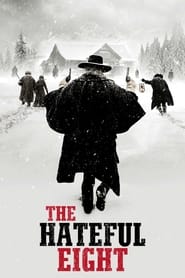
The Hateful Eight (2015)
A paradox as a formal experiment: one of the widest lenses ever made, aimed at what is essentially a stage play in a single snowbound room. Watch how Richardson uses that enormous horizontal field to keep suspects arrayed in the frame together, so that meaning lives in the relations between faces rather than in any one of them. Almost nothing here is resolved by anyone acting on what they see; eight people talk, and the question of who is lying gets handed to you. You are the detective.
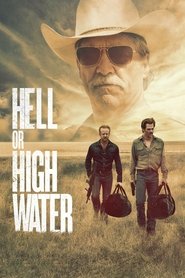
Hell or High Water (2016)
Watch the edges of the frame: debt-relief billboards, fast-cash storefronts, empty lots sliding past the truck window, never dwelt on, just accumulating like heat. Made largely by Scots and Australians — the outsider's eye that has always refreshed the Western, from Leone onward — it stages the oldest genre setup, brothers acting to save the family land, against an enemy that has no face: a bank branch identical in every town. You can rob one. Watch the film wrestle with whether you can ever defeat it.
Watched in sequence, these films tell a single story the genre told about itself over eight decades: first the confident circuit of see-trouble-fix-trouble, then the elegies for the men who lived by it, then the films that let time stretch and silence speak, then the ones that hand the deed to people the myth had excluded — women, a Black bounty hunter, a Black detective in a hostile town — and finally the ones where the enemy has become a system no bullet can reach. Pay attention to how each film uses waiting, landscape, and the width of the frame, and you'll see directors across generations answering each other shot for shot: Leone quoting Ford, Eastwood quoting Leone, Tarantino quoting everyone, and Hell or High Water inheriting the whole conversation. It's one of cinema's great long arguments, and it's still going.