Sightlines · a mini film course
The Draw That Never Comes: Waiting, Watching, and the Long Goodbye of the Gunfighter
There's a moment these twelve films keep circling back to: the held breath before something happens — or instead of something happening. A fly on a face. A hand hovering over a holster. A man digging a grave at dusk, too small in the frame to be a hero. These are films about people whose whole world was built on decisive action — the draw, the hit, the case cracked — made by directors who keep slowing that action down, stretching it, questioning it, sometimes withholding it altogether. Watch this set together and you'll see a conversation across fifty years: the camera learning to wait, space becoming a trap or a cathedral, and violence steadily losing its old promise to fix anything. It's also a family tree — Ford begets Leone, Leone begets Eastwood and Tarantino, and everyone learns to let time stretch.
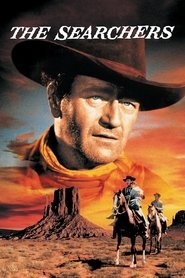
The Searchers (1956)
Start here, at the source. Watch the doorways: the film opens from inside a dark house looking out at the desert, and it keeps framing its people through thresholds — inside versus outside, home versus wilderness. Winton Hoch's saturated Technicolor turns Monument Valley's red buttes into towering monuments dwarfing tiny riders, and Ford uses all that grandeur to ask uneasy questions about who belongs in it. This is classical Hollywood at its late peak — and quietly its own sharpest critic.
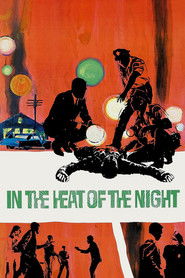
In the Heat of the Night (1967)
The pleasure here is watching a detective story run at full efficiency — clue read, deduction made, next move — while everything around it burns. Haskell Wexler shoots the Southern town with a hot, documentary closeness: sweat-sheened faces in tight close-up, long lenses that isolate a man inside hostile space. Watch how the film stages its confrontations through small things — forms of address, who stands where, who gets to give orders — and watch for one returned slap, where the camera goes not to the blow but to the faces around it.
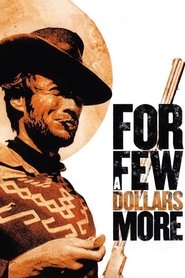
For a Few Dollars More (1965)
Here Leone perfects his signature oscillation: a cut from tiny figures lost in desert immensity to an eye filling the entire screen, with almost nothing in between. Watch the standoffs, where the film finds the exact instant a gunfight hesitates — the hand near the holster — and builds a cathedral on it, with a pocket watch's chime doing the work a ticking clock did in High Noon. The genre's fastest gesture, the draw, becomes its slowest.
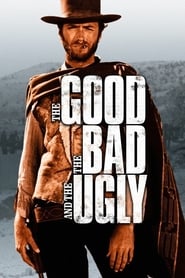
The Good, the Bad and the Ugly (1966)
The key innovation to listen for: Morricone composed the major cues before filming, they were played on set, and the editing was cut to the music. So in the great three-way cemetery standoff, the camera cuts to the score rather than the score chasing the camera — faces, eyes, holsters intercut in an accelerating rhythm for minutes in which nobody moves, and it's the most electric passage in the film. Note too how the title's moral categories are bracketed in irony from the first frames.
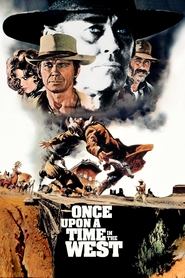
Once Upon a Time in the West (1968)
Leone's elegy, and his most patient film. The opening — nearly wordless, built from a fly, dripping water, cracking knuckles — teaches you how to watch everything that follows: this is a Western where waiting is the drama. Tonino Delli Colli's telephoto lenses flatten distance into painterly abstraction, and Leone plants his camera in Ford's Monument Valley as a deliberate citation — an Italian, shooting in Spain, dismantling the American myth from inside its own church. Notice that the real subject is a changing of the world: the railroad coming, and the men of the gun running out of time.
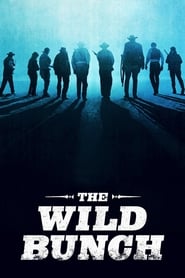
The Wild Bunch (1969)
Watch the very first minutes: children laughing over a scorpion swarmed by ants. Peckinpah puts the film's whole idea there — cruelty as the current running under the civilized surface — before a shot is fired. Then watch what he and editor Lou Lombardo do with violence itself: slow motion braided with fast cutting, a grammar borrowed from Bonnie and Clyde and Kurosawa and scaled into something both horrifying and mournful. This is a film about men who have outlived their world, and Lucien Ballard's sun-bleached widescreen arrays them like a group portrait already fading.
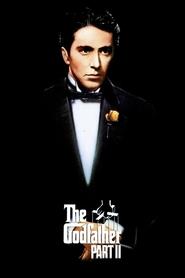
The Godfather Part II (1974)
Watch the light. Gordon Willis shoots young Vito's rise in warm, honeyed amber and Michael's reign in deepening shadow, so the two braided timelines comment on each other visually before a word is spoken. Notice how Michael, the man who acts most decisively, is framed increasingly like the princes in Visconti — small against grand rooms, dwarfed by what he's won. The film's boldest move is its patience: it lets scenes end not on acts but on faces enduring, and refuses the consoling cut.
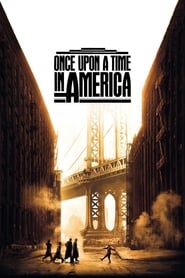
Once Upon a Time in America (1984)
Leone's last film opens near its own end and moves like memory — forward, backward, sideways. Watch the color temperatures: the past glows golden, sunlight through dust; the later scenes go cold and grey. De Niro's performance is a study in passivity — a man who mostly looks, at peepholes and lockers and faces across banquet tables — and the film asks you to wonder how much of what you're seeing is remembered, dreamed, or wished. Everything may be curling back toward one long-held, unreadable smile.
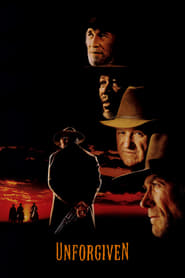
Unforgiven (1992)
Eastwood, thirty years after Leone made him an icon, turns the iconography against itself. The opening image — a small silhouetted figure digging at dusk under a burning sky — uses the full Leone grammar (widescreen, silhouette, elegiac stillness) to introduce a man burying rather than riding. Watch how the film keeps promising violence and withholding it, how the editing lets scenes go slack where a genre cut should fall, and how, when violence does come, it's dark, confused, and deliberately unbeautiful. Every myth the Western told about clean killing is here weighed against its cost.
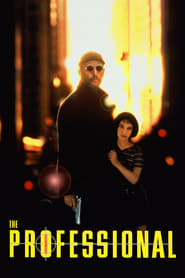
Léon: The Professional (1994)
The first strange note: a hit man who drinks milk, does sit-ups in the dark, and tends a houseplant he calls his only friend because "it has no roots — like me." Besson inherits the Melville tradition — the silent, code-bound professional whose procedure is his character — and then keeps switching the current off between jobs, letting Thierry Arbogast's warm ambers and long-held close-ups turn an action film into a study of a face. Watch the gap between what Léon does for a living and what he tends.
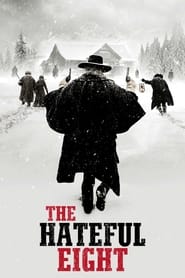
The Hateful Eight (2015)
A magnificent paradox: Tarantino and Robert Richardson use one of the widest lens formats ever made to shoot what is essentially a stage play in one room. The payoff is relational — that huge horizontal frame holds multiple suspects at once, so you're always reading faces in the background while someone talks in the foreground. Nobody in the room can solve the mystery by acting; only you, the watcher, holding all the pieces, can. Keep your eye on a certain letter, and listen for Morricone — scoring a Western again, with a cue borrowed from a paranoid thriller.
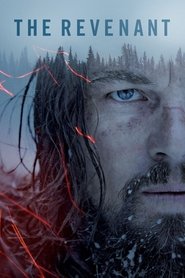
The Revenant (2015)
Watch for the breath on the lens. During the bear attack, Glass's exhalation fogs the glass between him and you — an accident Iñárritu and Lubezki chose to keep, and a statement of intent: the screen isn't a window, it's a membrane you're pressed against. Lubezki shoots in natural light in the Malick tradition, in long immersive takes, and the revenge plot is slowed almost to a standstill — for most of the film the wronged man can only crawl, freeze, endure, and look. The oldest engine in movies, the revenge story, is rebuilt here as an act of pure witnessing.
Why watch these together? Because they teach each other. Ford's doorways become Leone's telephoto abstractions become Eastwood's dark refusals become Tarantino's sealed room. You'll hear Morricone's before-the-camera-rolls method echo forward into how whole scenes are cut; you'll see the silhouette-at-dusk migrate from film to film like a passed torch. And you'll feel, cumulatively, the great shift these films enact: from heroes who act and fix the world, to watchers, waiters, endurers — people the camera studies rather than chases. By the last film, you'll notice you've become one of those watchers yourself. That's the course. Sit still. Let the fly land.