Sightlines · a mini film course
The Long Wait Before the Draw
Every film on this list is, on paper, a revenge story. A wrong is done; someone rides, drives, or drags themselves out to answer it. But what connects these twelve isn't the vengeance — it's the hesitation. Each of these directors, in wildly different countries and decades, discovered the same secret: the most powerful thing a camera can do in a revenge story is refuse to hurry. The camera watches rather than chases. Time is allowed to stretch. Violence, when it comes, is never clean, and the film is always more interested in the waiting — the faces, the spaces, the codes, the cost — than in the deed itself. Watch these together and you'll see a century of cinema quietly asking the same question: what does the act of vengeance actually fix?
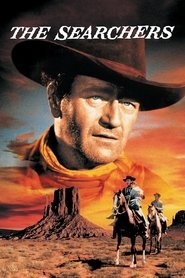
The Searchers (1956)
Start here, with the doorway. Ford opens on darkness inside a homestead, then a door swings open and the desert floods in — and that frame-within-a-frame, inside looking out, is the film's whole architecture. Watch how Monument Valley's red buttes aren't scenery but a total world that presses on the characters, and how Ford, Hollywood's most canonical mythmaker, uses saturated Technicolor and towering rock to interrogate the very myth he helped build. Notice how the film keeps framing its obsessive searcher at thresholds, half in and half out of the world of homes and families.
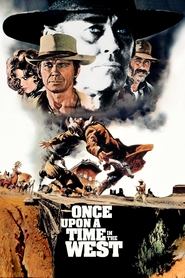
Once Upon a Time in the West (1968)
Leone plants his camera in Ford's Monument Valley on purpose — a citation, and a challenge. Watch the opening: three men at a train station, a fly, a dripping water tank, cracking knuckles, and nothing happening for what feels like a geological age. In the most action-driven genre Hollywood ever built, Leone makes waiting itself the spectacle. Notice too how the extreme telephoto lenses flatten distance, compressing landscape into near-abstraction, and how the film carries the weight of an elegy: it knows the frontier is closing and the gunfighter's time is ending.
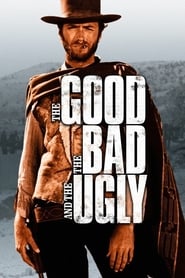
The Good, the Bad and the Ugly (1966)
Watch for the standoff staged like a ceremony: three faces, a ring of graves, and close to five minutes in which nobody moves — the most violent passage in the film, and not a shot fired for most of it. The secret is that Morricone composed the music before filming; it was played on set and ran in the editing room, so the images obey the score rather than the other way around. Feel how the cutting rides the music, and how the title's moral categories dissolve into irony — greed is simply the human common denominator here.
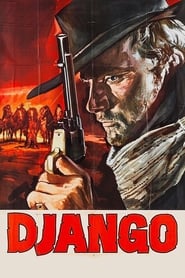
Django (1966)
Corbucci takes Leone's architecture and drowns it in mud. Where Leone is sun-bleached and monumental, Barboni's photography is wet, grey, and claustrophobic — one mire-choked street under permanent overcast, a palette closer to a war film. Watch the opening image: a man on foot, dragging a coffin through muck on a rope. Before the film tells you anything, it shows you a body doing a draft animal's work, hauling death behind it — the whole grim thesis of the film in a single sound: rope, wood, mud.
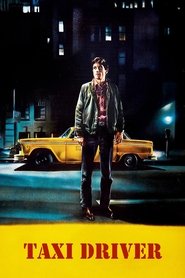
Taxi Driver (1976)
Almost everything this film knows, it knows from inside a cab. Michael Chapman's camera rides close enough to Travis's point of view to infect you — neon smeared on wet windshields, pedestrians caught in headlights — then steps back to watch him from across a diner, keeping just enough distance to judge. Watch how the vigilante-rescue plot, borrowed consciously from The Searchers, is hollowed out: the driving loops, the city circulates, and seeing never quite closes into meaningful doing. That gap is the film's real subject.

Ran (1985)
Kurosawa organizes an entire epic around color: three armies in yellow, red, and blue-green, legible at any distance, with the old warlord stripped down to white — the color of mourning in Japanese tradition. Watch for the moment when the sound of battle drops away entirely and only the orchestra remains, mourning over the images: it's the film's hinge, and one of the boldest sound decisions in epic cinema. The director who built his name on men of action here makes a film about a man reduced to watching — and it's devastating precisely because Kurosawa knows the grammar he's dismantling.
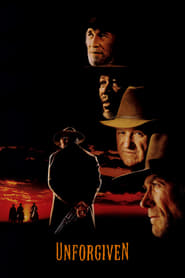
Unforgiven (1992)
The opening shot — a lone figure digging at dusk, silhouetted against a burning orange sky — is built on the Leone template Eastwood himself helped invent, and it announces everything: the man isn't riding in, he's burying. Watch how the film keeps promising violence and withholding it, how Joel Cox's editing lets scenes go slack where a genre cut "should" fall, letting dread pool in the gaps. When violence does arrive, notice how unbeautifully it's framed — dark, confused, graceless. This is a Western counting the true cost of every story the genre ever told.
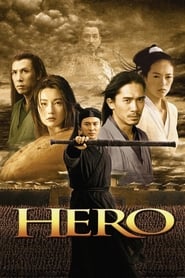
Hero (2002)
Watch the colors, because they're doing the storytelling. The same events are recounted in different, contradictory versions, and Zhang Yimou bathes each telling in its own hue — you feel the shift in your body before you reason it out. Christopher Doyle, famous for restless handheld work, here submits to painterly, architectural compositions; in one legendary sequence, an entire autumn grove floods to red at the instant a feeling arrives, not a plot point. It's a film that treats truth as something forged, not found — and makes the forging gorgeous.
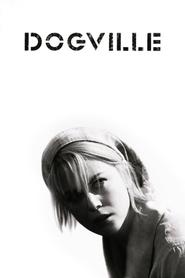
Dogville (2003)
Von Trier removes the town. Streets, houses, even the dog are chalk lines and labels on a black floor; actors mime doors while the soundtrack supplies the click of the latch. Watch what this subtraction does: stripped of walls and set dressing, every frame becomes something you have to actively read, and every social transaction stands exposed. Notice the tension between the rigid geometric set and Anthony Dod Mantle's restless handheld camera hunting among the actors — a stage play shot like a documentary, and all the more unnerving for it.
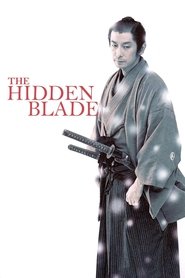
The Hidden Blade (2004)
Yamada's samurai film spends most of its running time watching people sit, bow, pour tea, and decline to touch. The camera stays low, level with the tatami, framing figures through the lattice of sliding screens, so that the distance between two bodies becomes the most legible thing in the shot. Watch how rank and class are never argued in dialogue — they're staged in the inches between kneeling figures, in who may approach whom. A revenge film where the real drama is the arrangement of a room.
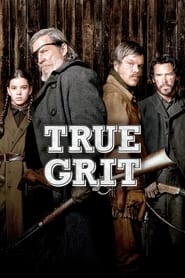
True Grit (2010)
Everything you see is already a memory: a grown woman's voice recalls the year she was fourteen and rode into the Territory to see justice done. Deakins shoots the plains in muted ochres and grey winter light, deliberately refusing the golden-hour glow that has sentimentalized the West — a world before the myth was burnished. Listen to the dialogue too: the Coens kept the novel's formal, archaic speech rhythms intact, and Mattie's precise legal language keeps insisting on lawful justice in a landscape that has other ideas about the gap between what we seek and what we get.
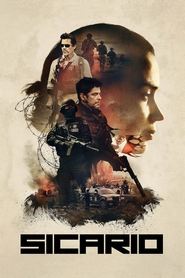
Sicario (2015)
Watch where Villeneuve puts Emily Blunt: in doorways, in back seats, at the edge of briefings where the real decisions happen somewhere she isn't. The film's entire argument is encoded in that blocking — a capable, clear-eyed agent positioned as the person things happen near. Deakins shoots the border landscape geologically rather than romantically, wide frames dwarfing human figures, and the film keeps converting sequences that should be action into things you can only watch, dread accumulating where release should be.
Watched together, these films become a conversation across decades and continents — Ford's doorway answered by Leone's water tank, Leone's silhouettes answered by Eastwood's gravedigger, Ethan Edwards's obsessive search reborn in a New York taxi, Kurosawa's color-coded armies passed by way of a shared costume designer into Zhang's chromatic worlds. Each filmmaker inherits the revenge story and slows it down until you can see its machinery — and its price. The reward for your attention is cumulative: by the last film, you'll notice a held pause, an empty threshold, or a withheld cut and know exactly what weight it's carrying. These movies teach you how to watch them, and then how to watch everything else.