Sightlines · a mini film course
The Cinema of Watching: When Action Fails and Time Takes Over
Most movies run on a simple engine: a character sees a problem, acts, and the world changes. The twelve films on your list — Soviet masters, their heirs, and a few unexpected cousins — are all, in different ways, about what happens when that engine stalls. Their protagonists are people history has outgrown: children swallowed by war, scientists facing mysteries too large to solve, exiles, patients, generals issuing orders into a void. Deprived of the power to act, they can only look and endure — and these filmmakers respond by building a cinema of looking. The camera watches rather than chases. Shots outstay their obvious purpose. Time is allowed to stretch until you feel it as a physical presence. Watched together, these films become a conversation across sixty years about how to film a person who can do nothing but witness.
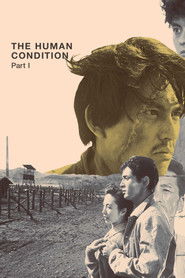
The Human Condition I: No Greater Love (1959)
Watch how Kobayashi uses the enormous widescreen frame against his hero: Yoshio Miyajima's compositions turn fence lines, watchtowers, and rows of laborers into visual grids of confinement, and the Manchurian plain dwarfs Kaji until he seems a single comma in a long, indifferent sentence. This is a film about a decent man trying to act humanely inside a machine built to prevent it — and the shape of the image registers the pressure before the story does. Notice how social force is layered into the frame, foreground against background, rather than delivered by cutting.
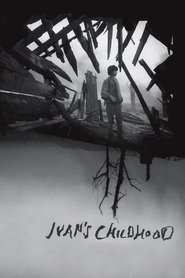
Ivan's Childhood (1962)
Tarkovsky's debut is built across a fault line: the tense, forward-leaning world of a boy scout's night missions — deep-focus river crossings through reeds and mist, low angles pressing his small figure against vast skies — and the luminous, floating world of his dreams. Watch the cuts between them: no dissolve, no consoling music, just the hardest possible seam. The whole film lives in that jolt — childhood and war welded together without permission to blend.
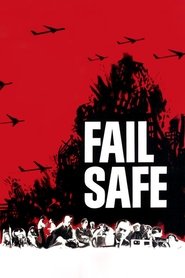
Fail Safe (1964)
Lumet strips the nuclear thriller down to rooms, telephones, and faces. The lighting is flat and institutional, the camera almost invisible, and there is no villain to fight — the system itself is the antagonist, which means all the genre's action-movie energy has nowhere to go. Watch how much dread Lumet generates from men simply talking into phones in real time, and how the absence of spectacle becomes the most frightening choice of all.
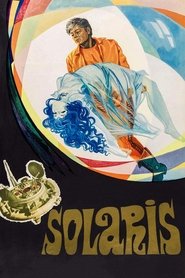
Solaris (1972)
Before any space station appears, the camera sits with weeds shivering in a stream, water combed flat by the current, a horse in the rain — shots that outlast their reason for existing, which is exactly the point. Tarkovsky took a commission to answer 2001 and inverted it: less technological wonder, more conscience, memory, and grief. Watch how the alien ocean is glimpsed only through portholes, never given the clarity that would let science get a grip — this is science fiction that refuses to treat its mystery as a puzzle.
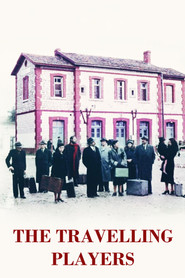
The Travelling Players (1975)
Angelopoulos builds four hours of Greek history out of roughly eighty shots, and the famous trick is worth waiting for: the camera follows marchers down a wet grey street, waits at a corner, and when people return, the year has changed — no cut, no announcement. He makes time a property of space instead of editing, and the effect is a whole theory of how history recurs. Watch the troupe of actors forever trying to finish their little pastoral play, forever interrupted by the century.
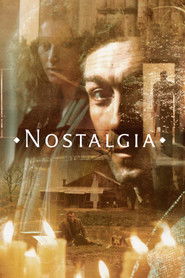
Nostalgia (1983)
A Russian writer adrift in Italy, unable to work, unable to love, unable to go home — and a camera that moves at the pace of his paralysis, in long lateral drifts through fog and water-stained rooms. The film's centerpiece is a single unbroken shot involving a man, a candle, and a drained thermal pool: nothing is "happening," and everything is at stake. Watch how duration itself becomes an act of faith — the shot's real precariousness is the drama.
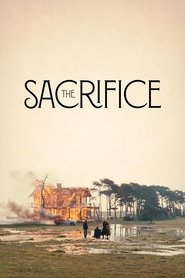
The Sacrifice (1986)
Tarkovsky's only collaboration with Bergman's great cameraman Sven Nykvist, and the meeting shows: overcast Nordic daylight treated not as atmosphere but as a spiritual condition. It opens with a man and his small son planting a dead tree, alongside a story about a monk who watered a withered tree daily for years — hold that image, because the whole film is a meditation on gestures whose results no one can verify, performed anyway. When catastrophe threatens, notice that it arrives through sound — a degrading television signal, a hyperreal hum — while the serene frame barely flinches.
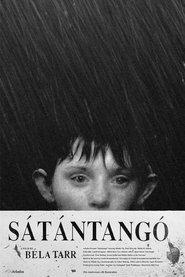
Satantango (1994)
It opens with cows shuffling out of a collapsing farmyard for several unbroken minutes, and by the end of that shot Tarr has taught you how to watch the next seven hours: not for what happens, but for time moving through a ruined place. Shots run five, eight, ten minutes; rain and mud become structural materials. Give it your patience and the film rewires how fast you think a story needs to move.
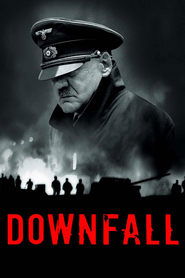
Downfall (2004)
In the bunker's narrow corridors, Rainer Klausmann's handheld camera stays close to faces, trapping everyone in shallow focus and stale air. Watch the map-room scenes: a hand moves armies across a table while, above ground, those armies no longer exist — commands issuing into a vacuum, the machinery of decision grinding on after decisions have stopped connecting to anything. It's a war film about a war room that has become pure theater, and the horror is in the procedural calm.
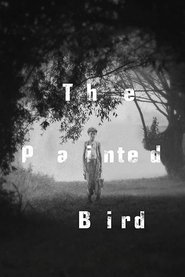
The Painted Bird (2019)
Vladimír Smutný's camera is static and disciplined, refusing the tracking shots and point-of-view edits that would let you comfortably inhabit the boy at the film's center; instead, wide monochrome compositions hold him small inside landscapes that dwarf and endanger him. The title image — a bird painted a bright, alien color and released back to its flock — is staged with no commentary and no music, and it announces the film's method: watch how communities mark difference, and watch a witness who has no power to intervene. Demanding, but built with rigorous purpose.
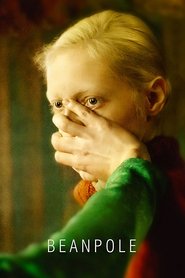
Beanpole (2019)
Leningrad just after the siege, filmed almost entirely in close-up: Balagov and cinematographer Ksenia Sereda hold on faces past the point where a conventional editor would cut, and the telephoto compression makes the narrow frame feel airless. The subject is war persisting inside bodies after the armistice — including a heroine whose body periodically simply stops, filmed plainly, the camera just holding on the fact of a person gone absent inside herself. Watch what stillness and duration do here that dialogue never could.
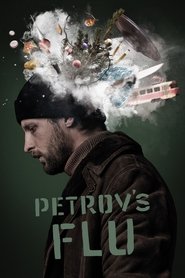
Petrov's Flu (2021)
The wild card and the inheritor: Serebrennikov's fever-dream glides through post-Soviet life in elaborate unbroken takes that follow characters out of a crowded bus, into a fantasy, and back — crossing thresholds of reality without an edit to warn you. Its hero doesn't act; he is carried, sweating and watching while the world churns around him. Watch how the flu becomes the film's whole grammar — a lowered state where sanity and delusion, past and present, stop keeping their distance.
Watched together, these films train a muscle most cinema lets atrophy. Each one asks you to stop waiting for the next event and start attending to the frame itself — the width of an image, the length of a shot, the texture of light, the sound of a room. You'll see the lineage plainly: Tarkovsky's rivers and dreams flowing into Tarr's mud, Angelopoulos's drifting streets, Balagov's held faces, Serebrennikov's delirious corridors — and you'll see how even a taut American thriller like Fail Safe or a German chamber piece like Downfall arrives at the same discovery from the opposite direction. The through-line is a kind of moral proposition: that watching, done seriously enough, is itself a form of action. These films extend that seriousness to you. Meet them at