Sightlines · a mini film course
The Cinema of Watching: Twelve Films Where Time Is the Main Character
Most movies are machines for getting things done. Someone sees a problem, acts on it, and the editing hurries you from cause to effect — see the bomb, cut the wire. The films on this list belong to a different lineage. Here, the camera watches rather than chases. Characters look, wait, and endure more than they act, and the films stop measuring time by the plot and let you feel it directly — as weather, as light changing, as a shot that outstays its practical use and becomes something you inhabit. This is not slowness for its own sake. When a film refuses to cut away, it teaches you a new way of paying attention: to mud, rain, faces, wind moving through a field. Watch these in any order, but watch them the way they ask to be watched — patiently, with the sound up and your phone in another room.
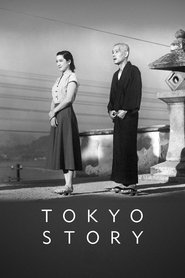
Tokyo Story (1953) — dir. Yasujirō Ozu
Notice the camera height: mounted low, roughly at the eye level of someone seated on a tatami mat, and it almost never moves. Between scenes, Ozu cuts to shots of chimneys, laundry, passing trains — images with no one in them and no job to do, held a few seconds past any narrative use. They're not telling you information; they're letting time breathe. The family drama at the film's center is built from quiet restraint — no confrontations, no melodrama — so the smallest gestures land with enormous weight.
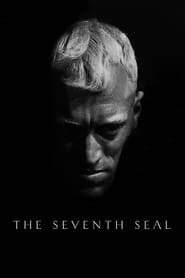
The Seventh Seal (1957) — dir. Ingmar Bergman
A knight plays chess with Death on a grey beach, and almost nothing moves. Gunnar Fischer's photography is severe and high-contrast — faces against blown-out skies, figures swallowed in shadow — drawing on the silent-era tradition of Sjöström's embodied Death and Dreyer's stark close-ups. Watch how the film stages a man who perceives everything around him — plague, terror, a silent sky — and keeps searching for one deed that will count. The stillness of that chessboard is the whole film in miniature.
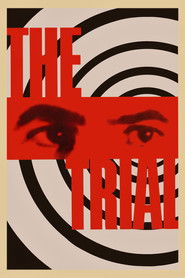
The Trial (1962) — dir. Orson Welles
Welles lost his set budget, then found the abandoned Gare d'Orsay in Paris — a dead, cavernous railway terminus — and shot the film inside real, overwhelming space. Watch what extreme wide-angle lenses and deep focus do here: ceilings press down, corridors stretch toward vanishing points, and Josef K. becomes a speck hurrying across a floor of a thousand identical desks. Space itself is the antagonist. The Expressionist inheritance (Caligari's warped architecture, Metropolis's monumental institutions) is turned into something you can feel in your shoulders.
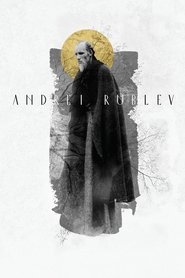
Andrei Rublev (1966) — dir. Andrei Tarkovsky
A film about a medieval icon painter that opens with a stranger's flight in a crude balloon — making something that briefly, gloriously works. Vadim Yusov's camera tracks and cranes in very long takes that refuse to cut away from discomfort or to punctuate a moment of revelation with an edit. Watch how the film builds its portrait not through psychology but through what its painter witnesses and endures, and how it quietly asks the hardest question: what does it cost to make art in a catastrophic time?
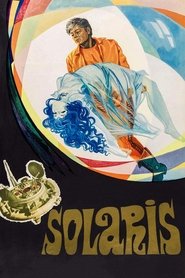
Solaris (1972) — dir. Andrei Tarkovsky
A science fiction film that spends its opening minutes on weeds shivering in a stream and a horse standing in rain — before any station, before the alien planet is even named. Made partly as a Soviet answer to 2001, it inverts Kubrick's priorities: less technological sublime, more conscience, memory, and grief. Watch how the mysterious ocean is never shown clearly enough to analyze — glimpsed through portholes, swirling amber — and how the lighting draws on Old Master painting, warm pools of gold against darkness.
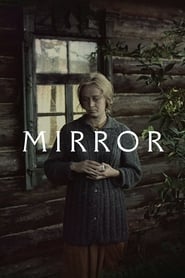
Mirror (1975) — dir. Andrei Tarkovsky
No plot in the ordinary sense: a dying man's consciousness circling his mother, his absent father, his failed marriage, without resolution. Watch how memory works here — not as a dated flashback, a sealed clip of the past, but as something alive that shares the same visual texture as the present, so past and present flow into each other. And watch the wind: a gust running through a buckwheat field toward a waiting woman, needed by nothing in the story, put there purely so you can feel time moving through things.
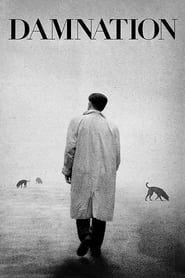
Damnation (1988) — dir. Béla Tarr
The opening shot is a manifesto: coal-conveyor buckets crawling across a grey sky in a slow lateral track — then the camera reverses and finds a man at his window, watching the same buckets you were just watching. That pivot tells you everything: this is a film about a watcher, and it makes you one too. Rain falls almost cosmologically; buildings, machines, and relationships are all returning to mud. Watch how Tarr converts the Hungarian tradition of choreographed long takes across open terrain into something existential rather than political.
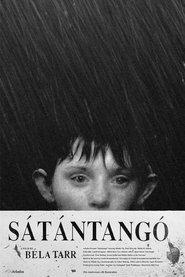
Satantango (1994) — dir. Béla Tarr
Seven-plus hours built from shots that run five, eight, ten minutes at a stretch — remarkably few cuts for the running time. The opening take, tracking alongside cows shuffling through a collapsing farmyard into grey drizzle, teaches you how to watch everything that follows: not for events, but for time itself moving through a ruined place. Villagers wait, drink, and watch each other wait as decay works on everything — buildings, bonds, resolve. It's demanding, and it's the summit of this whole tradition. Take the intermissions.
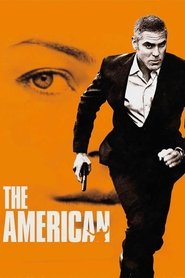
The American (2010) — dir. Anton Corbijn
A hitman film that refuses the chase. Corbijn, a photographer by trade, and cinematographer Martin Ruhe frame Clooney small within converging stone streets, the medieval Italian town pressing in like a vise — beauty and trap in the same shot. Watch the long, near-silent sequences of professional ritual: coffee, exercises, the filing of a piece of steel — inherited from Melville's laconic killers. The film even screens Once Upon a Time in the West within itself, tipping its hand: stillness before violence is the drama.

Silent Light (2007) — dir. Carlos Reygadas
The film opens on a star-pricked night sky and holds — crickets thinning, horizon bruising blue, a Chihuahuan dawn arriving in something close to real time — before a single face appears. Alexis Zabé's wide, deep, luminous compositions place a Mennonite farming community inside an immense landscape, telling you the story's scale before its plot. Watch how a crisis of love and marriage is treated not as melodrama but as genuine spiritual struggle, played by non-professional performers in the stripped-down tradition of Bresson and Dreyer.

Kaili Blues (2016) — dir. Bi Gan
At the film's heart is a single shot roughly forty minutes long: the camera climbs onto a motorbike, crosses a river by boat, rides a cable car up a green hillside, doubles back through crooked village streets — and keeps meeting people who shouldn't share the same afternoon. Past, present, and future stop behaving sequentially, and at some point you stop asking when you are. That surrender is the film's gift. Watch how Guizhou's misted, humid green becomes a landscape saturated with the traces of the dead and the estranged.
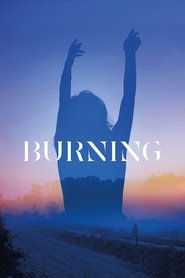
Burning (2018) — dir. Lee Chang-dong
A slow-burn thriller organized around things you can't verify — starting with a childhood well that may or may not have existed, which the film pointedly never shows you. Hong Kyung-pyo's sustained compositions refuse to telegraph meaning; the flat Paju farmland near the DMZ is rendered without picturesque softening. Watch Yoo Ah-in's deliberately blocked, near-absent performance — a register borrowed from Bresson — as a young man who watches and watches while the film makes its class argument through form rather than speeches. Ambiguity here isn't a puzzle awaiting solution; it's the subject.
Why watch these together? Because they teach each other. Ozu's empty rooms prepare you for Tarr's rain; Tarkovsky's drifting memories prepare you for Bi Gan's forty-minute ride; Bergman's stalled knight and Welles's hurrying clerk are the same figure seen from opposite ends — the person who sees everything and can convert none of it into an act that counts. Across seven decades and six countries, these filmmakers made the same wager: that if the camera stops rushing toward the next event, the world itself — light, weather, faces, ruin — becomes the event. By the third or fourth film, you'll notice your own attention has changed shape. A held shot will no longer feel like waiting. It will feel like looking, finally, at something.