Sightlines · a mini film course
The Watching Camera: One Frame, Whole Worlds
Every film in this set shares a quiet, radical conviction: that if the camera holds still enough, wide enough, and long enough, life will reveal itself without being chopped into pieces. These are films of deep focus — where the person in the foreground and the doorway far behind them are equally sharp, so that stories can unfold across the full depth of a room — and of the sustained shot, where time is allowed to stretch until you feel it as weight rather than pace. Instead of cutting from face to face to tell you what to feel, these directors build whole worlds inside single frames and trust you to look. Watch them in roughly this order and you'll see a way of seeing get invented, exported, exhausted, mourned, and finally pushed to its outer limit.
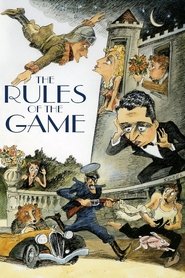
The Rules of the Game (1939)
Renoir's camera never sits still and never plays favorites: it tracks down corridors and drifts between rooms of a French country house, keeping a flirtation at the front of the frame and a quarrel at the back legible at the same instant. Watch how the masters upstairs and the servants downstairs mirror each other's affairs and codes so exactly that the whole house becomes a glittering machine of performance. Notice the Marquis's mechanical toys — a man who collects machines that perform joy on command — and ask what happens when someone tries to step outside their assigned part.
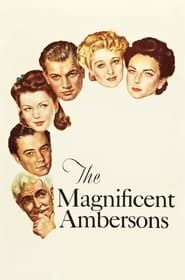
The Magnificent Ambersons (1942)
Welles and cinematographer Stanley Cortez turn a great dark mansion into a lens for grief: the famous staircase shots hold two people on different landings, both knife-sharp, in one unbroken image — together in the frame, worlds apart in time. Cortez's soft, painterly shadows photograph the house as a beautiful thing slowly consuming itself. Watch the ballroom sequence, where mirrors multiply the dancers into a vanished abundance, and how three generations get stacked into a single deep composition — the family seeing itself and remembering itself in the same glance.
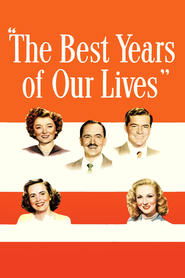
The Best Years of Our Lives (1946)
Three veterans ride home in the glass nose of a bomber, built for nothing but looking down — and that image sets the film's whole question: what happens to men trained to act when the world only asks them to look? Gregg Toland's deep-focus photography lets crucial moments play in the far background while ordinary life fills the foreground; watch the celebrated drugstore scene, where two dramas unfold at opposite ends of one shot without a cut. This is Hollywood craft at its absolute peak, used to show a country that no longer knows what to do with its heroes.

La Terra Trema (1949)
Visconti went to a Sicilian fishing village and cast its actual fishermen, speaking their own dialect — yet composed them with the eye of a painter: silhouetted women on black volcanic rocks, watching the sea for late boats, held longer than any plot requires. Watch how the film builds drama out of the rhythms of real labor — nets, boats, the fixed price of fish — and how the sea itself becomes a character, both livelihood and threat. It's the rare film that is at once raw documentary and formally exquisite, and the tension between those two is the point.
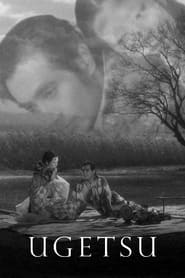
Ugetsu (1953)
Kazuo Miyagawa's camera doesn't cut so much as glide — long, floating tracking shots that follow characters through space and let events accumulate inside a single continuous movement. This is a ghost story told without shock cuts: watch how the film lets the everyday and the uncanny share the same unbroken frame, so you're never entirely sure where one ends and the other begins. Notice, too, how a man's hunger for wealth and beauty and a supernatural enchantment are photographed as the same kind of spell.

Seven Samurai (1954)
Early on, the veteran samurai Kambei crouches and scratches a map of the village into the dirt — a line for the river, a circle around the weak gate — and you should watch the whole film through that gesture: the battle as a problem to be solved, terrain as destiny. Notice how the compositions themselves encode class — samurai framed against sky and high ground, farmers clustered low to the earth — and how the village isn't a backdrop but practically an antagonist. Kurosawa strips sword-fighting of its choreographed elegance and replaces it with mud, rain, fatigue, and speed.
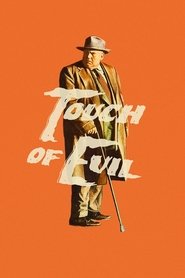
Touch of Evil (1958)
It opens with one of cinema's most famous shots: a car with a bomb in its trunk, followed for three unbroken minutes over rooftops and through border-town traffic, no cut, the whole town breathing as a single motion. Then watch the counter-image: Orson Welles's corrupt cop shot from floor level, wide-angle lens, ceiling pressing down on his head like a fate. This is film noir pushed to its glorious limit — scenes built not from cutting but from actors surging toward and away from a distorting lens.
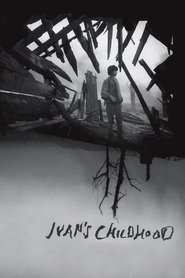
Ivan's Childhood (1962)
Tarkovsky's first feature is built across a fault line, and he wants you to feel the seam: dreams of birch trees, water, and light cut flat — no dissolve, no consoling music — against night reconnaissance missions through mist and reeds. Watch how the deep-focus night photography presses a small boy against vast, threatening skies, and how the dream sequences are lit in the exact opposite register. The hardest cuts in the film are its whole argument about what war does to childhood.
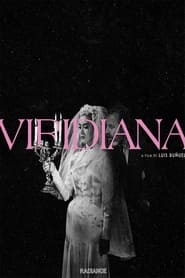
Viridiana (1962)
Buñuel's method is to photograph the strange thing with total plainness, so its strangeness becomes undeniable — José Aguayo's clean, sober, deep-focused images refuse to editorialize even as obsession and blasphemy pile up in front of them. Watch the objects: a skipping rope, a wedding gown, small fetishized things that travel through the film accumulating charge, never once underlined. And watch how a young novice's sincere Christian charity collides with appetites that no amount of virtue can reform.

This Sporting Life (1963)
Anderson opens with a rugby player in a dentist's chair, anaesthetic flooding his skull, and lets memory surface and sink with the drug — so the story arrives out of order, as trauma does. Watch the two registers of the photography: the rugby scenes, chaotic and participatory in a way that anticipates modern sports filmmaking, versus the interiors, where deep pooling shadows isolate people inside a wide frame. It's a film about a man superb at applying force to the world and helpless at everything force can't reach.
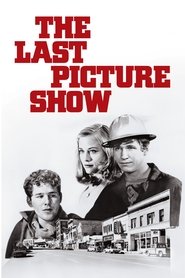
The Last Picture Show (1971)
Bogdanovich, coached personally by Orson Welles on black-and-white discipline, resurrects the deep-focus look of the 1940s to film a Texas town in 1951 — high-contrast skies, wind-blown grit, faces lit by a hard plain light that flatters no one. Watch how he frames people small against flat horizons and weathered storefronts, summoning the imagery of the classic Western only to show the town after the frontier's engine has stopped. The whole film is an elegy for the movies as a shared public ritual, made in the very style it mourns.
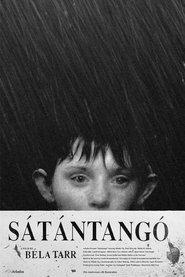
Satantango (1994)
Everything in this set arrives here, at the far edge: a seven-hour film built from shots that run five, eight, ten minutes, following the residents of a collapsed collective farm through rain and mud. The opening take — several wordless minutes tracking alongside a herd of cows shuffling out of a ruined farmyard — teaches you how to watch everything that follows: not for what happens, but for time itself moving through a place. Give yourself to its rhythm and it stops feeling slow; it starts feeling inhabited.
Why watch these together? Because they form a single, decades-long conversation about what a camera owes the world. You'll watch Renoir and Toland invent the deep frame; Welles carry it from mansion to border town; Visconti, Mizoguchi, and Kurosawa prove it could hold whole communities; Tarkovsky, Buñuel, and Anderson turn it inward toward dreams, drives, and damage; Bogdanovich mourn it; and Tarr stretch it until watching itself becomes the drama. By the end, you'll have retrained your own eye — you'll stop waiting for the cut, start reading the whole depth of the frame, and discover how much a film can say when it simply refuses to look away.