Sightlines · a mini film course
The Art of Watching: Twelve Films Where the Camera Refuses to Hurry
Most movies run on a simple engine: a character sees a problem, does something about it, and the doing changes things. The cut exists to hurry you from one deed to the next. The films on this list — from a seven-hour Hungarian epic to a Hollywood thriller with Tommy Lee Jones — all, in their different ways, unplug that engine. Their people see everything and can do almost nothing. What floods into the space where action used to be is looking itself: time allowed to stretch, spaces that become traps or minds, faces held so long they stop performing and start confessing. These are films where the camera watches rather than chases. Learn to watch with it, and each one opens up.
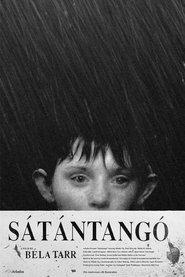
Satantango (1994)
The opening take — several minutes of cows shuffling out of a ruined farmyard, no dialogue, no explanation — is Tarr teaching you how to watch the next seven hours. Shots here routinely run five, eight, ten minutes; the film has remarkably few cuts for its length, so your sense of rhythm shifts from editing to sheer duration, time moving through a ruined place at the speed of an animal with nowhere to go. Notice how decay operates at every level at once: the mud and rain, the dissolving community, the villagers' moral surrender. Tarr learned from Tarkovsky to treat the long take as a vessel for accumulated time rather than delivered information, and from Jancsó to keep figures at a distance on the open Hungarian plain — watch how rarely the film grants you a comforting close-up.
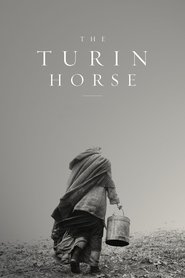
The Turin Horse (2011)
Watch them eat the potato. A father and daughter, a boiled potato each, eaten in silence, and the camera simply holds — you wait the way they wait, and the waiting is the film. Fred Kelemen's black-and-white photography is among the most sustained achievements in contemporary cinematography; the whole film is built from long takes structured across six days, so that collapse isn't described to you but inhabited, felt in your own body as the wind howls and routines repeat. Note the debt to Bresson's Au hasard Balthazar: an animal filmed as bare fact, never as symbol, quietly at the film's spiritual center.
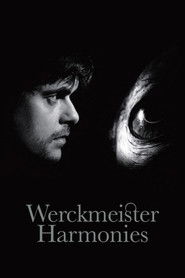
Werckmeister Harmonies (2001)
The opening scene is one of cinema's great single takes: a postman arranges drunken men in a bar to enact a solar eclipse — you be the sun, you the earth, you the moon — and sets them slowly orbiting, nearly ten minutes unbroken. Nothing is accomplished, and everything is established: in this film, meaning arrives through movement and duration, not plot. Watch Lars Rudolph's face — an open, unguarded instrument on which events register rather than a mind that schemes, descended from Tarkovsky's holy fools. The film's deepest question hums underneath: how do systems of order — musical tuning, social hierarchy — carry violence inside them?
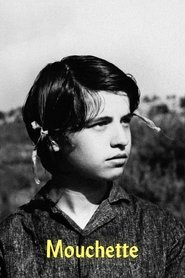
Mouchette (1967)
Start with her hands. Bresson builds this portrait of a persecuted village girl from fragments — hands, gestures, objects — filmed by Ghislain Cloquet in sober, even, overcast light, with a camera that observes rather than dramatizes. Notice the sound: a moped's whine belonging to no image you're shown, off-screen noises carrying as much weight as anything in frame, a technique Bresson pioneered and here perfects. And notice Nadine Nortier's famous blankness — Bresson used non-professional "models" trained to suppress performed feeling, so that what you read in her face is what you bring to it.
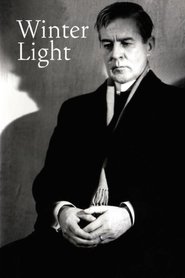
Winter Light (1963)
Early on, Bergman does something almost no filmmaker would dare: instead of cutting to a letter being read, he puts Ingrid Thulin in close-up, speaking directly into the lens, for nearly seven minutes. No music, no reaction shot, no escape. Sven Nykvist's diffused, flat winter light — one of the most recognizable visual signatures in art cinema — lies on faces like a verdict, refusing all glamour. This is a chamber drama about a pastor performing the forms of faith after the content has drained away; watch how the film asks whether that performance is hypocrisy, endurance, or something with no name yet.
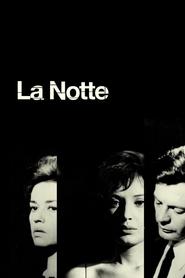
La Notte (1961)
Watch what holds the center of the frame: not the people, but Milan — glass curtain walls, brutalist towers, half-finished buildings — photographed by Gianni Di Venanzo as active presences while the characters drift to the edges, small and almost incidental. A woman leaves a party and walks through the city; you keep waiting for the walk to lead somewhere, and it doesn't, and that's the engine of the film. This is where Italian cinema broke from neorealism's social document toward something new: the body in space rather than the body in society. A celebrated novelist with nothing left to write, a wife who understands him too well — watch how the film makes seeing itself the drama.
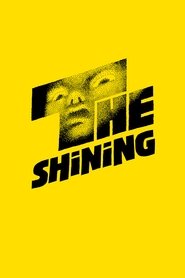
The Shining (1980)
A boy pedals a trike through an empty hotel, and Garrett Brown's brand-new Steadicam floats behind him inches off the floor — carpet, hardwood, carpet, the wheels going loud and soft as you brace for each corner. Kubrick took a device built to smooth shaky footage and turned it into a way of thinking. Notice John Alcott's one-point-perspective compositions, corridors receding to a single vanishing point in bright, unnerving clarity — the Overlook rendered not as gothic shadow but as luminous, impossible geometry. Viewers have tried to map this hotel for decades and failed; that failure is the point. The building isn't a setting the family moves through. It's a mind they're moving inside.
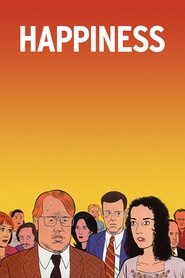
Happiness (1998)
Solondz's great invention here is flatness raised to an ethic. Maryse Alberti lights every interior — the tender and the terrible alike — with the same even, clinical, household brightness; Solondz frames his ensemble frontally and holds shots past comfort, giving the actors nowhere to hide and you no visual cue for how to feel. Nothing in the image judges, which means you have to. Watch how the Altman-style mosaic structure — many suburban lives intercut, meaning made by juxtaposition rather than cause and effect — turns a network of isolated people into a single diagnosis.
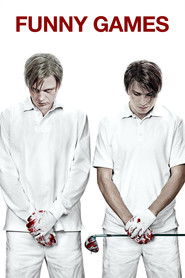
Funny Games (2008)
Haneke made this film twice — the 2008 version is a near shot-for-shot translation of his own 1997 Austrian original — because he wanted American audiences, specifically, to see it. Darius Khondji's cinematography pursues deliberate neutrality: wide, stable compositions in which nothing in the geometry warns you of danger. Notice the casting as technique: recognizable stars in a holiday house, every genre signal loaded and lit. The film's subject is you — the argument that watching violence for pleasure is never innocent — and it makes that argument directly, formally, through what it shows, what it withholds, and one small object on a sofa you'll know when you see.
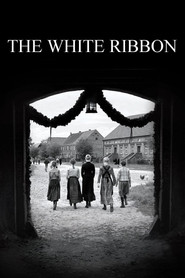
The White Ribbon (2009)
Start with the wire: an injury shown, a cause withheld. Someone in a German village on the eve of the First World War is doing terrible things, and Haneke — via Monika Willi's editing — systematically ends scenes before their discharge, rejoining them in the flat aftermath, a technique inherited straight from Bresson. Christian Berger's camera barely moves, locked off at a middle distance that refuses both intimacy and spectacle, stripping every trace of period-drama nostalgia from Wilhelmine Germany. Watch the village's hierarchies — landowner over farmer, pastor over child, man over woman — and watch how the not-seeing gradually becomes the subject.
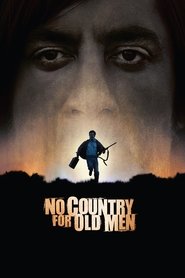
No Country for Old Men (2007)
The film's most celebrated scene is a coin toss on a gas-station counter: nothing moves except the talk and the fluorescent light, and a tension with nowhere to go. You watch the way the proprietor watches — unable to act. Roger Deakins's cinematography is strategic restraint: long lenses compressing figures against featureless desert, landscape as participant rather than backdrop. Notice the sound design working in the tradition of The Conversation — ambient rustle and room tone as the instruments of dread, in place of a conventional score. The Coens honor every mechanic of the crime thriller and quietly refuse its promises; watch for the moments the genre's machinery simply declines to run.
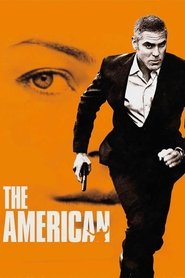
The American (2010)
Corbijn loves to film Clooney from behind — a small figure walking into a wedge of medieval stone street, the walls converging like a vise. The town is beautiful, and it is a trap, and the film knows the difference is only a matter of where you're standing. Stop waiting for the chase; there isn't one. What there is instead is ritual — a professional making coffee, checking exits, filing steel in near silence — in the lineage of Melville's laconic hitmen, with the Leone-like patience of the held wide shot (a Leone film literally plays within the film). Action, when it comes, is over in a second. The watching is everything.
Watched together, these twelve films train a muscle most cinema lets atrophy. Once you've sat with Tarr's cows and Bergman's seven-minute face, the coin toss in No Country and the potato in The Turin Horse reveal themselves as the same wager made in different registers: that duration itself carries meaning, that a held shot can do what a hundred cuts cannot, that people who can only watch and endure may show us more than heroes who act. You'll start noticing the lineages — Bresson's hands and withheld cruelties flowing into Haneke, Jancsó's choreographed plains into Tarr, Dreyer's faces into Bergman — and you'll start noticing something else, too: your own habits as a viewer, your hunger for resolution, your bracing at every corner. These films know you're watching. The best of them are watching back.