Sightlines · a mini film course
The Cinema of Watching: Twelve Films Where Seeing Replaces Doing
Most movies are engines. A character sees a problem, acts on it, and the action pushes the story forward — see the villain, chase the villain, catch him. The films on your list belong to a different tradition entirely. In these, the characters mostly can't act — they wait, drift, witness, endure — and the camera does the same. It watches rather than chases. Shots stretch far past the point where an ordinary film would cut, and something remarkable happens in that stretch: time itself becomes the subject. You feel it passing in your own body. These twelve films, made across sixty years and half the globe, all wager that a person reduced to looking is not less interesting than a person taking action — that watching, done with enough patience, becomes its own kind of drama.

Wild Strawberries (1957)
Bergman opens with one of cinema's great dream sequences: a deserted street, blinding white light, and a clock with no hands. That handless clock is the film's thesis — time unhooked from schedules and appointments, become something an aging man can only stand inside and contemplate. Watch how cinematographer Gunnar Fischer quietly shifts the light between the film's layers: soft, naturalistic tones for the present-day car journey, something stranger for dream and memory. The structural trick — a man observing scenes from his own past like an uninvited ghost — comes straight from Victor Sjöström's silent classic The Phantom Carriage, and Bergman completes the circle by casting Sjöström himself in the lead.
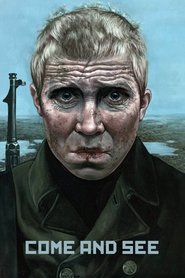
Come and See (1985)
Klimov strips the war film of everything war films usually offer: no epic geography, no legible tactics, no heroics. Instead the camera presses wide-angle lenses within centimeters of young Florya's face, so that atrocity often reaches you through his reactions before — or instead of — direct depiction. Watch that face across the film: nothing in the plot ages him, and yet the aging is real, shot into the actor's body over months of grueling production. It's a deliberate demolition of the lyrical Soviet war film (The Cranes Are Flying was the exact template Klimov set out to break), replacing redemptive sacrifice with pure, helpless witness.
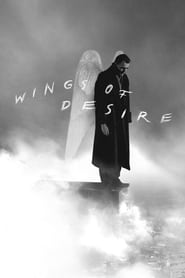
Wings of Desire (1987)
Wenders builds his film around beings who perceive everything and can act on almost nothing — angels drifting through Cold War Berlin, hearing the private murmur inside every mind. Watch Henri Alekan's gliding, frictionless Steadicam: it moves the way the angels move, weightless through the great library reading room, and it registers every texture of the mortal world the angels cannot touch. The famous color scheme — silvered black-and-white for the angels' plane, color for the human one — is inherited from Powell and Pressburger's A Matter of Life and Death, and it's an argument, not decoration: it makes the case for the perishable over the eternal, for skin and coffee over perfection.
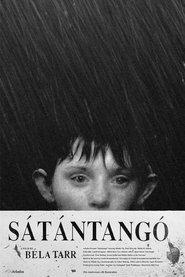
Satantango (1994)
Seven hours, black and white, remarkably few cuts. Tarr's film opens with several unbroken minutes of cows shuffling out of a ruined farmyard, and that opening is a lesson in how to watch everything that follows: not for events, but for time moving through a decaying place. Watch how the extreme long take becomes the film's basic unit of meaning — mud, rain, and rot rendered at the speed of lived experience — a method Tarr inherited from Tarkovsky's Stalker and from Jancsó's choreographed sweeps across the Hungarian plain, then pushed further than anyone had in a narrative feature. Don't fight the duration; it's doing the work.
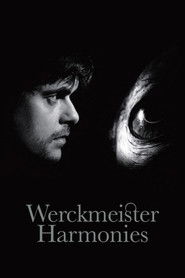
Werckmeister Harmonies (2001)
The opening sequence alone justifies the film: in a provincial bar at closing time, a gentle postman arranges drunken men into a working model of a solar eclipse — you be the sun, you the earth, you the moon — and they orbit in slow ritual circles, in one fluid take of nearly ten minutes. Nothing is accomplished, and everything is expressed. Watch how Tarr channels menace through atmosphere and duration rather than event: political catastrophe arriving as weather, not plot. And watch Lars Rudolph's open, unguarded face — a holy-fool witness in the tradition of Tarkovsky's Andrei Rublev, a screen on which the town's darkness registers.
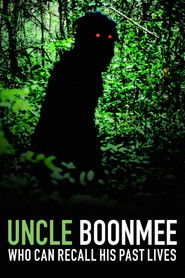
Uncle Boonmee Who Can Recall His Past Lives (2010)
There is a dinner scene here — low lamplight, a family talking on a veranda — where the extraordinary enters the frame by slow degrees, and nobody screams. That's the film's whole method: the supernatural treated with the calm courtesy you'd extend a guest. Watch how the camera stays patient, static or barely mobile, and how Sayombhu Mukdeeprom's photography preserves real darkness, letting shapes surface out of the night like a photograph developing. Apichatpong borrows the costume-monster look of older popular media and drains it of fear entirely — no music stings, no shock cuts — so that wonder lands precisely because no one onscreen treats it as wonder.
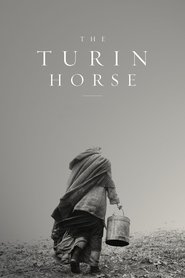
The Turin Horse (2011)
Six days, a father, a daughter, a horse, a farmhouse, and wind. Tarr builds the film from long takes of daily ritual — fetching water, dressing, eating the nightly boiled potato — and lets repetition do what plot usually does. Watch the potato scene: he eats fast and angry with his one good hand, she eats slowly, nothing is explained, and the camera holds until you're waiting alongside them. Fred Kelemen's black-and-white photography is among the most sustained achievements in contemporary cinematography, and the film's treatment of an animal as its quiet spiritual center descends directly from Bresson's Au hasard Balthazar. This is entropy made watchable — collapse experienced as lived time rather than described.

Kaili Blues (2016)
Somewhere in the middle of Bi Gan's debut, the camera climbs onto the back of a motorbike and doesn't cut for roughly forty minutes — crossing a river by boat, riding a cable car up a green hillside, doubling back through crooked village streets. Watch what that unbroken take does to your sense of when you are: the film keeps meeting people who shouldn't share the same afternoon, and past, present, and possible future begin to coexist inside a single continuous shot. It's the boldest recent extension of a lineage running from Tarkovsky's Stalker through Tarr's Sátántangó — the conviction that the length of a shot is a moral stance, not a stylistic flourish.
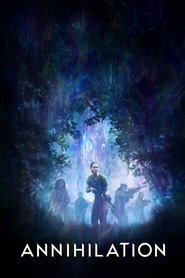
Annihilation (2018)
Garland arms his protagonist with every competence a thriller could want — soldier, cellular biologist — then places her inside a zone where competence has nothing to grip. Watch the mirrored deer: two animals moving in perfect unison, unexplained, and the expedition can only look. That stalled attention is the film's signature. Rob Hardy shoots the Shimmer as a soap-bubble membrane, greens pushed toward the toxic, everything oily and refracted, and the structure is borrowed knowingly from Tarkovsky's Stalker — a rule-warping zone entered by a small expedition — with a finale that echoes 2001's surrender of story to pure image and sound.
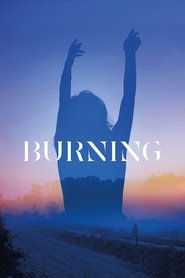
Burning (2018)
Lee Chang-dong's masterstroke is a well that may or may not exist — attested by one witness, denied by another, never shown. Watch how the film keeps handing you these unresolvable holes and refuses to fill them, a structure inherited from Antonioni's L'Avventura. Watch, too, Yoo Ah-in's deliberately blocked, near-absent performance — a flatness borrowed from Bresson's Pickpocket to register a young man estranged from his own life — and Hong Kyung-pyo's unhurried compositions of the Paju farmland near the DMZ, rendered without any picturesque softening. The class argument here is made entirely through form: through who gets watched, and who remains untouchable.
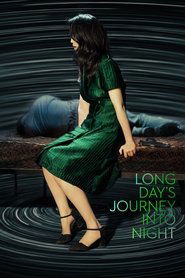
Long Day's Journey Into Night (2018)
About an hour in, the screen goes dark, the title card finally appears, and the film asks you to physically put on 3D glasses — at which point the image swells into depth and the camera does not cut for fifty-nine minutes. That small gesture in the dark, fingers to temples, makes you a participant in the crossing. Watch how the first half handles memory: a lyric voiceover hovering over images that refuse to anchor to any timeline, a device Bi Gan takes from Tarkovsky's Mirror, while the architecture-as-frozen-memory owes a debt to Last Year at Marienbad. Two kinds of cinema in one film, hinged on an act you perform yourself.
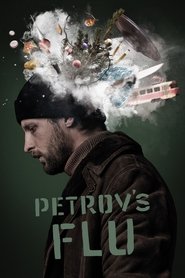
Petrov's Flu (2021)
Serebrennikov's fever-dream follows a flu-ridden man carried — literally slung over shoulders, ferried between buses, apartments, and stranger vehicles — through a post-Soviet city where reality's boundaries have gone porous. Watch Vladislav Opelyants's roving long takes, which glide from a crowded bus into a full-blown fantasy and back without an edit, so the seams between delirium and fact are impossible to find. The recurring New Year's party and the Snow Maiden's famously cold touch anchor a film obsessed with Soviet childhood memory, and the tactile, teeming chaos of the camera work descends from Alexei German's Khrustalyov, My Car! and Hard to Be a God. Note how often the protagonist goes still while the world sweeps past him — absorbed by the dance rather than leading it.
Watch these together and you'll start to feel the family resemblance in your own body: the moment, in each film, when you stop waiting for the next event and start attending to what's actually in front of you — light on a face, wind in a landscape, the exact weight of a held silence. That recalibration is the point. These filmmakers pass techniques down a visible lineage — Sjöström to Bergman, Tarkovsky and Jancsó to Tarr, Tarr and Tarkovsky to Bi Gan, Bresson to Lee Chang-dong, Stalker to Garland — but what they share is deeper than technique. It's a bet that a viewer, given time instead of plot, will discover they can see more than they knew. Twelve films, one invitation: slow down and look.