Sightlines · a mini film course
The Cinema of Watching: Twelve Films Where Looking Becomes the Story
Most movies run on a simple engine: a character sees a problem and does something about it. The cut hurries us from crisis to response. The twelve films below all, in their different ways, switch that engine off. Their people — a gossip journalist, a contract killer, an elderly couple, a silent actress, a director who can't start his film — keep seeing, but seeing stops converting into action. What fills the space instead is time itself: long takes that let a shot breathe past its usefulness, landscapes that dwarf or trap their figures, faces held until they stop giving information and start giving weather. This is not slowness for its own sake. It's a wager that if the camera watches rather than chases, you will start noticing what stories usually rush past — decay, distance between people, the strange texture of waiting. Watch these in any order; they will start talking to each other almost immediately.
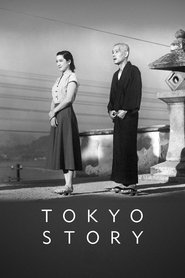
Tokyo Story (1953)
The quietest revolution here. Ozu mounts his camera about fifty centimetres off the floor — the sightline of someone seated on a tatami mat — and barely moves it. Between scenes he cuts to shots of nothing: chimneys, hanging laundry, a passing train, held a few seconds past any narrative use. Notice how these "empty" images accumulate a feeling no dialogue scene could deliver — a gentle awareness of time passing that the Japanese call mono no aware, the pathos of transient things.
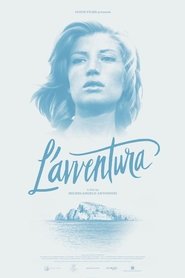
L'Avventura (1960)
Antonioni sets a mystery in motion — someone vanishes on a volcanic island — and then does something no film had quite dared: he lets the search lose interest in itself. Watch the framing. People drift to the edges of shots, get obscured by walls and columns, are dwarfed by rock and sea until they read as small marks on stone. The landscape isn't a backdrop; it's the film's way of showing you how far apart two people standing side by side can be.
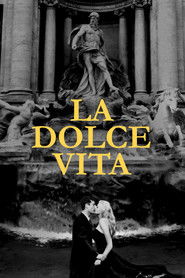
La Dolce Vita (1960)
It opens with a statue of Christ dangling from a helicopter over Rome, while a journalist in a second helicopter mimes flirtation at sunbathing women — and the rotor noise swallows every word. That's the film in miniature: a man who sees everything and can act on none of it. Watch Marcello Mastroianni's performance of intelligent, helpless receptivity, and watch how Otello Martelli's hard, bleached lighting flattens celebrities into photographic surfaces — the paparazzi's world rendered in its own currency.
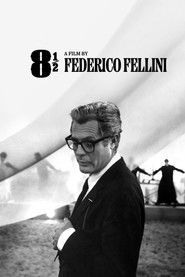
8½ (1963)
Fellini's film about a director who can't make his film moves between reality, memory, and daydream with no warning whatsoever — no dissolve, no misty edges, no musical cue. The cut from the present to a childhood bath is as hard and matter-of-fact as a cut between two rooms. Watch for those missing seams: Gianni Di Venanzo shoots everything on the same continuous silver, so you're never told when you've left the world for someone's head. Learning to swim in that is the film's great pleasure.
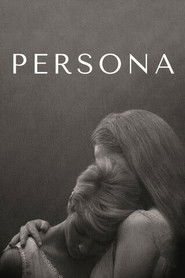
Persona (1966)
Two women, one house, and the human face as an entire landscape. Sven Nykvist lights Bibi Andersson and Liv Ullmann with a severe window-light naturalism and holds their faces in extreme close-up past the point of expression — until you stop reading them for information and start reading them like weather. One woman talks; the other has gone silent. Watch what speech becomes when it's poured into someone who won't reply.
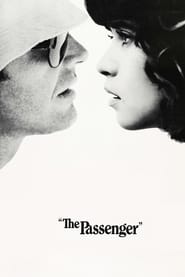
The Passenger (1975)
A reporter makes the single most consequential choice a person can — and Antonioni films it with the calm of a man watering plants. No music swells; no close-up hammers the moment home. That flatness is the point. Watch how Luciano Tovoli's palette shifts with geography — bleached Saharan whites, muted northern grays — and how the editing slackens exactly where a conventional thriller would tighten. The film wears the clothes of suspense while quietly asking whether a new name delivers anything but a new trap.
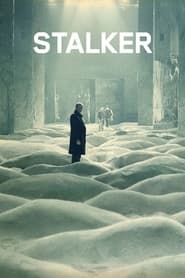
Stalker (1979)
Three men journey into a forbidden zone that supposedly grants your deepest wish — and once they arrive, they mostly sit in wet grass and argue. Tarkovsky's camera moves with geological patience: watch the long drift over a riverbed of submerged objects — coins, a syringe, a torn scrap of a religious painting — that refuses to resolve into a clue or a symbol. You keep waiting for the shot to mean something, and slowly the looking itself becomes the substance of the film.
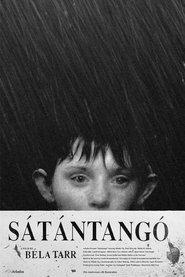
Satantango (1994)
Béla Tarr's seven-hour monument opens with cows shuffling out of a collapsing farmyard in one long, unbroken tracking shot — no dialogue, no explanation — and by the time the take releases you, it has taught you how to watch everything that follows. Individual shots run five, eight, ten minutes; watch how the rain, the mud, and the rotting buildings become as expressive as any actor. This is duration as an experience, not a delay: time moving through a ruined place at the speed of an animal with nowhere to go.
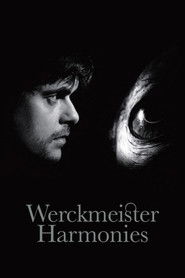
Werckmeister Harmonies (2001)
The opening alone justifies the ticket: at closing time in a provincial bar, a gentle postman arranges drunken men into a working model of a solar eclipse — you be the sun, you the moon — in a single fluid take of nearly ten minutes. Nothing is "accomplished," and everything is said. Watch Lars Rudolph's face throughout the film: transparent, unguarded, a surface on which events register rather than a mind that schemes. Tarr builds dread not through events but through atmosphere and duration — the feeling of order slowly failing.
Synecdoche, New York (2008)
A theater director rents a warehouse and builds a full-scale replica of his own life, hiring an actor to play himself — then an actor to play that actor. Watch how Frederick Elmes (who shot Eraserhead and Blue Velvet) photographs the impossible with unhurried, autumnal calm: a house that is casually, permanently on fire gets the same lighting as a kitchen sink. The uncanny is never flagged, and that flat acceptance is the door into the film. The model is meant to represent the life; watch the boundary between them go quietly porous.
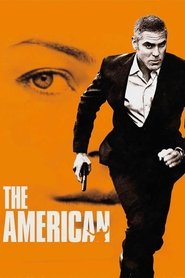
The American (2010)
Corbijn loves to film George Clooney from behind — a small figure walking into a wedge of medieval stone street, the walls converging like a vise. Stop waiting for the chase; there isn't going to be one in the sense the trailer promised. Instead: routines, exits checked, a piece of steel patiently filed, long wordless stretches of craft descended from Melville's ritualistic loner-killers. The town is beautiful and the town is a trap, and the film knows the difference is only where you happen to be standing.
Burning (2018)
There's a well on a family farm — or there isn't. One person swears it existed; another swears it never did; the film declines to show you. Lee Chang-dong builds an entire slow-burn thriller out of that kind of hole: Hong Kyung-pyo's unhurried compositions refuse to telegraph meaning, and Yoo Ah-in plays the protagonist with a blocked, near-absent affect — a young man who watches and watches, while the watching never converts into anything that resolves. Watch, too, what the film says about class: how wealth makes some people immune to consequence and others nearly invisible.
Watched together, these films train a muscle. The lineage is real and traceable — Tarkovsky's patient long takes feed Tarr; Antonioni's unsolved disappearance echoes in Burning; Fellini's blocked director is the direct ancestor of Kaufman's; Bergman's merging selves haunt Synecdoche; Melville's silent professionals stand behind Corbijn's killer. But the deeper reward is what happens to your own attention. After a few of these, you stop asking "what happens next?" and start asking better questions: what does this shot feel like to inhabit? What is the space doing to these people? What does a face say when it stops performing? These are films made by directors who trusted that watching — real watching, sustained past comfort — is not the absence of drama but its purest form. Give them the time they ask for, and they give it back transformed.