Sightlines · a mini film course
The Cinema of Watching: When Action Fails and Seeing Begins
Something happened to movies in the rubble of postwar Europe, and this set of films traces it like a fault line. The old grammar — a hero sees a problem, acts, and fixes it — stopped working when the world itself seemed too broken to fix. What replaced it was a cinema of witnesses: people who see everything with terrible clarity and can do almost nothing about it. A father searching for a bicycle, a prince watching his world dissolve, a girl at a bumper-car rail, a woman on a factory floor. In these films, the camera watches rather than chases. Time is allowed to stretch. Faces are held long past the point where an ordinary film would cut away, because the face itself — not the plot — is where everything happens. Watch these twelve films together and you'll see a lineage: an idea born in occupied Rome, tested and deepened across two decades of Italian cinema, then carried into France, Hungary, and finally a New York-bound airliner in 2004.

Rome, Open City (1945) — dir. Roberto Rossellini
This is where it starts: shot in Rome's actual streets in the immediate aftermath of occupation, with framings that feel caught rather than composed — figures grabbed mid-gesture, focus shifting as if the camera is discovering the scene along with you. Watch for how Rossellini refuses the tidy rules of melodrama; the film is willing to do things to sympathetic characters that studio pictures simply never did, and that willingness changes what you believe a movie can do. Notice too the moral spine: a Communist and a Catholic priest bound together against a common enemy, without sentimentality.
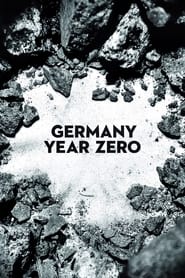
Germany, Year Zero (1948) — dir. Roberto Rossellini
Rossellini takes his camera to bombed-out Berlin and refuses to make the ruins beautiful — no dramatic shadows, no picturesque framing, just grey light flattening wreckage into fact. Watch for the film's astonishing patience with its child protagonist: long stretches where he simply walks, sits, plays amid the rubble, doing nothing that "advances" the story. Notice what the music does — and when it withdraws, leaving only ambient city sound. That withdrawal is the film's boldest gesture.
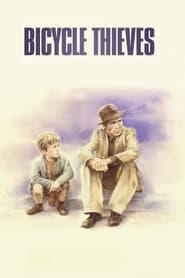
Bicycle Thieves (1948) — dir. Vittorio De Sica
The most famous image of a man who sees his catastrophe perfectly and can do nothing adequate about it. Watch how De Sica's camera refuses to prettify poverty — no tilted angles, no expressive shadows, just bodies held inside social space, with close-ups saved for rare moments that earn them. The bicycle itself is the whole postwar economy in one object: to own it is to work; to lose it is disaster. Notice how the search structures the film as a single day moving through Rome's social geography, one encounter at a time.
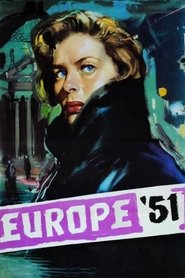
Europa '51 (1952) — dir. Roberto Rossellini
A bourgeois woman is jolted out of her comfortable distraction and begins truly seeing the suffering around her — and the film asks what that kind of attention costs. Watch the assembly-line sequence: the camera simply holds on her face as the machine hands her one repeated motion, and nothing gets decided, and something in her tips over anyway. Rossellini's camera observes rather than intervenes, holding on faces longer than conventional editing would allow. This is where "just looking" becomes the most dramatic act in the frame.
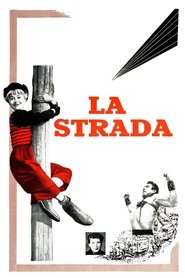
La Strada (1954) — dir. Federico Fellini
Watch Giulietta Masina's face — that's the whole assignment. Fellini holds it in plain, even light, refusing to tell you whether to laugh or grieve, and her expression simply persists where another film would cut to what she'll do next. Her physical vocabulary comes straight from Chaplin: a single held look loaded with comedy and devastation at once. Notice how the film moves between two textures — the grainy, overcast naturalism of the roads and countryside, and something more heightened in the circus scenes — as it drifts from social realism toward fable.
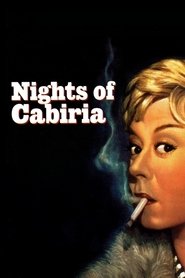
Nights of Cabiria (1957) — dir. Federico Fellini
Fellini builds the film as a series of episodes in which his heroine's actions reveal her situation without ever transforming it — she is stripped of money, dignity, hope, and somehow reconstitutes herself each time. Watch the tension in Aldo Tonti's photography between raw location grit (harsh headlights on Rome's periphery roads) and something more charged and theatrical. And stay alert in the final minutes for one of cinema's great uses of a face — and where that face chooses to look.
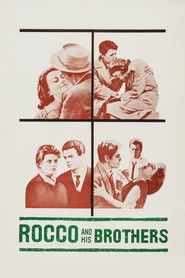
Rocco and His Brothers (1960) — dir. Luchino Visconti
Visconti grafts opera onto documentary: watch the film shift between grainy social realism — wet Milanese pavements, fog, unfinished apartment blocks greeting a southern family arriving north — and charged, high-contrast light that lifts key scenes toward tragedy. Notice how the most riveting figure is often the one watching: Alain Delon plays absolute goodness as a kind of paralysis, and Visconti frames his stillness as the most active thing on screen. This is neorealism's method turned toward family saga and moral catastrophe.
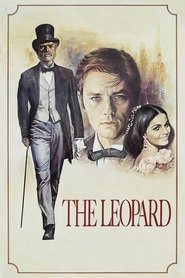
The Leopard (1963) — dir. Luchino Visconti
Visconti and cinematographer Giuseppe Rotunno built the film's look on 19th-century Italian painting — watch how the early villa sequences glow with a warm, canvas-like light. The protagonist is the seer in aristocratic form: a prince who understands the death of his world more completely than anyone else, and whose deepest act is comprehension itself. Watch for the celebrated ball sequence, where the camera moves through the crowd like a dancer, and for a quiet moment when Don Fabrizio steps away to a mirror — a whole film in a single look at a reflection.
Red Desert (1964) — dir. Michelangelo Antonioni
Antonioni had the grass along the refinery road painted grey — the landscape is authored down to the chlorophyll to match the inside of his heroine's head. Watch Monica Vitti's performance: not numbness but flooding, a face in constant micro-attention, registering steam, engine-throb, industrial sound she cannot discharge into any deed. Carlo Di Palma's telephoto photography flattens Ravenna's petrochemical corridor into abstract fields of color. The film's radical proposal: her distress may be the accurate response to this world.
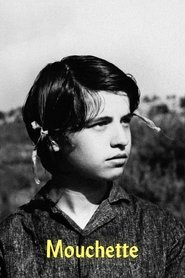
Mouchette (1967) — dir. Robert Bresson
Bresson works with non-professional "models" drained of performed emotion, building his film from isolated gestures — hands, objects, fragments of bodies — in even, overcast light. Watch how sound carries as much weight as image: off-screen noises, a moped's whine belonging to nothing you can see. And watch the bumper-car scene, where a girl who is given nothing anywhere else in her life is briefly, wordlessly allowed something like joy. The famous blankness of the lead's face isn't amateurism; it's the method, and it asks you to do the feeling.
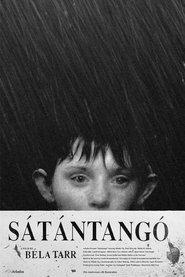
Satantango (1994) — dir. Béla Tarr
The postwar idea taken to its furthest edge: seven hours, black and white, built from shots that routinely run five, eight, ten minutes without a cut. The opening — several minutes tracking alongside a herd of cows shuffling out of a collapsing farmyard, no dialogue, no explanation — teaches you how to watch everything that follows: not for what happens, but for time itself moving through a ruined place. Watch how mud, rain, and decay operate at every level of the frame, and how Tarr inherits Jancsó's Hungarian tradition of figures distributed across the open plain, held at a distance, never rescued by a close-up.
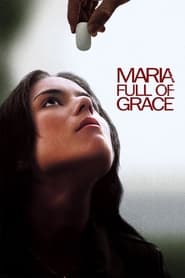
Maria Full of Grace (2004) — dir. Joshua Marston
Proof the lineage is alive: Marston takes the drug-trafficking picture — the most action-hungry genre there is — and drains the action out until only a body carrying its cargo remains. Watch Jim Denault's handheld camera stay close to faces and unglamorous spaces: a flower greenhouse, a sealed airplane cabin, a fluorescent customs hold. Watch her throat — the film is organized around the small muscular act of swallowing and enduring. The debt to Bicycle Thieves and the Dardenne brothers is direct: an unknown lead, ordinary economic entrapment, smuggling treated not as crime spectacle but as labor.
Watched together, these films train you in a different way of seeing. The early Rossellini pictures break the old machinery; De Sica and Fellini find the human faces stranded inside the breakage; Visconti and Antonioni discover that even princes and the prosperous can be witnesses rather than actors; Bresson strips the method to its spiritual bone; Tarr stretches it across seven hours of Hungarian mud; and Marston proves it can still carry a twenty-first-century story through an airport customs line. The reward for your attention is a recalibrated eye. You'll stop asking "what happens next?" and start noticing what these filmmakers actually built: the held face, the unbeautified ruin, the sound that belongs to no image, the shot that refuses to let you go. That's not slower cinema. It's cinema asking you to become the kind of watcher its characters already are.