Sightlines · a mini film course
The Cinema of Watching: When the Camera Refuses to Blink
There's a kind of film where the hero sees a problem and fixes it — where every shot pushes toward the next act, and the editing hurries you along like a tour guide with a schedule. The eleven films below belong to the other kind. In each of them, someone looks at the world and cannot change it — a pastor, a postman, a donkey, a dying man on a veranda — and the film, rather than cutting away, stays. The camera watches rather than chases. Time is allowed to stretch until you feel it passing in your own body. Faces are held past the point of comfort until a flicker of feeling becomes the main event. Watched together, these films teach you a different way of paying attention: not "what happens next?" but "what is happening right now, in this light, in this face, in this room?" That shift is the whole course.
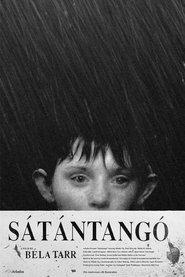
Satantango (1994)
Tarr builds this seven-hour epic out of astonishingly few shots — single takes that run five, eight, ten minutes, following villagers through mud, rain, and a collapsing collective farm. Watch the famous opening: several minutes tracking alongside a herd of cows shuffling out of a ruined farmyard, no dialogue, no explanation. It's a lesson in how to watch everything that follows — at the speed of an animal with nowhere to go. Notice how decay operates at every scale: the rotting buildings, the dissolving community, the moral surrender, all rendered in deep-focus black and white.
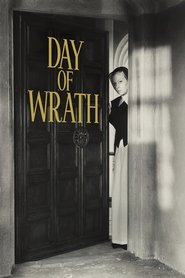
Day of Wrath (1943)
Dreyer lights faces like Rembrandt — white linen and pale skin emerging from deep shadow — and then holds on them long after the scene's business seems finished. Watch what happens in those held moments: tiny movements gathering under the stillness, a thought crossing a face before its owner has admitted it. In one register you get portrait-like calm; in another, a slow tipping-point building beneath the surface. Set in a world of witch-persecution and religious dread, this is a film about how a community projects its fear onto the vulnerable — and Dreyer makes you read it all in eyes and mouths.
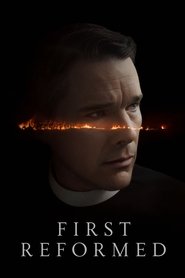
First Reformed (2018)
Schrader locks the camera down in frontal, symmetrical compositions — a man at a bare desk, writing in a journal, framed as squarely as the white church he keeps. Because stillness is the rule, movement becomes an event: when the camera finally does move, feel the weight it carries. Watch the long counseling scene between the pastor and a despairing young activist — two figures in a fixed frame, no cutting back and forth for reactions — and notice how much tension a refusal to cut can generate. The film's lineage runs straight back to Bresson and Bergman's dramas of clerical doubt, transplanted into an America of ecological dread.
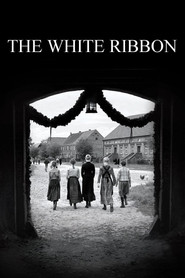
The White Ribbon (2009)
Haneke's great structural gamble: the film gives you injuries and withholds causes. A wire is strung across a path; we see the fall, never the hands that tied it. Watch how the editing ends scenes before their emotional discharge — a punishment approaches and the door closes on it; we rejoin an interrogation in its flat aftermath. The locked-off camera sits at a middle distance, refusing both intimacy and spectacle, while a pre-WWI German village organizes itself around obedience and hierarchy. The not-seeing is the subject.
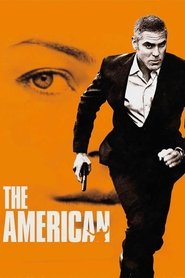
The American (2010)
Corbijn, a photographer by training, films George Clooney's hitman small within converging medieval stone streets, so the beautiful town becomes a slowly tightening vise. Stop waiting for the chase — there isn't one in the usual sense. Instead, watch the ritual: exercises, coffee, the patient filing of a piece of steel, long wordless sequences of a professional at his craft, in the tradition of Melville's laconic killers. Notice the butterfly motif, and notice how the film — which even screens Once Upon a Time in the West within itself — turns stillness and waiting into the dramatic event.
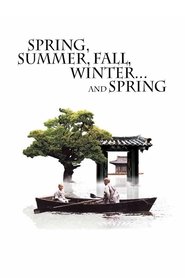
Spring, Summer, Fall, Winter... and Spring (2003)
Kim Ki-duk trained as a painter, and it shows: a floating temple centered on a lake, encircled by mountains, composed in symmetrical, frontal tableaux that shift palette with the seasons. Watch how little is spoken — meaning is pushed onto water, wind, birds, the creak of a rowboat. And watch how the film thinks in weight: lessons here are never abstract but carried in the body, stones tied to living creatures, burdens that don't come off. The seasonal structure insists that stages of life recur; keep that circularity in mind as you watch.
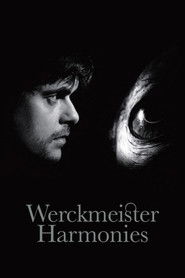
Werckmeister Harmonies (2001)
The opening sequence is one of cinema's great single takes: at last call in a provincial bar, a gentle postman arranges drunken men into a working model of a solar eclipse — you be the sun, you the earth, you the moon — and sets them slowly orbiting under a single bulb, nearly ten minutes without a cut. That's the film in miniature: bodies set in motion, time allowed to pass, meaning arriving through movement rather than plot. Watch the protagonist's face — played with transparent, unguarded wonder — as a surface on which events register rather than a mind that schemes. The film renders political catastrophe through atmosphere and duration, never through spectacle.

Salò, or the 120 Days of Sodom (1976)
A warning first: this is the most punishing film here, Pasolini's reckoning with fascism as power that consumes bodies. What makes it endurable as art is precisely its formal control. Watch how coolly it's shot — measured medium and wide shots, even, undramatic lighting, like an official document. The structure borrows Dante's descent through circles rather than any narrative arc. And watch how the film handles distance: the horror lives less in what's shown than in the polished rooms, the tasteful furniture, the civilized connoisseurship of the men in charge. Decorum as the crust over pure appetite.
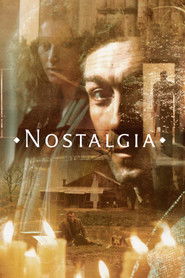
Nostalgia (1983)
Tarkovsky's film about exile contains one of the medium's great sustained shots: a man trying to carry a lit candle across a drained thermal pool, the flame guttering in the steam, forced to start over, nine minutes in a single take. Real precariousness, not a simulation of it. Nothing is "happening"; everything is at stake. Watch how the film shifts between color and monochrome registers — a technique carried over from Mirror — and how figures are placed small and eccentric within wide, water-saturated, fog-threaded frames. This is homesickness as metaphysics: the self as a place you can't return to.
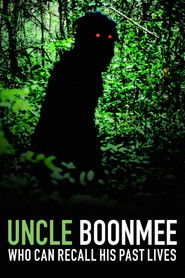
Uncle Boonmee Who Can Recall His Past Lives (2010)
Watch the dinner on the veranda. In low oil-lamp light, a chair that was empty is slowly no longer empty — a dead wife surfacing out of the dark like a photograph in a developing bath — and then a lost son returns from the night in a stranger form entirely. Nobody screams. Food is passed. The wonder lands because no one in the frame treats it as wonder. Apichatpong lights interiors to preserve real darkness and holds shots past the point where a normal film would cut, letting ghosts, memory, and reincarnation share the frame with family small talk as if that were the most natural thing in the world. It becomes the most natural thing in the world.
Au Hasard Balthazar (1966)
Start with the eyes: Bresson keeps cutting to tight close-ups of a donkey's dark, wet, unreadable gaze. We lean in for a reaction and find none — and that refusal carries the whole film. Balthazar passes from owner to owner through a fallen rural world, absorbing everything, answering with nothing we can read. Notice Bresson's method: non-professional performers ("models," he called them) drained of theatrical expression, images fragmented into hands, feet, and gestures, isolated sounds — clinking, footsteps, scraping metal — doing narrative work that other films would give to dialogue. This is the wellspring: half the directors in this program drank from it.
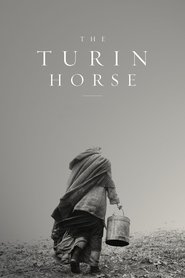
The Turin Horse (2011)
Watch them eat the potato. A father tears at it fast and angry with his one good hand; his daughter eats hers slowly; nothing is explained; the camera holds. Tarr's final film builds 146 minutes from a handful of takes across a six-day structure, in some of the most sustained black-and-white cinematography of the contemporary era, and it asks you to inhabit a world running down rather than receive information about it. The wind, the well, the lamp, the horse: you don't watch entropy here, you wait inside it. The waiting is the film.
Why watch these together? Because each one retrains your attention for the next. Dreyer teaches you to read a held face; then Bresson shows you a face that refuses reading, and you discover how much you'd been depending on performance. Tarr teaches you to feel a ten-minute take as lived time; then Schrader's locked-off frames feel charged rather than empty, and Haneke's withheld cuts feel like violence. The lineages are real and traceable — Bresson feeds Tarr and Haneke and Schrader; Dreyer feeds Bresson and Haneke; Tarkovsky feeds Tarr — so you're not just watching eleven films, you're watching a conversation across seventy years about a single question: what happens when a film stops rushing toward resolution and simply looks? The answer, it turns out, is that you start looking too — and the world of each film, its light and mud and wind and silence, becomes something you've lived in rather than something you've been told about. That's a skill you keep. It changes how you watch everything after.