Sightlines · a mini film course
There's a moment in each of these twelve films when you realize the movie isn't going to hurry — and that this is the point, not a flaw. These are films about people who watch more than they act: a doctor at a window, a poet on a motorbike, a priest at a bare desk, a postman narrating an eclipse to a room of drunks. In most movies, someone sees a problem and does something about it; the cutting exists to carry that action forward. Here, the link between seeing and doing has quietly snapped. What floods in to replace it is time itself — felt in your own body as a shot holds past the point where a "normal" film would move on. The camera watches rather than chases. Space becomes something you inhabit, or something that traps you. And time, allowed to stretch, becomes the main character. Watch these together and you'll start to feel the family resemblance: twelve very different films, one shared conviction that looking can be the whole event.

Wild Strawberries (1957)
The elder statesman of this program, and the gentlest way in. Notice how Gunnar Fischer's photography quietly shifts its texture between the present-day car journey and the strata of dream and memory — and how the famous opening dream announces the film's whole idea with a single image: a clock with no hands. Time here has been unhooked from schedule and deadline; it's something the aging Isak Borg stands inside and looks at. Watch for the debt to silent-era master Victor Sjöström (who also stars): a man permitted to observe his own past like a ghost at the window.
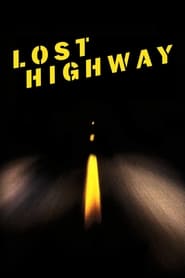
Lost Highway (1997)
Lynch takes the noir kit — femme fatale, gangster, surveillance, doomed Los Angeles — and removes the part that usually holds it together: explanation. Watch Peter Deming's engulfing darkness, the way characters walk into shadow inside their own house and seem to dematerialize. And watch how the film treats the present and its double — memory, dream, reflection — as impossible to tell apart, like an object and its mirror image trading places. Don't try to solve it; try to feel the shape of it.
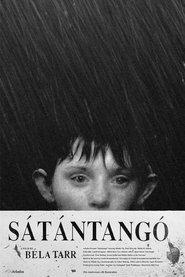
Satantango (1994)
The monument. Individual shots run five, eight, ten minutes; the whole seven-hour film contains remarkably few cuts. Tarr's opening — a herd of cows shuffling out of a collapsing farmyard, unexplained, unhurried — is a lesson in how to watch everything that follows: not for what happens, but for time moving through a ruined place. Notice how decay operates at every scale at once: the mud and rain, the dissolving village, the villagers themselves. This is the long take not as style but as worldview.
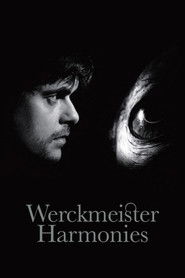
Werckmeister Harmonies (2001)
Start with the opening: a postman arranges drunken men in a bar into a working model of a solar eclipse — you be the sun, you the earth, you the moon — in one fluid take of nearly ten minutes. Nothing is decided; everything is meant. Watch how Tarr lets meaning arrive through choreographed movement rather than plot, and how political catastrophe is rendered through atmosphere and duration instead of event. Lars Rudolph's face is a screen on which things register rather than a mind that schemes — watch it closely.
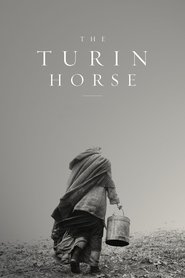
The Turin Horse (2011)
Tarr's most stripped-down film: a father, a daughter, a horse, a house, wind, six days. Watch the daily meal — a boiled potato, eaten with fingers, filmed whole. The film asks you to wait the way its people wait, and Fred Kelemen's black-and-white photography makes that waiting one of the most sustained visual achievements in recent cinema. Notice how the household's routines accumulate weight through repetition: you don't receive information about a world running down; you inhabit it.
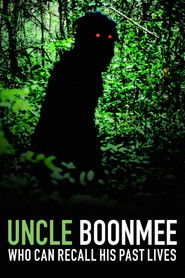
Uncle Boonmee Who Can Recall His Past Lives (2010)
Watch the dinner on the veranda. The dead and the transformed arrive at the table by slow degrees — no music sting, no hard cut — and nobody screams; food gets passed. Apichatpong lights his interiors to preserve real darkness, and his camera watches rather than chases, so the supernatural surfaces out of the frame like a photograph developing. The wonder lands precisely because no one on screen treats it as wonder. Ghost story, folk tale, family drama — held together without fear, without catharsis, in long patient shots.

Kaili Blues (2016)
Somewhere in the middle of this film, the camera climbs onto a motorbike and doesn't cut for roughly forty minutes — crossing a river, riding a cable car, doubling back through crooked streets, meeting people who shouldn't share the same afternoon. Watch what happens to your sense of when you are, and notice the moment you stop asking. Bi Gan places his characters within landscape rather than isolating them from it, and the film treats past, present, and future as neighbors on the same street.
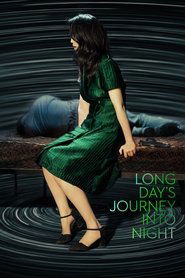
Long Day's Journey Into Night (2018)
Bi Gan again, doubling down. The film is built in two halves that are two different kinds of cinema — and the hinge is a physical instruction to you, the viewer, delivered an hour in, when the title card finally appears. (Go in knowing nothing more; the gesture is the film's best gift.) In the first half, watch how memory refuses to behave: a lyric voiceover hovers over images that won't anchor to a timeline, no clean seam between then and now. In the second, a single unbroken take becomes a passage you can feel but not name.
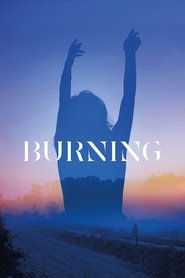
Burning (2018)
Lee Chang-dong builds a psychological thriller out of things that can't be verified. Watch for the well that may or may not exist on the family farm — the film never shows it to you, and over 148 minutes everything quietly drains into that hole. Hong Kyung-pyo's compositions refuse to telegraph meaning; the flat Paju farmland near the DMZ is filmed without softening. And watch Yoo Ah-in's blocked, near-absent performance — a man who watches and watches, and whose watching never converts into an act that would settle anything. The film's class argument is made through form, not speeches.
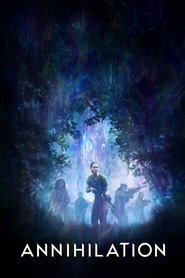
Annihilation (2018)
The genre film of the set, and proof this sensibility can live inside a studio science-fiction picture. Rob Hardy pushes the greens toward the toxic and gives the Shimmer an oily, soap-bubble refraction that tints everything inside it. Watch for the moments when the expedition — armed, competent, trained to act — can only stand and look: two deer moving in mirrored unison, and nobody can do anything with it but witness. Inside the Shimmer, cause and effect refract like the light does, and the film's climax hands narrative over to pure image and sound.
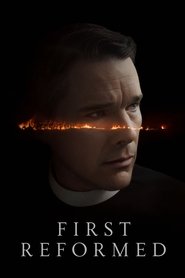
First Reformed (2018)
Schrader, who wrote the book on this tradition of spiritual cinema, delivers his own entry. The camera is almost entirely static, locked into head-on, symmetrical frames — so that when it finally moves, the movement lands like an event. Watch the long counseling scene: two figures held in a fixed frame, no cutting back and forth for reactions, while an argument about despair unspools in real time. Reverend Toller perceives everything — a dying planet, a failing body, a church kept alive as a gift shop — and the film is about what it feels like to see clearly and be unable to act.
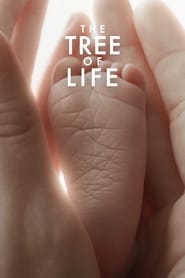
The Tree of Life (2011)
The counterweight: where Tarr locks the camera down, Malick sets it loose. Emmanuel Lubezki shoots in natural light with wide lenses from a low, child's-eye vantage, the camera floating after a lifted curtain the way a small child drifts after anything bright. Watch how the film gives you perception before it gives you facts — light through fabric, water, the undersides of leaves — and how it dares to set a family's grief against a wordless cosmic interlude scored to classical music, in the lineage of 2001's great abstract passage. Not a story told, but a life remembered from the inside.
Why watch these together? Because each one retrains you a little, and the training compounds. After Satantango's cows, you'll be ready for The Turin Horse's potato. After Bergman's handless clock, you'll recognize what Bi Gan does to chronology and what Lynch does to the front door. The Tarkovsky films that haunt nearly every entry here — the forbidden zone, the memory that won't file itself away — form a hidden spine connecting Hungary to Thailand to Guizhou to upstate New York. Most of all, these films reward the very quality they depict: patient, undefended attention. They ask you to stop waiting for the next thing to happen and to notice what is happening — which turns out to be time itself, moving through rooms and landscapes and faces, visible at last because someone finally held the shot long enough for you to see it.