Sightlines · a mini film course
The Long Look: Twelve Films That Trust You to Watch
The films on this list come from Hungary, France, Japan, the Soviet Union, Italy, and America; they span nearly fifty years and every register from four-hour epic to slick studio thriller. But they share one quiet conviction: that a movie doesn't have to be a machine for delivering "what happens next." In each of these, something loosens — the camera watches rather than chases, time is allowed to stretch or fold back on itself, and the people on screen often do less doing and more seeing. Some of these films slow down until a single shot becomes a place you live in. Others sprint, but scramble their chronology or hand the story to a narrator you'd be foolish to fully trust. Either way, they're asking you to notice how you're being shown things — and that's where the pleasure is.
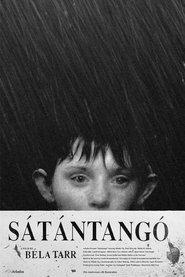
Satantango (1994)
Seven-plus hours, black and white, and built almost entirely from shots that run five, eight, ten minutes without a cut. The very first sequence — a herd of cows shuffling through a ruined farmyard in the rain — is Tarr teaching you how to watch the rest: not for events, but for time itself moving through a decaying place. Notice how mud, rain, and rot work at every level of the film — physical, social, moral — and how the refusal to cut makes you feel duration in your body rather than just register it.
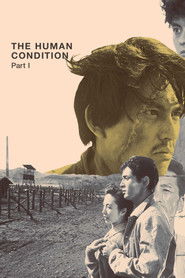
The Human Condition I: No Greater Love (1959)
Kobayashi opens his enormous humanist epic with a man handed the chance to run a Manchurian labor camp humanely — and the widescreen frame already seems skeptical. Watch how Miyajima's photography turns fences, watchtowers, and rows of laborers into grids of confinement, and how a single figure placed against that vast bleached plain looks impossibly small. This is a film where social pressure is composed into the image — you can read the odds against decency in the geometry alone.
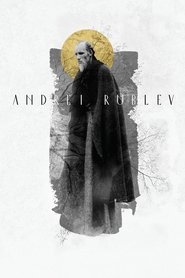
Andrei Rublev (1966)
Tarkovsky's film about a medieval icon painter opens not with the painter but with a stranger's homemade balloon flight — a minute of astonished flight, then the fall. Watch how the camera refuses to cut away from difficulty or punctuate a revelation with an edit; it simply stays, and the staying becomes the event. The film's great question — can art be made in good conscience during catastrophe? — is asked mostly through a man who watches rather than acts, and the film makes his watching your own.
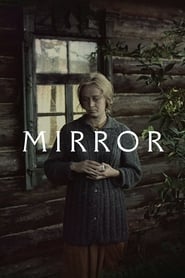
Mirror (1975)
Almost no plot: a dying narrator we hear but never see, circling memories of his mother, his childhood, the war. Early on, a gust of wind runs through a field of buckwheat for no story reason at all — that's the film announcing what it's made of: time and sensation, not cause and effect. Watch how Tarkovsky refuses the tidy flashback; past and present interleave the way memory actually behaves, and the candlelit, window-lit faces have the weight of old photographs.
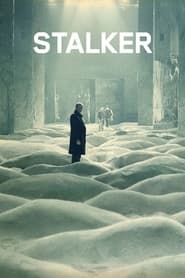
Stalker (1979)
A guide leads two skeptics into a forbidden zone toward a room said to grant one's deepest wish — and once there, the film's science fiction evacuates all the usual spectacle. Watch the celebrated sequence where the camera drifts low over a riverbed of submerged objects: coins, a syringe, a scrap of religious painting. You'll keep waiting for it to resolve into a clue; it won't, and that refusal — looking as the substance of the film, not a delay before it — is the whole Tarkovsky method. Notice, too, the shift between sepia and color, borrowed from Antonioni's way of making landscape carry a state of mind.
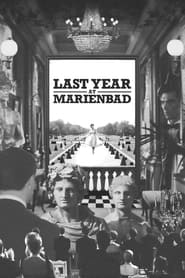
Last Year at Marienbad (1961)
A man insists to a woman that they met last year in this vast baroque hotel; she doesn't remember; the images take sides, then switch. Watch Vierny's gliding tracking shots through ornate corridors that never let you build a stable map of the space — and watch for the famous garden shot where the hedges cast long shadows and the people cast none. Details contradict themselves between cuts; a gown changes color mid-conversation. The film isn't hiding an answer. It's showing you what it looks like when memory and desire, not events, generate the images.
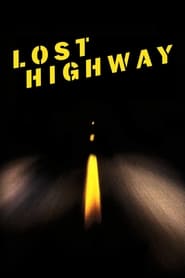
Lost Highway (1997)
Lynch's noir has all the genre furniture — the femme fatale, the gangster, the murder, doomed Los Angeles — with the explanations surgically removed. Watch how Deming photographs the Madison house as near-total darkness, rooms defined by what you can't see, characters walking into blackness and dissolving; then how that murk snaps against bleached, sun-struck exteriors. And pay attention to doubling — faces, voices, roles that rhyme uneasily with each other. The film's structure owes a debt to Marienbad: don't try to straighten it into a line. Let it stay strange.
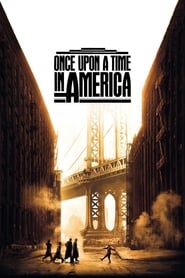
Once Upon a Time in America (1984)
Leone's four-hour gangster elegy tells decades of a life out of order, and Delli Colli's photography color-codes the eras: honeyed amber for childhood and Prohibition, colder light elsewhere. Watch De Niro's remarkable passivity — a protagonist who mostly looks, remembers, and endures — and notice how Morricone's score, composed before shooting, seems to dictate the rhythm of the images rather than decorate them. The title says "Once Upon a Time" for a reason: this is memory as fairy tale, and you're never quite sure whose.
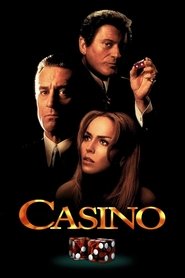
Casino (1995)
Scorsese's Vegas epic switches off ordinary suspense from its opening minutes and replaces it with something stranger: an anatomy. Watch Richardson's photography of deliberate excess — amber and gold casino floors, harshly overlit pools, a woman's entrance in a swirl of warm backlight that marks her as desire and danger at once. Notice the freeze-frames, the dueling voiceovers, the ironic pop songs against violence — the whole Scorsese grammar deployed not to ask what happens but to show, piece by piece, how a machine works and what it does to the people inside it.
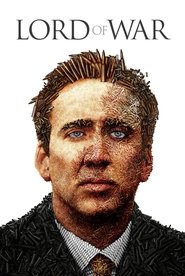
Lord of War (2005)
The film opens by following a single bullet — from factory stamping press through crates and borders to its final destination — in one unbroken ride where the camera belongs to no human eye at all, only the merchandise. Hold onto that shot: everything Yuri Orlov's charming, salesman's voiceover tells you afterward is being argued against by how the film was shot. Watch how Mokri's glossy, saturated images deliberately make the arms trade look seductive — and notice when you catch yourself enjoying it. That's the trap, inherited from GoodFellas and A Clockwork Orange, and it's set for you.
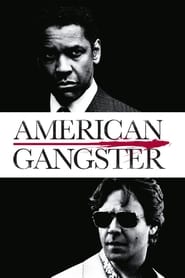
American Gangster (2007)
Ridley Scott tells a 1970s Harlem crime story through wardrobe and light. Watch the meaning packed into clothing: a conservative grey suit as a business strategy, a chinchilla coat as a change of philosophy — the film's whole moral argument lives in how bodies present themselves to being seen. Notice Savides's chromatic split: the amber warmth of Frank Lucas's world against the institutional grey and street-level cold of the detective's. Two visual worlds, two attitudes toward power, running on parallel tracks.
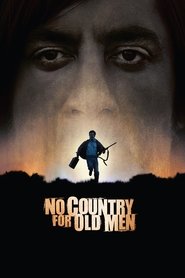
No Country for Old Men (2007)
The Coens build a flawless chase-thriller engine