Sightlines · a mini film course
When the Camera Learns to Wait
There's a family of films — scattered across Hungary, Italy, Iran, Sweden, Austria, America — in which the usual engine of movies quietly stalls. In most films, a character sees a problem and does something about it; the story is the chain of see-act-resolve, and the editing keeps that chain taut. These eleven films cut the chain. Their people keep seeing — plague, mud, rooftops, traffic, their own reflections — but seeing no longer cashes out into action that fixes anything. What rushes into the gap is time itself: shots that hold long past comfort, faces that register the world rather than scheme against it, landscapes that outlast the people in them. Don't watch these for what happens. Watch them for how they teach you to look — because each one, in its opening minutes, hands you new instructions for watching.
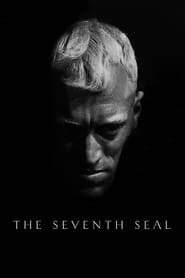
The Seventh Seal (1957)
A knight returns from the Crusades wanting to do one meaningful thing, and keeps discovering the world won't give him a deed that counts. Watch Gunnar Fischer's severe black-and-white — faces set against blown-out skies or swallowed in shadow, a visual grammar inherited from silent-era masters like Dreyer and Murnau. Notice how much of the film is stillness: a chess board on a grey beach, pieces shifting, nothing decided. Bergman stages the supernatural with total matter-of-factness, and that calm is the point.
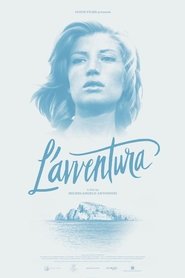
L'Avventura (1960)
A woman vanishes and a search begins — and then Antonioni does something quietly radical with that setup, letting the machinery of the mystery go slack while the camera keeps looking. Watch where people sit in the frame: pushed to the edges, hidden behind walls and columns, dwarfed by volcanic rock and flat sea until they read as marks on stone. Two people can stand close enough to touch and remain unreachable, and the film holds those compositions long enough for you to feel the distance. Nobody says what they mean, because nobody quite knows what they mean — and Antonioni renders that through absence rather than confrontation.
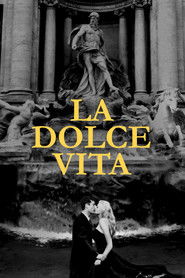
La Dolce Vita (1960)
The opening image — a statue of Christ dangling from a helicopter over Rome while a journalist mimes for phone numbers below, every word drowned by rotor wash — announces the film's whole method: the sacred and the trivial sharing one sky. Watch Mastroianni's face, a performance built almost entirely of intelligent, helpless receptivity; he's a professional watcher whose watching never becomes doing. Otello Martelli's wide anamorphic frame gives the Via Veneto a hard, bleached glare that flattens celebrity into pure surface. The film drifts through nights and dawns rather than building toward anything — that drift is the story.
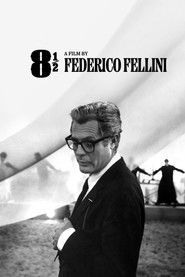
8½ (1963)
Fellini removes the seams. Memory, fantasy, and the present are cut together with the same hard, matter-of-fact joins a film would use between two rooms of the same house — no dissolves, no misty warnings, no musical cue telling you you've left the world for someone's head. Watch how Gianni Di Venanzo shoots all three registers on one continuous silver, with no change of grain or lighting code to grab onto. It's the definitive artist's-block film — creation itself as the subject of the work — and its influence runs everywhere, including straight into the last film on this list.
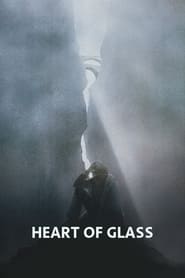
Heart of Glass (1976)
The strangest experiment here: Herzog put nearly his entire cast under clinical hypnosis and filmed them in trance. Watch how the actors occupy a room — bodies present, persons somewhere behind them, never quite cheating toward the lens or landing a line for an audience. The one warm thing in a world of grey, brown, and mist is the ruby glass, glowing arterial red; when the man who knows its formula dies, a village is left circling the hole where its knowledge used to be. The compositions borrow from German Romantic painting — tiny figures before vast fog-bound vistas — so that landscape and people carry equal dramatic weight.
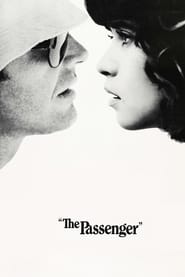
The Passenger (1975)
A man does the most consequential thing a person can do — he stops being himself — and Antonioni shoots it with the calm of someone watering plants. No music swell, no hammering close-up. Watch Luciano Tovoli's palette shift with geography: bleached Saharan whites, muted northern greys. And watch how the editing systematically loosens the suspense a thriller should tighten — the film has all the apparatus of pursuit and danger, and refuses to run on it. That refusal is the meaning.
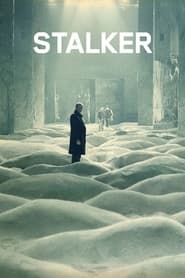
Stalker (1979)
Science fiction with every conventional pleasure evacuated — no spectacle, no explanation, no technological wonder — leaving only a journey, a forbidden zone, and three men's competing kinds of faith and doubt. Watch the camera move at the pace of geological time: long glides through grass, flooded corridors, rubble. There's a famous passage where the lens simply drifts over submerged objects in shallow water while someone sleeps — you keep waiting for it to resolve into a clue, and it declines, and the looking itself becomes the film. The sepia-to-color design and the stripped, inward performances (modeled on Bresson's discipline) reward complete surrender.
The Seventh Continent (1989)
You can watch this film for a long stretch before realizing you haven't seen a full face. Haneke's camera looks at hands, faucets, a cereal bowl, banknotes at a teller's window, a car wash — the world as an inventory of objects and transactions. This fragmenting is borrowed from Bresson and turned on comfortable modern life: a family's routine rendered so clinically that affluence itself becomes the source of dread. It's been called a horror film without a monster. Watch what the framing withholds, and notice how that withholding does the emotional work most films assign to music and close-ups.
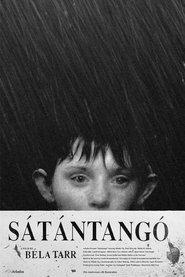
Satantango (1994)
Seven-plus hours, and the opening take — several wordless minutes tracking alongside cattle shuffling out of a collapsing farmyard into the grey — teaches you exactly how to watch the rest: for time moving through a ruined place, not for plot. Tarr's shots routinely run five, eight, ten minutes; the film has astonishingly few cuts for its length. Decay operates at every level — the mud, the rain, the dissolving social bonds — and the villagers can mostly only wait, drink, and watch each other wait. It sounds punishing; it's actually hypnotic, the fullest realization of an approach inherited from Tarkovsky and the choreographed long takes of Miklós Jancsó.
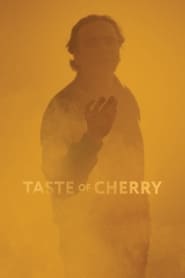
Taste of Cherry (1997)
A man drives the ochre hills outside Tehran with a request he can barely say aloud, and Kiarostami films every conversation against the grain of movie grammar: driver and passenger side by side, facing forward, almost never looking at each other — no your-face-my-face cutting. Because the camera so often sits where the windshield would be, the person really being addressed is you. Watch the desaturated palette — earth in every frame, present as landscape and as something more. The non-professional performances, in the Bresson tradition of stripped-down expression, make every small vocal shift enormous.
Synecdoche, New York (2008)
Kaufman inherits 8½'s premise — an artist's paralysis dramatized from inside his own head — and literalizes it on an American scale: a theater director builds a full-size replica of his life inside a warehouse, then hires an actor to play himself, then an actor to play that actor. Watch how Frederick Elmes (who shot Eraserhead and Blue Velvet) photographs the impossible with unhurried, autumnal naturalism — the uncanny is never flagged, and that flat acceptance is the door in. A house can be on fire while a realtor praises the closets, and no one blinks. The film's subject is the gap between a life and any representation of it — and what happens when the model starts absorbing the original.
Watched together, these films run a single long experiment from 1957 to 2008: what does cinema become when it stops chasing and starts watching? Each director cuts the see-act-resolve chain differently — Bergman with a stalled quest, Antonioni with searches that dissolve, Tarr with sheer duration, Kiarostami by seating you in the passenger seat, Kaufman by folding the watcher into the watched. The reward for your patience isn't slowness for its own sake. It's that when a film stops hurrying you toward the next event, you start seeing what's actually in the frame — light, weather, faces, time passing — and the films begin to feel less like stories told to you and more like places you've lived in. Sequence them however you like, but let the early ones teach you the patience the later ones assume.