Sightlines · a mini film course
The Art of Watching: Twelve Films Where Looking Becomes the Event
Most movies run on a simple engine: a character sees a problem, acts on it, and the story moves. The films on your list belong to a different tradition — one where that engine goes quiet. Their characters see everything with painful clarity and can do almost nothing about it, so seeing itself becomes the drama. The camera watches rather than chases. Shots outstay their obvious purpose. Time is allowed to stretch until you feel it passing in your own body. This isn't emptiness — it's a different kind of fullness, and once you learn to watch for it, these films open up like weather.
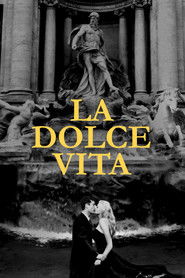
La Dolce Vita (1960)
The opening image sets the terms: a statue of Christ dangling from a helicopter over Rome, the holy and the trivial sharing the sky, while a journalist mimes flirtation no one can hear over the rotors. Watch Mastroianni's performance — a face of intelligent, helpless receptivity, expressive almost entirely in reaction. Otello Martelli's hard, bleached black-and-white flattens celebrities into photographic surfaces, a visual joke about a world that has become all appearances. This is a man whose whole profession is watching, drifting through nights and dawns.
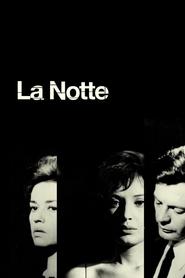
La Notte (1961)
Antonioni gives the buildings the center of the frame and lets his people drift to the edges. Watch how Milan's glass towers and half-built walls stop being backdrop and become active presences — the architecture doing the emotional work the dialogue refuses to do. When Lidia walks through the city, wait for the walk to lead somewhere; the film's boldest move is that it doesn't have to.
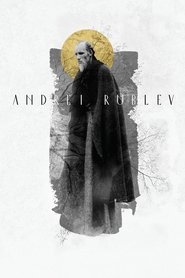
Andrei Rublev (1966)
Tarkovsky opens with a man lashed to a homemade balloon, briefly airborne over a silver river — a whole film about the cost of making, announced before we've met its painter. Notice how the camera refuses to cut away from discomfort or punctuate revelation with an edit: it watches, at length, and the watching is the moral position. A film about an artist that is almost entirely about what he witnesses.
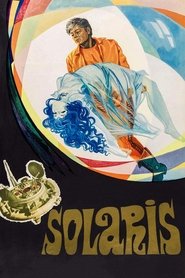
Solaris (1972)
Start with the grass — Tarkovsky sits with weeds shivering in a stream, a horse in the rain, long before any space station appears, teaching you to inhabit time rather than spend it. Yusov's lighting draws on the Old Masters: warm pools of gold against low-key darkness. Notice how the alien ocean is never shown clearly enough to analyze — glimpsed through portholes, swirling amber. The mystery isn't being saved for a reveal; the film simply refuses to treat the unknown as a puzzle.
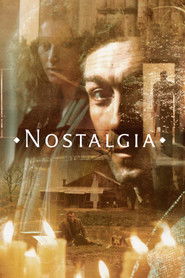
Nostalgia (1983)
Watch for the candle sequence: a single unbroken shot, nine minutes, of a man trying to carry a small flame across a drained pool — real precariousness, not a simulation of it. Duration becomes an act of faith. Notice too the shifts between color and sepia monochrome, a technique Tarkovsky developed for separating present from memory, and how figures are staged small against vast, murky landscapes.
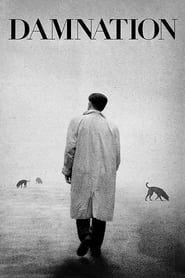
Damnation (1988)
The opening is a lesson in itself: coal-conveyor buckets crawling across a grey sky in a slow lateral track — then the camera reverses and finds a man at his window, watching the same buckets we were. That pivot is Tarr's whole method. Watch the rain, which falls like a cosmic principle, and the way buildings, machines, and bodies all seem to be returning to mud together.
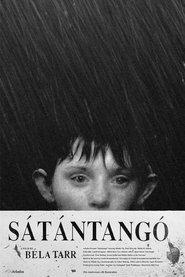
Satantango (1994)
Tarr's seven-hour monument opens with cows shuffling out of a collapsing farmyard, one unbroken take, several minutes, no explanation — and by the end of it you've been taught how to watch everything that follows. Individual shots run five, eight, ten minutes; the film has astonishingly few cuts for its length. Don't fight the duration. Let the mud, the rain, and the waiting work on you at the speed of an animal with nowhere to go.
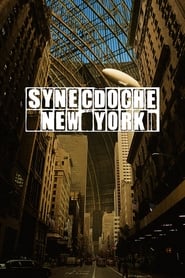
Synecdoche, New York (2008)
Kaufman's masterstroke is tonal: Frederick Elmes (who shot Eraserhead and Blue Velvet) photographs the impossible with unhurried, autumnal calm, so the uncanny never gets flagged as uncanny. Watch how the film builds a hall of mirrors — a theater director constructing a full-scale replica of his own life, hiring an actor to play himself, then an actor to play that actor — until the copy and the original become impossible to tell apart.
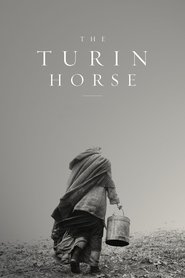
The Turin Horse (2011)
Watch them eat the potato. A father tears at it fast and angry; his daughter eats slowly; nothing is explained; the camera holds. Fred Kelemen's black-and-white cinematography is among the most sustained achievements in contemporary film, and the six-day structure lets you inhabit a world running down rather than be told about it. The wind, the well, the lamp — pay attention to what fails, and when.
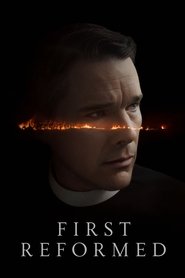
First Reformed (2018)
Schrader rations camera movement so severely that when the camera finally moves, it lands like an event. Watch the frontal, symmetrical framing — a pastor at a bare desk, held head-on, the empty rectory boxing him in like a cell. Notice the counseling scene built as two figures in a fixed frame, no cutting away for reactions: the film makes you sit still, look, and endure alongside its hero.
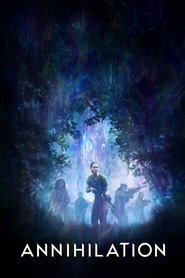
Annihilation (2018)
Watch for the two deer moving in perfect mirrored unison — one of the eeriest images in recent science fiction, and no one explains it or can do anything with it. Rob Hardy's cinematography renders the Shimmer as a soap-bubble membrane tinting everything inside it, greens pushed toward the toxic. This is a thriller that keeps handing its competent, armed characters things they can only look at — and the looking is where the horror lives.
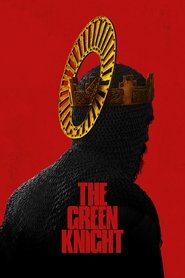
The Green Knight (2021)
Lowery takes the most action-shaped genre we have — the knight's quest — and empties the action out of it, leaving landscape, mist, and time. Watch for the slow 360-degree pan at the Green Chapel, a single rotation of the camera in which seasons wheel past and the world's indifference becomes visible. The frieze-like, centered framing turns every composition into a reminder of mortality.
Watched together, these films train a muscle most cinema never asks you to use. You'll start noticing rhymes: Tarkovsky's Zone becoming Garland's Shimmer; Fellini's drifting journalist echoed in Antonioni's exhausted novelist; Tarr's rain and mud answering Tarkovsky's water and fog; Schrader's locked-off frames descending from the same European spiritual cinema that shaped them all. More than that, you'll find the patience these films require becomes its own reward — a way of seeing that follows you out of the theater, where the world, too, turns out to be full of things worth watching longer than you thought.