Sightlines · a mini film course
Nothing Happens, Everything Is at Stake: A Course in the Cinema of Watching
Most movies are built on a simple engine: a character sees a problem and does something about it, and the editing hurries you from the seeing to the doing. The twelve films below run on a different fuel. In each of them, the people on screen — a knight, a pastor, a wife at a party, a donkey — take in their world with painful clarity and find they cannot convert what they see into a deed that changes anything. So they watch. And the films, in solidarity, watch with them: the camera holds still or moves at walking pace, shots stretch until you feel their weight, and time itself — waiting, enduring, sitting with something — becomes the drama. Don't come to these films asking what happens next. Come asking what is this shot doing to me right now. That small adjustment is the whole course.
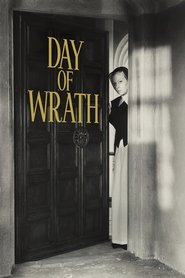
Day of Wrath (1943)
Watch how long Dreyer holds a face after a scene's business is done. Lit like a Rembrandt — pale skin and white linen emerging from deep shadow — the camera stays on Anne until her stillness stops being information and becomes an event, tiny movements of mouth and eyes gathering under the surface like weather. Dreyer never dramatizes what's changing in her; he lets it surface, flicker by flicker, across held time. This is the oldest film in the set and the seed of everything after it.
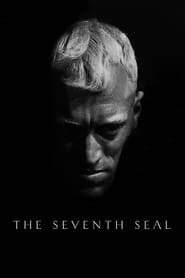
The Seventh Seal (1957)
A knight home from the Crusades wants desperately to do one meaningful thing and keeps discovering there's no deed available to him — so he plays chess instead, and Bergman makes the waiting itself monumental. Notice Gunnar Fischer's severe high-contrast images: faces against overexposed skies, figures swallowed by shadow, a visual grammar inherited from silent cinema's boldest lighting. The famous stillness of the beach scenes is the key to the whole film.
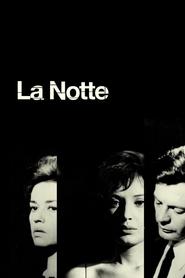
La Notte (1961)
Watch what holds the center of the frame. Antonioni and cinematographer Di Venanzo photograph Milan's glass towers and half-built walls as active presences, while the human beings drift to the edges — small, almost incidental. In the film's great passage, a woman simply walks through the city, watching things, and you keep waiting for the walk to lead somewhere; the point is that watching is where it leads.

L'Eclisse (1962)
Antonioni's next film pushes further: characters framed through car windows, against reflective surfaces, dwarfed by the inhuman geometry of Rome's EUR district — space itself subdividing and containing them. The subject is the difficulty of holding a feeling in place long enough for it to become what you hoped. And stay alert at the end: the film's most famous minutes ask nothing of you except pure, patient attention to a place — one of cinema's boldest acts of trust in the viewer.
Au Hasard Balthazar (1966)
Bresson keeps cutting to the donkey's eyes — dark, wet, giving nothing back — and trusts that blankness to carry a fallen world. Notice how he refuses acting altogether: his non-professional "models" repeat gestures until self-consciousness falls away, and isolated sounds (footsteps, clinking metal) do narrative work the images withhold. A creature that can only endure turns out to be the perfect witness.
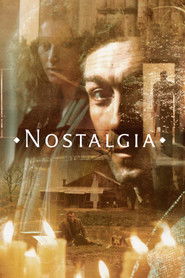
Nostalgia (1983)
Tarkovsky's camera moves slowly, laterally, through fog and water, building pressure through duration rather than cutting — and shifts color registers to move between present and memory. Watch for the sequence in a drained thermal pool: one shot, nine minutes, a man, a candle, and real precariousness rather than a simulation of it. By the end of that take you're no longer watching a task; you're watching persistence itself become an act of faith.
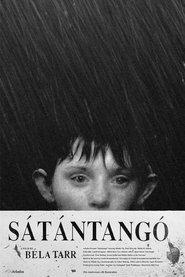
Satantango (1994)
The opening take — several unbroken minutes tracking alongside cows shuffling out of a ruined farmyard — teaches you how to watch the next seven hours: for time moving through a ruined place, not for plot. Tarr's shots routinely run five, eight, ten minutes; rain, mud, and decay saturate every frame in deep-focus black and white. Yes, it's long. That length is the instrument, and once you tune to it, it plays you.
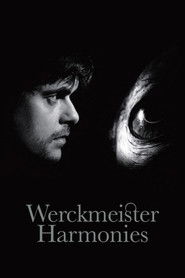
Werckmeister Harmonies (2001)
Watch the opening: in a closing bar, a young postman arranges drunken men into a working model of a solar eclipse — you be the sun, you the earth — and sets them slowly orbiting, all in one fluid ten-minute take. Nothing is accomplished, and it's the whole film in miniature: bodies set in motion, time allowed to pass, meaning arriving through movement rather than plot. Watch Lars Rudolph's face too — open, unguarded, a surface on which events register rather than a mind that schemes.
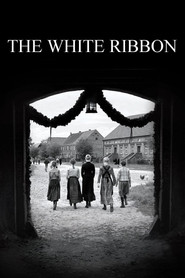
The White Ribbon (2009)
Start with the wire strung across a riding path: Haneke shows you the injury and withholds the hands that caused it, and keeps withholding, on purpose, for two and a half hours. Notice how the editing ends scenes before their discharge — a door closes on a punishment; we rejoin an interrogation in its flat aftermath — a technique inherited directly from Bresson. The not-seeing becomes the subject.
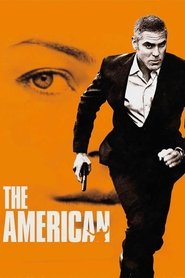
The American (2010)
Stop waiting for the chase; there isn't going to be one in the sense the trailer promised. Corbijn films Clooney from behind, small in wedges of converging medieval stone, so the beautiful Italian town doubles as a slowly tightening trap. What the film gives you instead of action is ritual — a professional's near-silent routines of craft and preparation, in the lineage of Melville's laconic killers — where stillness before the event is the event.
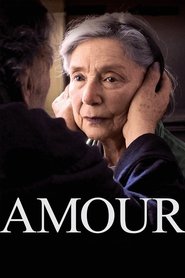
Amour (2012)
Early on, at a piano recital, Haneke points the camera at the audience instead of the stage and makes you hunt for the two protagonists in a hall of strangers — quietly assigning you your only job: to watch. Inside one Paris apartment, the static camera holds at a respectful middle distance while meals are prepared and bodies lifted in something close to real time. The restraint isn't coldness; it's a form of moral attention.
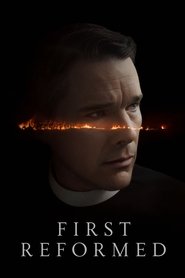
First Reformed (2018)
A man at a bare desk, filmed head-on, writing in a notebook he's sworn to burn: before anything happens, the film teaches you a posture — sit still, look, endure. Dynan's camera is locked into frontal, almost liturgical symmetry, so that when it finally does move, the movement lands like a thunderclap. Schrader built this from the European spiritual cinema he spent his life studying — Bresson's diary-keeping priest, Bergman's doubting pastor — and it's the proof that this tradition is still alive.
Watched together, these films train a muscle most cinema lets atrophy. Each one asks you to sit inside a shot rather than be carried by cuts, and the reward compounds: Dreyer's held faces prepare you for Bresson's unreadable eyes; Antonioni's architecture-as-trap returns in Corbijn's stone streets; Tarkovsky's patience flows straight into Tarr's; Bresson's cuts-before-the-blow become Haneke's method; and Schrader gathers all of it into an American church. By the end you'll notice you've changed as a viewer — waiting less for what happens, and seeing more of what's there. That, more than any plot, is what this lineage has been passing down for eighty years.