Sightlines · a mini film course
Time, Broken Open: Films Where the Past Refuses to Stay Put
Most movies treat time like a road: you start here, you end there, and the story is the drive. The twelve films below treat time like weather — something that surrounds you, pools in the corners of rooms, blows in without warning. Their heroes tend not to be doers so much as watchers: people who look at their own lives from the outside, whose memories arrive uninvited, who face situations too large or too strange to be fixed by action. And their filmmakers respond with some of cinema's most inventive tools: the flashback with no border around it, the loop with no seam, the take that refuses to cut, the beautiful image that's too beautiful to trust. Watch how each film makes time visible — stretched, folded, shuffled, or held perfectly still.
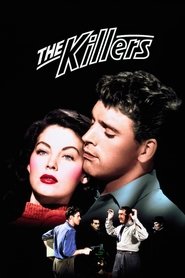
The Killers (1946)
Begin here, at the fountainhead. Watch the opening: a man knows death is coming up the stairs and simply waits — and the whole film becomes an investigation into that stillness, told through a mosaic of other people's memories, borrowed from the architecture of Citizen Kane. Notice Woody Bredell's lighting, which restricts illumination so aggressively that faces get carved out of darkness and rooms feel as confined as coffins — Siodmak's German Expressionist training pressed into American pulp.
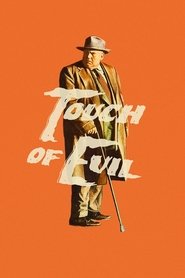
Touch of Evil (1958)
The famous opening is a single unbroken crane shot, three minutes long, threading a car with a bomb in its trunk through a whole border town of traffic and neon — the camera insisting everything is connected before a single word of plot is spoken. Then notice the opposite strategy: wide-angle lenses shot from floor level, ceilings pressing down, actors moving toward and away from the lens instead of the film cutting between them. Welles builds scenes out of proximity and distortion rather than conventional editing, and it changes what a face can mean.
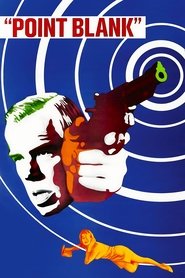
Point Blank (1967)
A British documentarian took an MGM crime picture and treated it like a European art film. The flashbacks don't announce themselves — no dissolve, no harp — the past just bleeds into the present mid-scene, and sound from one moment carries across the cut into another. Watch how Lathrop's cold, geometric compositions dwarf Lee Marvin against brutalist Los Angeles concrete: a lone hard figure in a world of glass, ledgers, and abstraction. Listen, too, to those footsteps in the opening corridor.
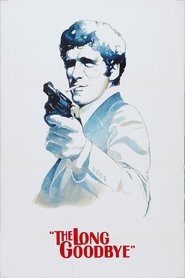
The Long Goodbye (1973)
The camera never sits still — always drifting, zooming, panning across a room like a curious bystander with its own agenda, catching margins instead of centers. Altman drops a 1940s-style private eye, complete with his code of loyalty, into a 1970s Los Angeles that has quietly stopped keeping score, and watches the code fail to gain traction. Pay attention to the opening cat-food errand: it looks like a throwaway, and it's the whole film folded small.
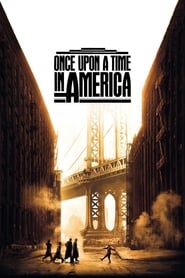
Once Upon a Time in America (1984)
Leone tells a gangster saga as an act of remembering, and Delli Colli's photography color-codes the decades: the childhood and Prohibition years glow warm and amber — sunlight through dust, honeyed nostalgia — while other eras cool down. Notice too the Morricone method Leone perfected across his career: music composed before shooting, so the long, dilated setpieces are staged to the score rather than scored afterward. Watch De Niro's stillness — a man who mostly looks, at peepholes and lockers and faces — and let the film's four hours move at the speed of memory.
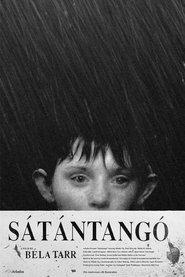
Satantango (1994)
Individual shots run five, eight, ten minutes; the opening simply follows a herd of cows out of a ruined farmyard, and by the time it ends you've been taught how to watch everything that follows. Tarr, drawing on Tarkovsky and the choreographed long takes of Jancsó, makes duration itself the subject: mud, rain, waiting, black-and-white deep focus. Don't fight the pace — the film rewards you for letting time move through you at its own speed.
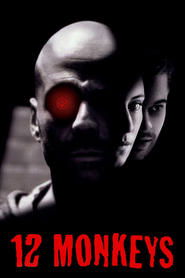
Twelve Monkeys (1995)
Gilliam expands the predestination architecture of Chris Marker's La Jetée into a full paranoid epic, returning again and again to one scrap of memory — an airport, hard morning light — that stays unreadable until the film allows you to finish it. Watch what he does with Bruce Willis: an action star arrives carrying all his physical authority, and the film systematically disables it, making him a man who can see everything and change almost nothing. Roger Pratt's distorting lenses and cold, desaturated palettes make the institutions feel like they're pressing inward on him.
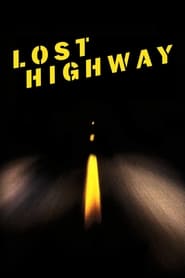
Lost Highway (1997)
Peter Deming photographs the Madison house as near-total darkness — rooms defined by what you can't see, characters walking into blackness and dissolving. Lynch takes the furniture of noir (the femme fatale, the gangster, the surveillance) and strips out motive, explanation, and detection, leaving pure dread. Watch the very first scene at the front door and the intercom carefully; the film's whole shape is folded inside it. And notice how the film refuses the cut that would tell you whether two people are two people or one person dreamed twice.
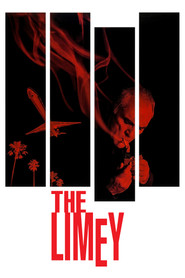
The Limey (1999)
There's a face in this film that doesn't belong to it: Soderbergh lifted actual 1967 footage of a young Terence Stamp from Ken Loach's Poor Cow and dropped it in as the aging hero's remembered past — a real cinematic yesterday, not a recreation. The memories are never flagged as flashbacks; they surface the way memory actually surfaces, mid-thought, while voice-over floats free of the image. Ed Lachman shoots Los Angeles in unglamorous, sunstruck clarity — a city profoundly foreign to the Englishman drifting through it.
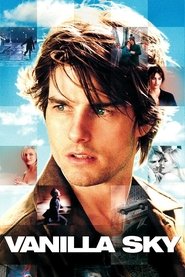
Vanilla Sky (2001)
John Toll — Malick's cinematographer on The Thin Red Line — gives the film a lush, high-gloss surface, and Crowe weaponizes that very beauty: the gorgeousness of the image is itself a clue. Watch the depopulated Times Square sequence early on — panic tipping into rapture — and hold onto the feeling that something too beautiful shouldn't be trusted. Listen also to the needle-drops: Crowe uses songs not as accompaniment but as a second layer of narration.

Mulholland Drive (2001)
Deming returns, and this time maps two whole visual registers onto the film: warm, golden Hollywood-mythology light for one part of the story, something harsher for the other. Watch for the Club Silencio sequence — a stage, an emcee, a singer — where Lynch pulls the voice loose from the body and shows you, in ninety seconds, how cinema manufactures real feeling from unreal sources. The editing runs on emotional association and dream-rhyme rather than cause and effect, in a line that runs back through Sunset Boulevard and all the way to Un Chien Andalou.
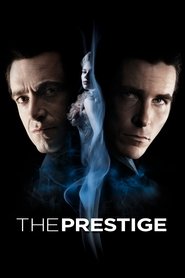
The Prestige (2006)
Pfister's widescreen frames are built on the compositional logic of the magic trick: wide shots containing information you're trained not to notice. The structure is two rival magicians reading each other's diaries — and every time a reader's knowledge changes, the meaning of a scene you've already watched changes with it. There is no master version, no narrator you can fully bank on; the film keeps its two magicians equal partly by refusing to tell you which one was ever honest. Watch actively — the frame is always performing for you.
Why watch these together? Because they teach each other. The Killers shows you the first tremor — a man who sees his fate and doesn't move — and everything after is a variation: the stranded watchers of Tarr and Altman, the memory-flooded avengers of Boorman and Soderbergh, the dreamers of Lynch and Crowe, the diary-readers of Nolan, the old man staring backward in Leone. You'll start noticing the techniques rhyming across decades and continents: the unmarked flashback traveling from Point Blank to The Limey, the mosaic-of-memories structure passing from Citizen Kane's heirs to The Prestige, Deming's darkness deepening from Lost Highway into Mulholland Drive. Watched in a row, these films stop being twelve puzzles and become one long conversation about the thing cinema does better than any other art: it doesn't just tell you about time — it lets you feel it move.