Sightlines · a mini film course
Seeing and Doing: Twelve Films About What the Camera Watches — and What It Waits For
Most movies run on a simple engine: a character sees a problem, acts, and the world changes. What binds this dozen together is how each film handles that engine — some run it at full roar, some let it idle, some quietly unplug it and ask what's left when watching replaces doing. Across prison camps, bunkers, manor houses, and desert highways, these are films about the gap between seeing and acting: cameras that observe rather than chase, spaces that become traps, time that's allowed to stretch until you feel its weight. Watch them as a set and you'll start noticing the engine itself.
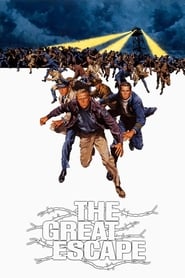
The Great Escape (1963)
Start here, with the machine running perfectly. Notice how patiently Sturges builds the camp in the opening reels — the wire, the towers, the huts raised off the ground — until the whole place feels like a single escape-proof apparatus. Then everything becomes something to be done: the film has an almost loving fixation on process, tools, and specialized hands working in concert. It's action cinema at its cleanest voltage, and it sets the baseline every other film here complicates.
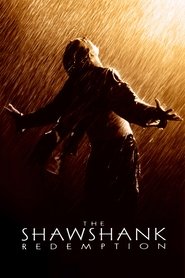
The Shawshank Redemption (1994)
A prison film where the real drama is posture. The institution — stone, echo, vertical crowds of men dwarfed by walls — presses on everyone, and Darabont stages freedom not as an event but as a way of holding the body: watch the famous rooftop scene, where men simply sit, loose and horizontal against open sky. Roger Deakins's photography makes the place itself a character. Notice how interiority — the life the institution can't reach — becomes the film's true subject.
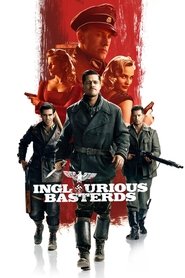
Inglourious Basterds (2009)
Everyone here is performing, and everyone is reading the performance. Tarantino builds suspense not from chases but from etiquette: long, unhurried scenes — sustained wide shots, minimal cutting — where an accent held too carefully or a small gesture of the hand carries mortal weight. The film speaks three languages more than it speaks English, and language itself becomes the battlefield. Watch faces watching faces.
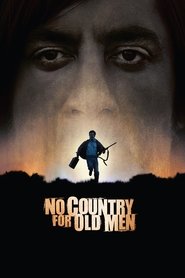
No Country for Old Men (2007)
Deakins again, at his most restrained: long lenses flatten figures against featureless desert, and there's almost no music — the tension is built from room tone, fluorescent hum, the rustle of a wrapper. Watch the celebrated gas-station scene, where nothing moves but the talk and the dread. The Coens honor every mechanic of the thriller while quietly withholding its usual comforts; notice which satisfactions the film declines to hand you.
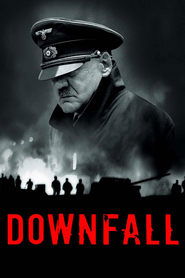
Downfall (2004)
A war film staged almost entirely in corridors. Rainer Klausmann's handheld camera stays close to faces, trapping characters in shallow focus and narrow bunker spaces — proximity as pressure. The film's deepest subject is the gap between the map room and the street above it: orders issued with total confidence to a reality that no longer answers. Watch how a closed system of belief maintains itself against the evidence.

Rome, Open City (1945)
Shot in an actual, freshly scarred city with a mix of professionals and non-professionals, this is where a new kind of cinema was born. The framing is off-center, figures caught mid-gesture, the camera seemingly discovering events rather than staging them. Watch how the film binds a Communist and a priest into solidarity without sentimentality — and notice how the war refuses to obey the story's convenience. Movies were never quite the same after this one.
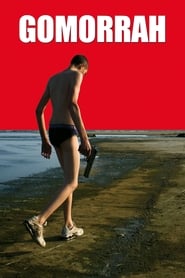
Gomorrah (2008)
Rossellini's inheritance, sixty years on. Marco Onorato's handheld camera keeps a watchful distance in a concrete-grey palette, and violence arrives without music, slow motion, or dramatic emphasis — filmed like weather. Five story strands, no single hero: the criminal system, not any character, drives events. Watch the two teenagers imitating Scarface — Hollywood's gangster myth held up against the reality that produced it.
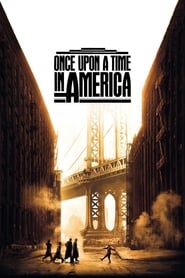
Once Upon a Time in America (1984)
A four-hour act of remembering. Tonino Delli Colli's photography color-codes time itself — the past bathed in warm amber, sunlight through dust — and Morricone's music was written in advance, so the great set-pieces are staged around the score. De Niro gives what may be the great study in stillness: a man who mostly looks. Let the nonlinear structure wash over you; the film is less a plot than a tide of memory moving back and forth.
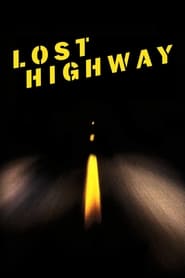
Lost Highway (1997)
Don't solve it — inhabit it. Peter Deming photographs a house as pure shadow: characters walk into blackness and simply dematerialize, and the murk is set against bleached, sun-struck exteriors. Identity here is unstable, doubled, dreamlike; the film withholds the explanations noir usually provides. Watch what the darkness does to rooms, and trust your unease more than your reasoning.
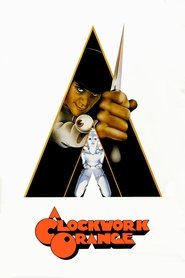
A Clockwork Orange (1971)
Kubrick puts you inside a gaze. The extreme wide-angle lens makes everything near the camera bulge and loom — not how the world looks, but how it looks to Alex: grand, curved toward him, his. Notice the direct-address stare of the opening shot; before anything happens, the film has shaken your hand. The whole picture is built on the act of seeing, and on making you complicit in it.
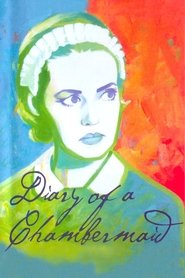
Diary of a Chambermaid (1964)
Buñuel's method is a refusal to be surprised. Roger Fellous shoots everything — dinners, desires, fetishes — in the same flat grey light, level camera, no music telling you how to feel, and that evenness becomes a scalpel. Watch the objects: boots, leather, small things charged with meaning the camera declines to explain. Beneath the manor's respectability, something feral keeps pressing at