Sightlines · a mini film course
Bodies in Motion, Bodies at the Threshold: Crime Cinema and the Art of Watching
Every film in this set borrows the machinery of crime — the heist, the hunt, the score, the score to settle — and then asks a quieter question underneath the sirens: what can a person actually do about the world they're in? Sometimes the answer is thrilling: a detective reads a corpse and acts, a cop pulls a thread until a hidden network lights up. But just as often these films slow the machinery down, or unplug it entirely, and let you watch someone waiting, enduring, remembering, standing in a doorway while the real decisions happen elsewhere. The pleasure of this set is learning to feel the difference — to notice when a film lets its hero cut through space, and when it makes space a trap and lets time stretch instead. Watch faces. Watch throats. Watch where the camera puts people in a room. These twelve films teach you how.
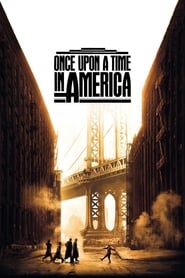
Once Upon a Time in America (1984)
Leone's four-hour gangster epic is really a film about memory, and it announces this in its very light: Tonino Delli Colli photographs the childhood and Prohibition years in warm, honeyed amber — sunlight through dust — so that the past glows like something remembered rather than lived. Notice how little the main character does in the later timeline; he mostly looks — through a peephole, into a locker, across a table — and the film builds its power out of that looking. And notice the music: Morricone composed before shooting, as he had on Leone's Westerns, so scenes stretch and breathe to the score's rhythm rather than the plot's. Let the film's slowness work on you; it's the whole point.
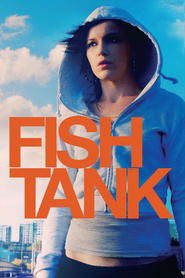
Fish Tank (2009)
Andrea Arnold's first great decision is the shape of the frame itself: a tall, boxy, nearly square image that crops the horizon away and keeps her fifteen-year-old heroine visually penned in — the fish tank of the title, built into every shot. Robbie Ryan's handheld camera trails Mia close, the way the Dardenne brothers shadowed their heroines, never judging, never cutting away. Watch the dancing: Mia has almost no words for her situation, so her body does the talking — posture, drilling the same eight counts alone in a gutted flat. The film trusts movement over dialogue, and once you see that, every scene opens up.
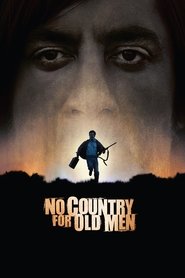
No Country for Old Men (2007)
Roger Deakins shoots the Texas desert with long lenses that flatten figures against featureless space — the landscape as participant, exposure as dread. But the real innovation is what the Coens withhold: notice how much tension lives in ambient sound alone — a rustle, a fluorescent hum, room tone doing the work a score usually does. The film honors every mechanic of the chase thriller and then quietly declines to deliver the satisfactions the genre promises. Watch the gas-station scene early on — two men, a counter, a coin — and notice how paralysis, not action, becomes the engine of suspense.
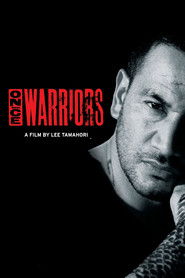
Once Were Warriors (1994)
The opening image is a thesis: postcard-perfect mountains that turn out to be a billboard bolted over a roaring motorway. Everything the film knows lives in that gap between painted paradise and the concrete beneath it. Stuart Dryburgh — who shot The Piano the year before — gives this world a hard, glossy, neon-inflected sheen: amber and red in the pub, cooler and flatter at home. Watch Temuera Morrison's Jake, a performance in the lineage of Brando's Stanley Kowalski — magnetic and terrifying at once — and watch how the film frames domestic space as a pressure vessel for an ancestral energy with nowhere left to go.
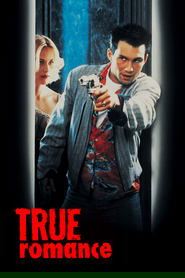
True Romance (1993)
Tony Scott shoots a Tarantino script in bruised blues and molten ambers, saturated to the edge of abstraction — image as pure sensation, closer to a music video or a perfume ad than to realism. That's not a flaw; it's the argument. The hero has assembled himself entirely out of pop culture — comic books, movie posters, an inner Elvis who offers advice from bathroom mirrors, shot dead literal, no wavy dream-dissolve. Watch how the film descends from Godard's Breathless — the kid trying to become a movie — and from the lovers-on-the-run tradition of Gun Crazy and Bonnie and Clyde, and how it dares to hold extreme tenderness and extreme violence in the same frame.
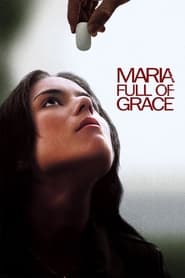
Maria Full of Grace (2004)
Marston takes the most action-hungry genre there is — the drug-trafficking picture — and drains the action out until only a body carrying its cargo remains. Watch her throat: the film organizes itself around the small muscular act of swallowing and enduring, quiet and still, for a day and a half. Jim Denault's handheld camera stays close to faces in tight, unglamorous rooms — greenhouse, airplane cabin, fluorescent customs hold — in the neorealist tradition of non-actors and economic entrapment that runs from Bicycle Thieves through the Dardennes. Suspense wrung from stillness rather than spectacle: that's the radical move.
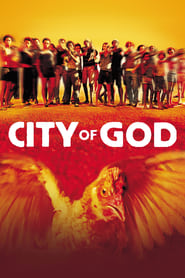
City of God (2002)
The famous opening — a chicken bolting down a favela alley, boys with pistols in pursuit, the camera whipping a full 360 around the trapped narrator before snapping into the past — contains the whole film. César Charlone's camera is handheld but never neutral: whip pans, snap zooms, ramped slow motion, color graded hot gold for the good years and souring as the bodies accumulate. Watch how the film pours all the velocity of a Goodfellas-style rise-and-fall chronicle into a place where all that motion resolves nothing — where the cycle just consumes the next generation of children. The style is exhilarating; what it depicts is a machine.
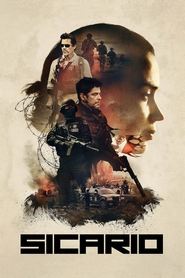
Sicario (2015)
Watch where Villeneuve puts Emily Blunt: in a doorway, in a back seat, at the edge of a briefing where the real plan is decided somewhere she is not. The film's entire argument about complicity and institutional power is encoded in that blocking — a competent agent who perceives everything and can change nothing. Deakins shoots the border landscape geologically, wide frames dwarfing human figures, refusing the Western's mythic glow. This is a thriller that keeps converting action into something you can only witness — and it makes witnessing unbearable in the best way.
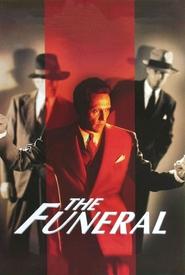
The Funeral (1996)
Ferrara opens where a gangster picture is supposed to end: a coffin in the front room, candles burning, the living arranging themselves around the dead. Ken Kelsch lights it in deep chiaroscuro — faces emerging from darkness, a palette of browns and blacks, interiors lit as if by a few real lamps — so the whole film feels like a wake. Notice how the present keeps getting interrupted by the past, and how the revenge plot moves forward without ever generating the forward momentum the genre promises. This is a mob film built on Catholic questions — free will against fate — with no empire, no glamour, no ascent.
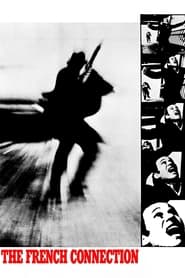
The French Connection (1971)
Friedkin's procedural is built out of adversarial, documentary-rough craft: Owen Roizman's telephoto surveillance shots, an urban-winter palette of greys and wan yellows, real streets and real cold. Watch the scene where Doyle stands on a freezing sidewalk eating cold pizza while, through restaurant glass, the elegant Frenchman he's hunting enjoys wine at a white tablecloth — no dialogue explains it; the film just lets you stand on the cold side of the glass. This is detective cinema in its purest dialect: no grand confrontation, just a thread snagged and pulled, each small act — a tail, a frisk, a wiretap — lighting up one more inch of a hidden network.
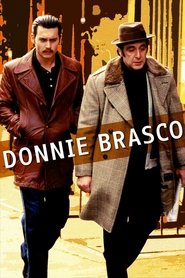
Donnie Brasco (1997)
The camera here, in a lovely phrase, "rarely performs" — it just watches, in a palette of late-autumn greys and washed-out amber. What it watches is Johnny Depp's face, and the film's whole subject is there: a man always slightly behind his eyes, listening, laughing on cue, watching the room and watching himself work the room. An undercover agent is a method actor in a mortal context, and this film takes the cost of sustained performance more seriously than almost any gangster picture. Where Goodfellas demythologized the mob through irony and Casino through excess, this one works through intimacy and reduction — the small, shabby, human scale of it.
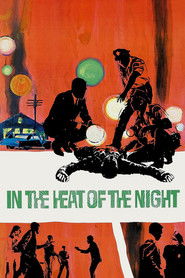
In the Heat of the Night (1967)
Haskell Wexler — documentary-trained, two years from directing Medium Cool — shoots the Mississippi town hot and close: sweat-sheened faces, long lenses compressing space, a hostile environment pressing in. Watch for the greenhouse scene: a slap, and a slap returned without a breath of deliberation — and notice that the camera skips the blow itself and goes straight to the faces around it. This is one of the last, purest examples of classic detective cinema working at full strength: a man reads a clue — the lividity of a corpse, the angle of a wound — and acts, and the act discloses the situation piece by piece. That the man is Sidney Poitier, asserting competence and authority in a society built to deny both, is what gives every deduction its charge.
Watched together, these films become a conversation about agency. Some — In the Heat of the Night, The French Connection — show you the crime film's engine running at full power: perceive, act, disclose, resolve. Others — Sicario, No Country, Donnie Brasco, Maria Full of Grace — take that same engine and let it idle, stall, or run without traction, so that watching, waiting, and enduring become the drama. And a few — Once Upon a Time in America, The Funeral, Fish Tank — let time itself flood in where action used to be: memory, grief, a body dancing in an empty room. Once you start noticing whether a film's hero can act on what they see — and what the camera does when they can't — you'll never watch a thriller the same way again. That's the course. The films are the teachers.