Sightlines · a mini film course
Twelve Films, One Jury: You
Every film in this set puts someone on trial — but the real defendant is the image itself. These are movies about testimony, verdicts, and the machinery of the law, yet almost none of them stage the crime. Instead they ask a harder question: when all you have is what people say happened — sworn, contradicted, coached, performed — how do you decide what's true? Each of these filmmakers answers with the camera. Some let it watch a face until the face becomes the whole world. Some seal it in a single room and let time press down. Some hand you more information than anyone on screen has; some deliberately give you less. Watched together, they form a course in how cinema turns judging into an experience — and how, again and again, the person left holding the verdict is you.
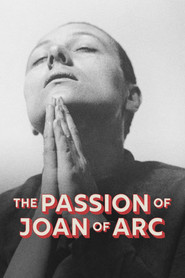
The Passion of Joan of Arc (1928)
Dreyer and cinematographer Rudolph Maté shoot a trial almost entirely in extreme close-up, on new film stock that could finally record skin as skin — pores, tears, weather — instead of a mask of makeup. Notice that you can never quite map the room: the usual rules of screen geography are suspended, so faces float free of any floor plan. Joan can do almost nothing — she is chained, outnumbered, questioned — so the entire drama has to live in what crosses her face while she endures. It's the boldest bet in silent cinema: that a face, held long enough, is a bigger landscape than any battlefield.
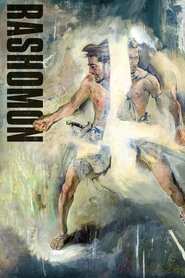
Rashomon (1950)
Kazuo Miyagawa pointed his camera straight up into the sun — something studio rules forbade — and bounced light off mirrors to make a forest that flickers, glares, and half-blinds you. That's the tell: before anyone speaks, the image itself has stopped being a neutral witness. Four people describe the same crime in accounts that cannot be reconciled, and Kurosawa films each telling with equal, seductive conviction. Watch how the style refuses to referee — and notice what that does to your own instinct to pick a winner.
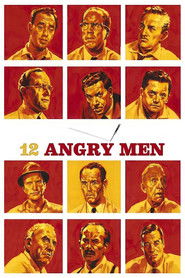
12 Angry Men (1957)
One room, real time, twelve men, a fan that barely works. The crime is over before the film begins and can never be shown, so all anyone can do — including you — is interpret. Watch what Lumet and cinematographer Boris Kaufman do with lenses and angles as deliberation wears on: the room seems to change shape around the arguments, the space slowly becoming part of the pressure. It's a thriller built entirely out of inference, and it never once feels like a filmed play.
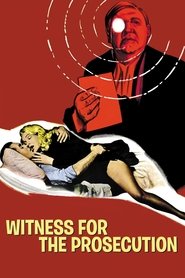
Witness for the Prosecution (1957)
Wilder's courtroom is a theater, and everyone in it is giving a performance — the barrister, the witnesses, the accused. Russell Harlan's lighting is the sly commentary: watch which faces are lit flat and bright, almost unkindly legible, and which are allowed to slide into pools of shadow at telling moments. The film's quiet argument is that a trial doesn't discover truth; it stages a competition of performances. Track the light, and you're tracking the game.
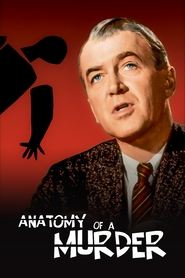
Anatomy of a Murder (1959)
A film with "murder" in the title that never shows you the act — no flashback, no privileged glimpse, only talk: sworn, cross-examined, contradicted talk. Preminger and cinematographer Sam Leavitt work in deep focus and long takes, letting legal argument unfold in continuous time with the camera watching rather than editorializing. Pay attention to the early office scene where Jimmy Stewart's lawyer explains the law to his client before hearing his story — it tells you exactly what kind of machine you're inside. The trial doesn't recover what happened; it builds an account that can win.
The Trial (1962)
Welles lost his set budget, wandered into the abandoned Gare d'Orsay railway station one night, and saw the whole film at once — and that accident is its secret. Cinematographer Edmond Richard shoots the real, enormous, lifeless place with extreme wide-angle lenses so that ceilings loom, corridors stretch to vanishing points, and Josef K. becomes a speck in a grid he cannot read. Watch how space itself is the antagonist: the accused man hurries constantly, and the hurrying gets him nowhere. It's the law as architecture — a building you're guilty of being inside.
Lost Highway (1997)
Lynch takes the trappings of noir — the murder, the gangster, the doomed Los Angeles — and strips out motive, explanation, and detection. Peter Deming photographs a house as engulfing darkness: rooms defined by what you can't see, people walking into blackness and dissolving, set against bleached, sun-struck exteriors. Don't try to draw the map; watch instead how the film melts the usual walls between what's happening, what's remembered, and what's dreamed. Identity here is unstable by design — the same face may not mean the same person.
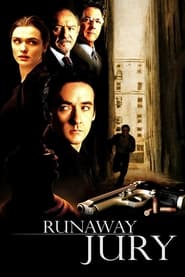
Runaway Jury (2003)
The pleasure here is knowing too much. Fleder intercuts three arenas — courtroom, surveillance bunker, the streets — so that you always hold more of the board than anyone inside the story, and the suspense comes from watching the pieces converge. Gene Hackman's jury consultant, lit colder than anyone else in the picture, treats twelve citizens not as a mystery but as a machine to be modeled. Robert Elswit (later of There Will Be Blood) gives it all a warm, classical New Orleans sheen that makes the cynicism go down smooth.
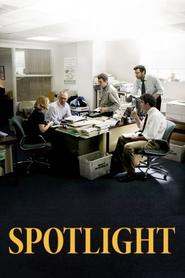
Spotlight (2015)
Watch the cuts. McCarthy ends scenes the instant a reporter has what they came for — a name, a document, a specific word — because the act of getting it is never the point; what it slowly reveals is. The camera is deliberately plain: functional placements, unglamorous fluorescent light, a handheld that breathes rather than jolts, all in the lineage of All the President's Men. The style is an ethics — no scene is allowed to be more dramatic than the information it carries — and the accumulating picture of institutional silence is the more devastating for it.
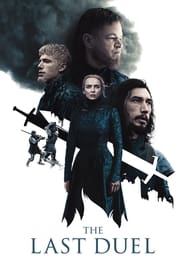
The Last Duel (2021)
One story, told three times, each chapter opening with a title card claiming the truth. Scott and cinematographer Dariusz Wolski resist the obvious move of restyling each version; the shifts are behavioral and compositional, which makes them easy to miss and devastating to catch. Above all, watch where Marguerite stands in the frame across the three tellings — pushed to the edges of other people's stories, then repositioned. The placement of one figure turns out to be the film's entire argument about whose testimony gets believed.
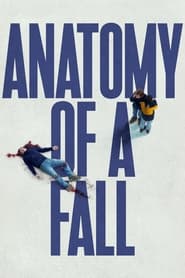
Anatomy of a Fall (2023)
Triet's title nods to Preminger, and so does her refusal: no flashback ever arrives to settle what the trial argues about. In the film's boldest passage, an audio recording plays and the camera has nowhere to go but the faces of people listening — you get sound the picture declines to confirm. Simon Beaufils's middle-distance camera refuses to loan you any single character's eyes, so you sit exactly level with the jury. Notice how the film makes marriage itself the unknowable crime scene.
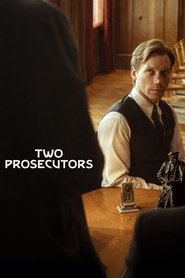
Two Prosecutors (2025)
Loznitsa boxes the film into a near-square frame, and cinematographer Oleg Mutu (of 4 Months, 3 Weeks and 2 Days) plants his upright young prosecutor dead center in it, holding scenes in patient, near-motionless takes that play in real time. Watch the architecture: cells, corridors, anterooms, train compartments cropped to the width of a doorway, the frame tightening as the man presses deeper into the Stalinist legal apparatus he still believes in. He thinks he is investigating a room. Pay attention to whether the room is investigating him.
Watch these together and something cumulative happens: you stop asking "what happened?" and start asking "how do I know?" You'll see the same tools passed hand to hand across a century — Dreyer's faces resurfacing in Falconetti-close interrogations, Kurosawa's repeated tellings inherited by Scott and Triet, Lumet's pressure-cooker room echoing in Fleder's wired jury box,