Sightlines · a mini film course
The Court of the Eye: Twelve Films on Evidence, Testimony, and What a Camera Can Prove
Every film on this list is, one way or another, a trial — some literally, in courtrooms and jury rooms, others in the looser courts of conspiracy, memory, and the street. What binds them is a shared suspicion: that seeing is not the same as knowing. These filmmakers keep asking what an image can actually testify to — and their answers live in the how. A camera placed at a child's eye level, a lens that stretches a room into a labyrinth, a frame boxed nearly square, a flashback deliberately withheld: each is a legal argument made of light. Watch them in order and you'll see a century of cinema cross-examining itself.
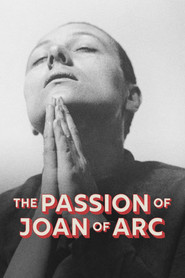
The Passion of Joan of Arc (1928)
Dreyer and cinematographer Rudolph Maté build almost the entire film from extreme close-ups of the human face — shot on new film stock that could finally record skin honestly, with no flattering makeup. Notice how you can never quite map the room; the usual rules of screen geography are suspended so that faces float free of their setting. Joan can do almost nothing — she is chained, outnumbered, on trial — so the whole drama has to live in what crosses her face while she endures. It remains the most radical demonstration that a face, watched closely enough, is a landscape.

The Lady from Shanghai (1947)
An unreliable narrator, a fraudulent scheme, and a heroine (Rita Hayworth, famously transformed to platinum) who may be more reflection than substance: appearance versus reality is worked into every level of the construction. Watch how Welles shoots the Acapulco sequences with a sun-drenched openness that feels almost deliberately wrong for a crime picture, and how mirrors keep multiplying the visible world — culminating in a funhouse set piece so intricate the set had to be planned so the camera never caught its own reflection.
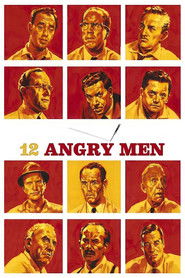
12 Angry Men (1957)
The crime is over before the film begins; it happened offscreen and can never be undone. Twelve men are sealed in one hot room in something close to real time, and all they — and we — can do is interpret. Lumet and cinematographer Boris Kaufman use lenses with quiet cunning to make the room itself feel like it's tightening as the deliberation deepens. It's a thriller built entirely out of inference, and it seats you as the thirteenth juror.
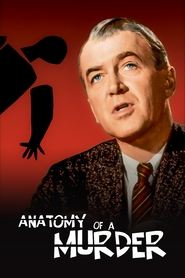
Anatomy of a Murder (1959)
A film called Anatomy of a Murder that never shows you the crime — no flashback, no privileged glimpse to settle what the characters can only argue about. Preminger gives you talk instead: sworn, cross-examined, coached, contradicted talk, filmed in lucid deep-focus long takes so legal argument unfolds in continuous real time and the camera watches rather than editorializes. Pay attention to the early scene in Biegler's office, where a lawyer explains the law before hearing the facts — a small masterclass in how a usable story gets built.
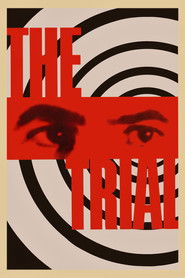
The Trial (1962)
Welles lost his set budget, then found the abandoned Gare d'Orsay railway station in Paris and saw the whole film in it at once. That accident is its secret: this isn't a built set but a real, enormous, lifeless place, and Edmond Richard's extreme wide-angle lenses and deep focus make sheer volume the antagonist — ceilings loom, corridors run to vanishing points, a hurrying man shrinks to a speck in a grid he'll never read. Watch how architecture does the work of accusation.
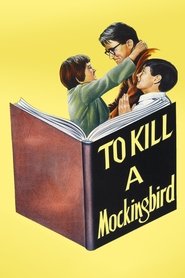
To Kill a Mockingbird (1962)
Watch where the camera sits: about four feet off the ground, a child's height, so the adult world leans in over it — Atticus becomes a tower, a threat becomes a shape detaching from the dark. The whole film is narrated by a grown Scout we never see, and Russell Harlan's hazy, diffused daylight is the visual grammar of remembering, while the main theme is a child's hand picking out single piano notes. Maycomb is never simply shown; it's shown as it reached a child looking up.
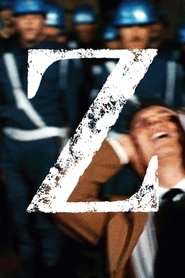
Z (1969)
When violence erupts in a crowd early on, Costa-Gavras drops the camera into the legs and the panic, cutting so fast you never get the clean overhead shot that would tell you exactly what happened — because that engineered confusion is exactly what officials will exploit. Raoul Coutard shoots with the handheld, fast, available-light style he developed for the French New Wave, repurposed here for political fury. Notice how the film replays the same event from multiple witnesses, turning editing itself into an investigation.

Chinatown (1974)
Jack Nicholson spends half the film with a bandage across his nose — a detective who can't follow his own nose, the joke taped right to his face. John Alonzo inverts the crime film's traditional grammar: instead of nocturnal shadows, the pivotal scenes happen in harsh midday sun, amber and dust, a world where daylight offers no clarity and shadow no refuge. Watch the quiet procedural beats — tailing, photographing, wading into water channels — and notice how craft and dread rise together.
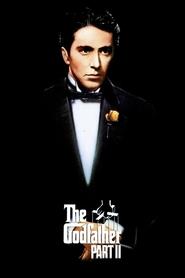
The Godfather Part II (1974)
The great structural gamble is the braid of two timelines: young Vito's rise in early-century New York, shot with warmth and gathering shadow, against Michael's mid-century empire, and Gordon Willis lights each era as its own moral climate — harsh Sicilian sun, amber tenements, rooms where darkness slowly wins. Watch how the crosscutting makes each story comment on the other without a word of dialogue, and how the film strips the gangster genre of every traditional consolation.
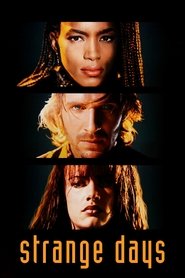
Strange Days (1995)
You don't watch the opening — you wear it: a crime unfolds entirely through someone else's eyes, on custom rigs Bigelow built years before GoPro or bodycams made first-person vision ordinary. The film maintains two distinct ways of looking — the grimy, neon-soaked Los Angeles of the "real world" and the seamless subjective footage of recorded experience — and much of its meaning lives in the difference. It asks, well ahead of its time, what it costs to rent someone else's eyes.
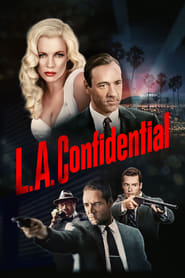
L.A. Confidential (1997)
Dante Spinotti lights 1950s Los Angeles in warm amber and gold — sunlight through venetian blinds, lacquered bars — a look borrowed lovingly from classic 1940s studio glamour. Then notice what that glamour is applied to: a city of manufactured surfaces, tabloid press, a TV cop show, and a vice ring selling women surgically altered to resemble movie stars. The film lights the forgery with full reverence and knows it's a forgery, and it refuses to choose between those two facts.
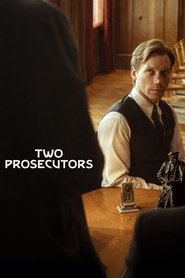
Two Prosecutors (2025)
Loznitsa boxes the film into a near-square frame, and Oleg Mutu — cinematographer of the Romanian New Wave's landmark 4 Months, 3 Weeks and 2 Days — plants his upright young prosecutor dead center in it, holding scenes in single, near-motionless setups so interrogations and waits play out in real time. Watch the architecture: cells, corridors, anterooms, train compartments cropped to the width of a doorway, tightening as the investigation deepens. A man believes the law means what it says; the frame itself keeps asking whether the rooms he enters are being investigated or doing the holding.
Watched together, these twelve films form a single long argument about the distance between what happened and what can be shown. You'll see the same tools passed hand to hand across seventy years — deep focus keeping every witness in view, close-ups turning faces into testimony, real spaces standing in for institutions too big to fight — and the same nagging question renewed each decade: when the camera takes the stand, can we believe it? Notice the choices. Notice what each film refuses to show you, and when. That refusal, more often than not, is where the meaning lives.