Sightlines · a mini film course
The Watcher Remade: Twelve Films About Seeing, Hesitating, and Becoming Something Else
What connects a fungus-bright meadow, a rain-slicked neon city, a silent farmhouse, and a chrome police officer? Every film in this set is fascinated by the moment when a body — human, android, infected, armored — meets something that will remake it, and by what the camera does in that moment. Sometimes the camera chases; more often, in these films, it watches. It lingers in the gap between seeing a thing and knowing what to do about it. It lets faces hold still, lets sound do the storytelling, lets space become a trap or a mirror. Watch these twelve together and you'll start noticing how differently each filmmaker handles that same charged pause — and how the great genre films are built not out of monsters, but out of attention.
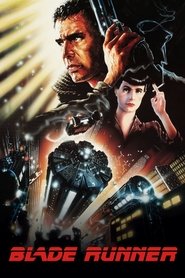
Blade Runner (1982)
Start here, because so much of the rest descends from it. Jordan Cronenweth's cinematography fuses 1940s crime-film shadow — venetian-blind striping, pools of darkness cut by sodium light — with a vertical future city borrowed from Metropolis: towers above, squalor below. Watch the photographs: characters keep clutching them as proof of who they are, and the film quietly asks whether a memory you hold in your hand can ever be trusted. Notice how often people are staged as images — spotlit against darkness, reconstructed by someone else's gaze.
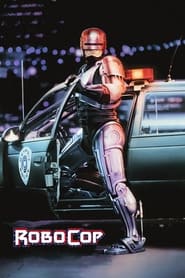
RoboCop (1987)
Verhoeven, a Dutch outsider in Hollywood, shoots corporate America with a satirist's cold eye. Watch the visor: whole stretches unfold as machine vision — targeting grids, readouts, a name printed beside a face — vision cut loose from any human eye. And watch how the film keeps interrupting itself with fake newscasts and ads ("I'd buy that for a dollar"), snapping you out of the story to make you read the world instead of just riding it.
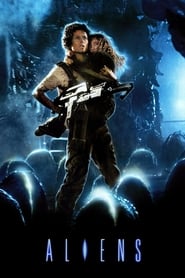
Aliens (1986)
Cameron's film is the purest demonstration in this set of cinema as cause-and-effect: perceive the threat, act, change the situation. But notice where it starts — with a survivor who has seen everything and can do nothing, disbelieved, enduring. The film's engine is watching her fight her way back from pure helpless witnessing into decisive action, and the industrial lighting — cold blue-white pools, strobing combat — charts that journey. The motion tracker's beep, invented here as pure dread, will echo forward through this whole list.
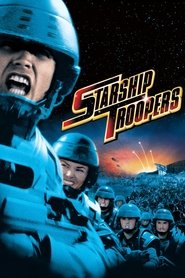
Starship Troopers (1997)
Verhoeven again, running the same trick as RoboCop at planetary scale: execute the rousing war movie flawlessly and hang a frame around it. Jost Vacano shoots the human world like a recruitment poster — high-key, saturated, every jaw square — pitched just a half-step too clean. Watch the propaganda interludes ("Would you like to know more?") and notice your own appetite for them. The film's boldest move is making a seductive surface and daring you to enjoy it uncritically.
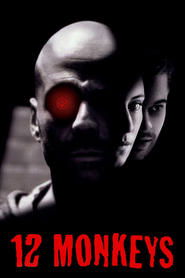
Twelve Monkeys (1995)
Gilliam takes an action star and systematically disables him: Bruce Willis arrives with all his physical authority, and the film gives him a world he can see clearly and cannot bend. Roger Pratt's distorting lenses, low angles, and cold desaturated palette make every institution — hospital, future bunker — press inward. Watch how one recurring fragment of memory keeps returning, slightly differently each time, like a lock the film is slowly teaching you to pick.
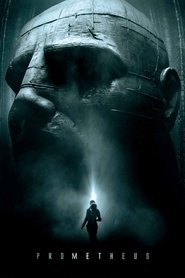
Prometheus (2012)
Before a single human wakes, watch what the android does with two empty years — the bicycle, the basketball, the borrowed voice from Lawrence of Arabia. A made thing quietly deciding who to be, in a film obsessed with the moment of being made. Wolski's vast, architecturally precise wide shots dwarf the humans against monuments, borrowing the awe-struck grammar of 2001. This is a blockbuster built around a question rather than an answer — notice how much the film withholds, and how deliberately.
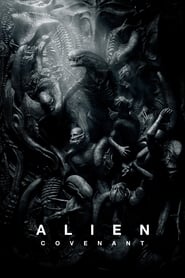
Alien: Covenant (2017)
Watch the hard line Wolski's photography draws between two worlds: the cool, sterile light of corporate spaceflight versus the soft, naturalistic gloom of the planet. This is the Alien franchise folding in Frankenstein — creators and creations in a chain of resentment — and its most unsettling spaces are decorated like an artist's studio: drawings, specimens, compositions. Ask yourself, as you watch, what kind of mind arranges things this beautifully.

Alien: Romulus (2024)
Here the franchise curates itself. Galo Olivares rebuilds the original's grimy, work-lamp-and-shadow look; Álvarez grafts Cameron's tactical siege dread onto Scott's haunted-house bones; the score openly quotes 1979. The fascinating thing is how the film frightens you with your own memory — a motion-tracker beep scares you before anything has happened, because you've heard it before, in a corridor you never walked. Notice also the sharpened class politics: the protagonists are indentured laborers, their lives literally company property.

28 Weeks Later (2007)
The opening sequence — a candlelit farmhouse, then a daylight flight across open country — is one of the most controlled stretches of 2000s horror, and everything after unfolds in its shadow. Watch how Chediak's camera changes when violence erupts: whip-panned, strobed, near-abstract, so that attack arrives as sensory overload rather than legible action. This is a film about drives outrunning decisions — and about what happens when the systems sent to restore order clamp down harder.
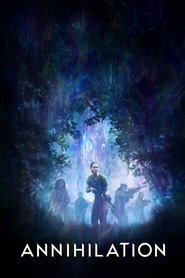
Annihilation (2018)
Rob Hardy shoots the Shimmer as a soap-bubble membrane, greens pushed toward the toxic, everything given an oily refraction — a contaminated Zone borrowed from Tarkovsky's Stalker, entered by an expedition of watchers rather than fighters. Notice the moments when the characters can only look: nobody explains the strangeness, nobody can act on it, and the looking becomes the whole event. Be ready for a finale that trusts pure image and sound the way 2001 did.
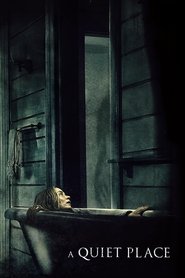
A Quiet Place (2018)
Watch the feet. Charlotte Bruus Christensen's earth-toned, naturalistic images keep returning to the half-second before weight settles — the raked sand path, the bare sole testing a floorboard. The film's genius is prying open the gap between perceiving danger and reacting to it, and living inside that gap for two hours. Sound design does the work a score usually does; silence becomes the suspense instrument, as it was in The Birds.
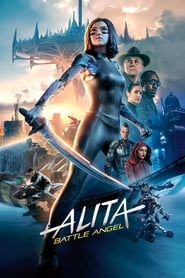
Alita: Battle Angel (2019)
Start with the eyes — built deliberately too large, breaking every rule of digital-human proportion. They're not a flaw; they're the argument. Where most blockbusters cut away from a face as fast as possible, this one enlarges a face of pure astonishment until you can't look anywhere else, and Weta's technology exists to carry every involuntary flinch and glance of Rosa Salazar's performance onto a non-human surface. Watch also the vertical city — elites above, laborers below — quoting Metropolis one more time.
Why watch these together? Because they're one long conversation. Metropolis's vertical city echoes through Blade Runner, RoboCop, and Alita; Cameron's marines march into Starship Troopers and Romulus; Scott's androids look in the mirror across four decades. But the deeper reward is training your eye on a single question asked twelve ways: what does the camera do when action fails — when a character can only watch, hesitate, remember, or become? Some of these films close that gap with a fist (Aliens), some pry it open until it aches (A Quiet Place, Annihilation), some fill it with irony (Verhoeven), grief (Gilliam), or wonder (Alita). Watch for the pause before the reaction. That's where all twelve of these films actually live.