Sightlines · a mini film course
The Missing Seam: Twelve Films Where the World and the Mind Trade Places
Most movies are courteous. When a character starts dreaming or remembering, the film warns you — a dissolve, a shift in music, a mistiness in the picture. The twelve films in this set withdraw that courtesy. In each of them, the border between what's happening and what's being felt, dreamed, or remembered goes quietly missing, and the filmmaking itself — a gliding camera, a held shot, an unbroken take, a room too beautiful to trust — becomes the way you experience a mind from the inside. These are films where the camera watches rather than chases, where time is allowed to stretch, where a house or a jungle or a hotel stops being a setting and starts being a state of being. Watch them close together and you'll start to feel the family resemblance in your bones.
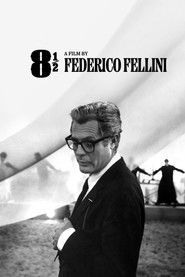
8½ (1963)
The founding document of the set. Fellini cuts between present life, childhood memory, and pure fantasy with the same hard, matter-of-fact joins he'd use between two rooms of the same house — no softening dissolve, no cue, no change in the silvery black-and-white to grab onto. Watch how the famous opening (a man trapped in a traffic jam, then suddenly airborne) teaches you the film's one rule in two minutes: you will not be told when you've left the world for the head. Once you accept that, the film becomes exhilarating rather than confusing.
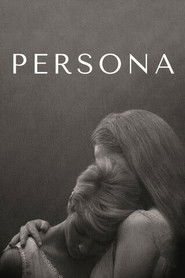
Persona (1966)
Bergman builds a whole film out of the human face held past the point where it "expresses" anything — until you stop reading it for information and start reading it like weather. Watch Sven Nykvist's window-lit close-ups, skin luminous against pure black, and notice how a story about an actress who has gone silent hands all its feeling over to one woman's face and another woman's voice. It's a chamber piece, nearly a single location, and the intimacy becomes its own kind of vertigo.
The Shining (1980)
Garrett Brown's Steadicam was brand new in 1980, invented to smooth out shaky shots; Kubrick turned it into a way of thinking. Watch (and listen — carpet, hardwood, carpet) as the camera floats behind a boy on a trike, gliding through corridors that seem to be arranging themselves ahead of him. Notice too that the hotel's geography is famously impossible to map — windows where walls should be — and that this is deliberate: the Overlook isn't a place the characters move through so much as a mind they're moving inside.
Nostalgia (1983)
Tarkovsky treats the long take as a moral commitment: the camera moves slowly or not at all, and pressure builds through sheer duration. Watch for a nine-minute single shot involving a man, a candle, and a drained pool — nothing is "happening," and everything is at stake, and the film teaches you to feel the difference. This is a film about exile where the hero can't act, can't go home, can't even communicate; all he can do is look and endure, and Tarkovsky makes that looking monumental.
Lost Highway (1997)
Peter Deming photographs Lynch's Los Angeles as engulfing darkness — a house whose rooms are defined by what you cannot see, where people walk into blackness and simply dematerialize. It has all the furniture of noir (the femme fatale, the gangster, the murder, the surveillance tapes) with the explanations surgically removed. Watch the very first scene closely — a voice on an intercom, a message, an empty street — and trust nothing about who anyone is; identity here is not stable ground but the thing under investigation.
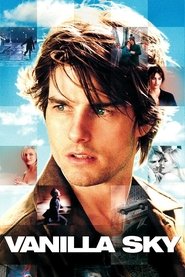
Vanilla Sky (2001)
John Toll, one of the great painterly cinematographers, gives this film a lush, high-gloss surface — and that beauty is not decoration, it's evidence. Watch the astonishing early image of a man alone in an emptied Times Square and hold onto the feeling that the picture is too gorgeous to trust. Crowe's meticulous song choices work as a second layer of narration; listen to what the needle-drops are telling you that the dialogue isn't.
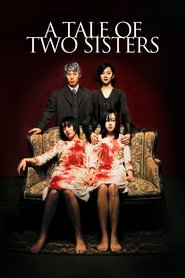
A Tale of Two Sisters (2003)
Lee Mo-gae shoots this Korean gothic like a children's book — floral wallpaper, warm woods, deep ambers, rooms framed through doorway after doorway — and the prettiness is the trap. Kim Jee-woon hides his horror not in the dark but in the well-lit corner of a lovely room. Watch how the house itself seems composed, finished, screened — a surface arranged over something you can't yet see — and notice how the film descends from haunted-house classics where you're never sure if it's the house or the mind.

Uncle Boonmee Who Can Recall His Past Lives (2010)
A camera that watches rather than chases: long, patient, near-static takes, interiors lit to preserve real darkness, the forest's ambient sound doing the work of a score. Watch how the film handles the uncanny — no music stings, no hard cuts, no one in the frame reacting with fear — so that the marvelous arrives with the calm of a guest showing up early to dinner. The wonder lands precisely because nobody treats it as wonder.

Black Swan (2010)
Matthew Libatique's camera rides inches behind Nina's shoulder through corridors and dressing rooms, putting you somewhere that has no name — not inside her mind, not safely outside it, but shadowing her, close enough that intimacy curdles into surveillance. Watch the mirrors: a ballet studio is wall-to-wall glass, and Aronofsky treats reflections as things with their own agenda, lagging a half-beat behind the bodies that cast them. A backstage melodrama, a doppelgänger thriller, and body horror, all at once.
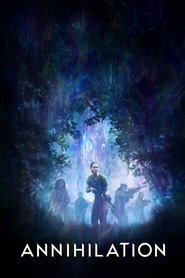
Annihilation (2018)
Rob Hardy shoots the Shimmer as a soap-bubble membrane that tints everything inside it — greens pushed toward the toxic, water given an oily refraction — and inside that membrane, cause and effect refract too. Watch for a pair of deer moving in perfect mirrored unison: nobody explains it, nobody can do anything with it, and that stalled, helpless looking is the film's whole method. Its debt to Tarkovsky's Stalker — a rule-governed forbidden zone entered by a small expedition — is proud and open.
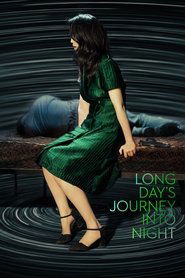
Long Day's Journey Into Night (2018)
About an hour in, this film asks you to perform a small physical ritual (if you can see it as intended, in 3D: glasses on, in the dark), and then holds a single unbroken shot for fifty-nine minutes. Watch how the two halves are two different kinds of cinema — first, memory that refuses to anchor to a timeline, hovering under a lyric voiceover; then, a continuous drift through space that feels like moving through someone's inner life. Bi Gan learned from Tarkovsky and Fellini, and you'll recognize the lineage by now.

Petrov's Flu (2021)
Serebrennikov's camera threads unbroken through doorways, stairwells, and crowded buses, gliding from ordinary provincial life into fever-vision and back without a cut to warn you — the long take as delirium. Watch for the film's hero doing almost nothing: sick, carried, sweating, watching, while the world sweeps around him like a dance he's been absorbed into rather than leading. It's the whole set's method pushed to fever pitch: illness as the state where the boundaries between sanity and delusion, now and then, simply give way.
Watch these together and something shifts in how you watch. Each film trains you a little further out of the habit of asking "what happens next?" and into a richer question: "where am I right now — in the world, or in someone's head — and how did the film move me across without my noticing?" You'll see the influences passing hand to hand: Fellini's seamless cutting flowing into Bi Gan, Bergman's faces into Aronofsky's mirrors, Tarkovsky's Zone into Garland's Shimmer, gliding cameras from Kubrick to Serebrennikov. By the twelfth film, you won't need the seam pointed out to you — you'll feel its absence the moment it goes, and that feeling is one of the deepest pleasures cinema has to offer.