Sightlines · a mini film course
When Seeing Is the Whole Event
Most thrillers and horror films run on a simple engine: a character sees a problem, acts on it, and the world changes. The eleven films in this set all, in one way or another, unplug that engine. Their detectives investigate and only incriminate themselves. Their soldiers and scientists and policemen watch things they cannot act on. Their houses, hotels, and painted towns stop being backdrops and start behaving like minds — or appetites. Across a century of filmmaking, from hand-painted shadows in 1920 to a rolling camera in 2020, these are films where the looking is the whole event: where light, space, and the camera's own behavior carry the horror, and where the gap between what the image knows and what the character can bear to know becomes the deepest source of dread. Watch them in any order, but watch them for how they see.
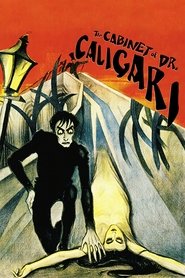
The Cabinet of Dr. Caligari (1920)
Look at the floor: there's a long black shadow on the cobblestones, and nothing in the frame casts it. It was painted there. The darkness in this film is not photographed — it is authored, brushed directly onto the sets, so the world itself leans, curdles, and menaces before anyone does anything. Watch how the warped architecture becomes a statement about psychological enclosure, and how a story of absolute control — a showman and the sleepwalker who has no will of his own — is nested inside a frame that keeps you from ever standing on solid ground.
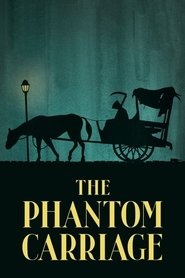
The Phantom Carriage (1921)
Watch the cart cross the water: waves visibly moving through its wheels, the driver there and not there. Sjöström and his cameraman Julius Jaenzon achieved this by exposing the same strip of film twice — once for the real world, once, dimmer, for the ghost — with a locked camera and extraordinary control of light. Superimposition existed before 1921; what's new here is that it isn't a parlor trick but the film's native tongue, sustained for an hour, making the living present and its spectral double share a single frame. Notice too how restrained, naturalistic performances in the human scenes anchor the supernatural ones.
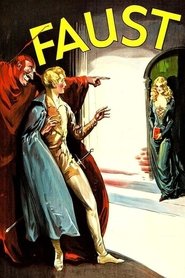
Faust (1926)
Keep the famous image in mind: a black winged shape opening over a sleeping town until the dark pours into the streets as plague. Nothing "happens" in the shot the way a story happens — a darkness simply enlarges until it owns the frame. This is a cinema where light and shadow are the real combatants, and where meaning travels not through fast cutting but through dissolves and superimpositions, one luminous mass bleeding into another. Watch how figures are sculpted out of enveloping blackness, and how a hand-built medieval town becomes the stage for a fight staged on the image itself.
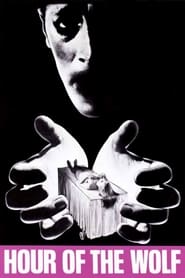
Hour of the Wolf (1968)
Watch how a face arrives in this film: it doesn't walk into a room, it surfaces out of black, says its small terrible thing, and sinks back with no door or footstep to mark the way. Sven Nykvist lit the film by subtraction, stripping illumination away until only the luminous skin of a face survives against a void — and that technical choice is also the film's philosophy, because you can never quite say where these people are standing, or whether they're there at all. Bergman built the picture so that two mutually exclusive accounts of what's happening stay equally alive; don't look for the seam, because there isn't one.
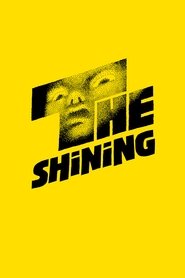
The Shining (1980)
A boy pedals a trike through an empty hotel and the camera glides behind him a few inches off the floor, smooth as a held breath — carpet, hardwood, carpet, the wheel-sound going loud and soft as he rounds each corner. Garrett Brown's Steadicam was invented to smooth out shaky shots; Kubrick turned it into a way of thinking, gliding through corridors composed with rigorous one-point symmetry, everything receding to a single vanishing point. Notice that the Overlook's geography is famously impossible — rooms that can't connect, windows where walls should be. People have tried to map it and failed, and that failure is the point: the hotel is less a setting than something the characters are moving inside.
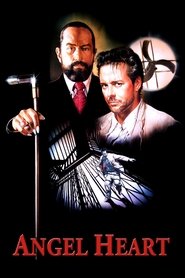
Angel Heart (1987)
There's a ceiling fan turning at the top of almost every room, chopping the light into flicker — and the detective keeps not looking at it while we keep looking at it. Michael Seresin films everything through smoke and dust: a cold, grey, verminous New York against a humid, amber, rotting Louisiana. Watch how the film performs all the rituals of the classic private-eye story — the wealthy client, the missing man, the interviews — while quietly rewiring them, and watch for the near-subliminal flashes of imagery cut into otherwise realistic scenes, a trick inherited from The Exorcist. This is a detective film where every opened door matters more than the detective knows.
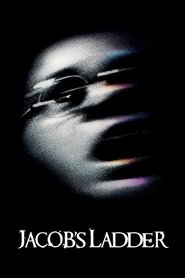
Jacob's Ladder (1990)
A man on the subway notices a slumped figure whose head shakes too fast — at a frequency the eye can't resolve. Lyne got that by having the actor whip his head while the camera ran slow, so the wrongness is printed into the photograph itself rather than layered on top. Watch how the palette splits: greenish swamp-humidity for Vietnam, sickly fluorescent whites for the civilian world — and watch what the protagonist does about the horrors he sees, which is mostly look. The film hands you thriller machinery — a veteran, a conspiracy — and then lets every thread dissolve faster than any action could follow.
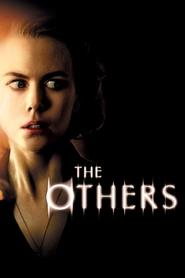
The Others (2001)
Grace carries the keys everywhere; the rule of the house is absolute — no door opened until the one behind it is locked. Javier Aguirresarobe shoots this sealed world in a nearly monochrome palette of slate greys and lamplight cream, the black of unlit corridors pressing at the rim of each candle flame. The film obeys the old rule of The Haunting: never show the ghost — terror is built from sound, suggestion, and the house itself. Watch how the fog smothers every exterior, closing off any outside, and pay attention to that key ritual: it means more than it appears to.
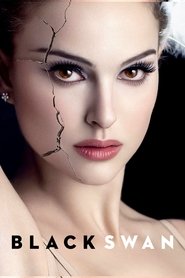
Black Swan (2010)
Watch the back of her head. Matthew Libatique's camera rides inches behind Nina's shoulder through corridors and dressing rooms — never letting you see quite what she sees, never letting you stand safely apart. And watch the mirrors, because the film can't stop: a ballet studio of wall-to-wall glass, reflections that lag half a beat behind the body that cast them, that seem to acquire a will of their own. The whole film lives in that few-inch gap where intimacy curdles into surveillance, and where a self and its reflection can no longer agree on which one is the original.
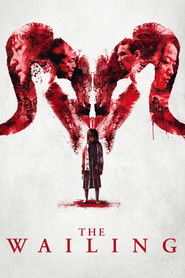
The Wailing (2016)
Dawn breaks over the village and you wait, as horror has trained you to wait, for the light to settle the question. It never does — the film's most devastating events happen in full morning clarity, and the clarity settles nothing. Hong Kyung-pyo's camera holds a bemused, almost pastoral distance early on, then tightens as certainty drains away. Watch the policeman at the center: a man whose job is to convert seeing into doing, in a story where seeing has quietly stopped leading anywhere, and where every protective decision seems to make things worse.
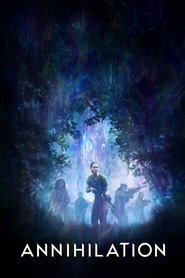
Annihilation (2018)
Two deer step out of the brush moving in perfect mirrored unison, one shadowing the other like a copy that hasn't noticed it's a copy. The women just watch — nobody explains it, nobody can do anything with it, and that stalled, helpless attention is the film's key. Rob Hardy shoots the Shimmer as a soap-bubble membrane tinting everything inside it, greens pushed toward the toxic, water given an oily refraction. The structure descends directly from Tarkovsky's Stalker — a rule-governed forbidden zone whose logic warps as you go deeper — and the finale echoes 2001's surrender of story to pure image and sound. Bring patience; the film rewards it.
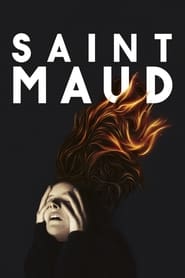
Saint Maud (2020)
The first time God arrives, the room tips over — the camera calmly rolls until the ceiling becomes the floor, and nothing in the plot moves while everything in the world does. Rose Glass frames Morfydd Clark's face the way Dreyer framed Joan of Arc: close, sustained, faith rendered as a facial event. Watch those held close-ups for the micro-movements where stillness trembles into need — you can watch piety sliding toward something else in the muscles of a face and never find the seam. Ben Fordesman's shallow focus and the amplified sound of breath seal you inside her perception; the desolate off-season seaside town outside stays cold and indifferent.
Watched together, these films become a hundred-year conversation about what a horror image can be when action fails. The painted shadows of Caligari become the sculpted darkness of Faust, become Nykvist's faces surfacing from black, become the candle-rimmed corridors of The Others. Jaenzon's double-exposed ghost cart teaches the mirrors of Black Swan how a present and its double can share one frame. The self-incriminating detective walks out of Angel Heart and into the village of The Wailing; the helpless watcher of Jacob's Ladder stands beside the biologist of Annihilation, both reduced to seeing what they cannot act on. None of these films needs the others to work — but each one sharpens your eye for the rest. Watch for how darkness is made, how the camera moves (or refuses to), and how often the most frightening thing on screen is simply a person looking at something and finding that looking is all that's left.