Sightlines · a mini film course
When Watching Is the Event: Twelve Films Where Seeing Outruns Doing
Most thrillers run on a simple engine: a hero sees a danger, acts, and the world bends back into shape. The twelve films in this set are all, in one way or another, about what happens when that engine stalls — when the camera watches rather than chases, when a character can perceive everything and change almost nothing, when the danger doesn't arrive because it was already there. Some of these films stretch the moment before action until it becomes the whole movie. Others take away the tools we rely on without noticing — the reassuring cut, the trustworthy image, the wide overview — and let us feel the floor go. Watched together, they form a quiet conversation across four decades about dread, helplessness, and the strange power of just looking.
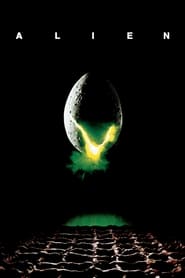
Alien (1979)
Watch how little you're allowed to see. Derek Vanlint's lighting is industrial and partial — corridors dissolve into darkness, and the creature is almost never shown in full illumination. The camera drifts and probes rather than pointing at things, and the creature itself is given no motive, no plan, no inner life to read: it is pure appetite, which is exactly why it can't be reasoned with, only outlasted. Notice too how the film treats space travel as mundane labor — the crew are tired employees before they are heroes, and the ship is a workplace before it is a trap.
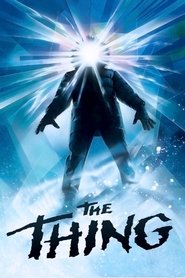
The Thing (1982)
Dean Cundey's wide, deep-focus frames keep multiple men in sharp focus at once — and that's the trick. With no single reliable point of view, you're placed in exactly the same position as the characters: scanning faces, unable to tell who is what. This is a film where looking has stopped working, where every perception might be a forgery, and where the most suspenseful scene is built around a scientific test — a machine invented to do the trusting the eyes no longer can. Watch how the film keeps all the machinery of an action movie while quietly making every action a guess.
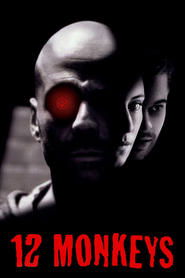
Twelve Monkeys (1995)
Terry Gilliam takes Bruce Willis — an actor carrying the physical authority of an action star — and spends the whole film disabling it. Cole can see everything and change none of it; his mission isn't heroism but data-gathering. Watch Roger Pratt's photography track the character's fractured mind: cold desaturated blues for the future, distorting lenses and vertiginous low angles throughout. And watch for one recurring scrap of memory — an airport, hard morning light — that the film circles for two hours, refusing to let you read it until it's ready.
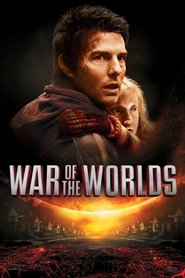
War of the Worlds (2005)
Spielberg's boldest choice here is refusal: no generals at maps, no command centers, no orienting overview. The film never leaves one ordinary man's eye-line, and Janusz Kamiński shoots the catastrophe in bleached, ashen light that deliberately recalls the photographic memory of 9/11. This is an invasion film that strips out the triumphalism of the 1990s blockbuster — watch how it inverts Spielberg's own vocabulary of awe, the upturned faces and light from above, from wonder into terror.
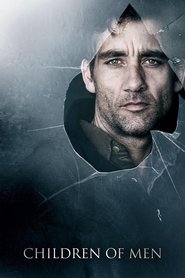
Children of Men (2006)
Emmanuel Lubezki's camera stays within arm's reach of the protagonist and, in the film's famous sustained takes, refuses to cut exactly where a genre film leans on the cut hardest. Watch for the moment blood spatters the lens and stays there — no reframe wipes it clean, no edit restores your comfortable sightline. When the camera won't cut, time stops being a delivery system for plot and starts being something you feel on your skin. Built like an ordinary thriller, shot like war reportage.
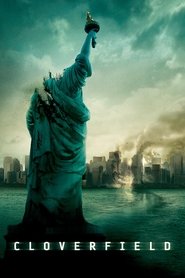
Cloverfield (2008)
A giant-monster movie in which the camera belongs to an amateur — and he films badly, on purpose. Lurching frames, blown exposure, the creature caught only in half-seconds before a whip-pan tears it away. Watch how the film keeps the monster but amputates the heroic response: what you get is never a hero's reaction to catastrophe, only a recording of one, history witnessed from below and understood in fragments. Its innovation is applying the intimate, low-fi found-footage grammar to city-scale destruction.
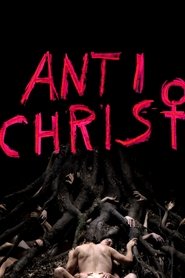
Antichrist (2009)
Notice the two films inside this one: a lustrous black-and-white slow-motion prologue, consciously beautiful, and then the restless handheld work that corrodes it. Von Trier dedicates the film to Tarkovsky, and the forest setting — called Eden — is shot as something more than scenery: listen for the acorns falling on the cabin roof all night, nature tirelessly producing and rotting, indifferent to the careful language of therapy being spoken indoors. Watch how the rationalist husband's confidence becomes the film's real subject.
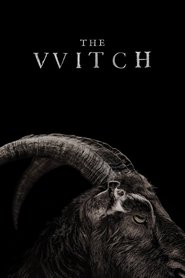
The Witch (2016)
Jarin Blaschke's camera barely moves — locked-off compositions closer to Flemish painting than to modern horror, and when it does move, it moves with the gravity of ritual. Watch the treeline: the forest is shot flat, dark, and lightless at its edges, giving nothing back, and the film's scariest moments are often withheld shots — a cut that doesn't show you where something went. Built partly from actual period documents, this is horror in which a belief system produces the very terrors it claims to guard against.
Alien: Covenant (2017)
Dariusz Wolski draws a hard visual line between two worlds — the cool, sterile light of corporate spaceflight and the soft, naturalistic gloom of the planet. But the film's real audacity is its reframing of the monster: watch the android David, a creator surrounded by anatomical drawings and dissected specimens, a being who forges — species, loyalties, even himself. The film deliberately breaks the old contract that says the image tells the truth, and it makes the breaking beautiful.
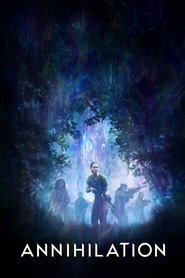
Annihilation (2018)
Rob Hardy shoots the Shimmer as a soap-bubble membrane, greens pushed toward the toxic, everything given an oily refraction. Watch for a pair of deer moving in perfect mirrored unison — nobody explains it, nobody can do anything about it, and that stalled, helpless attention is the film's whole method. Built on the template of Tarkovsky's Stalker — a rule-governed forbidden zone entered by a small expedition — it saves its boldest move for the end: a near-wordless passage where the film surrenders story to pure image and sound.
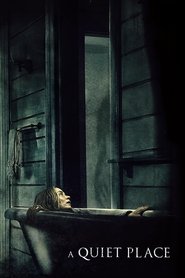
A Quiet Place (2018)
Watch the feet. Before any creature appears, the film teaches you to watch where weight comes down — sand raked smooth, a bare sole testing a floorboard. Krasinski's discovery is the half-second between noticing a danger and reacting to it: he pries that instant open and lives inside it for two hours. Listen, too, to how the sound design shifts in and out of the deaf daughter's perspective, making the texture and absence of sound itself the suspense instrument — a lesson learned from Hitchcock's The Birds.
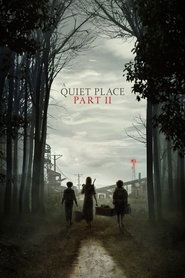
A Quiet Place Part II (2021)
The sequel opens by giving you what the first film withheld: Day 1, a golden Saturday afternoon at a baseball game, warmth engineered to be taken away — a family-in-peril overture straight out of Spielberg's War of the Worlds. Polly Morgan's camera is more dynamic than the original's, suited to expanded geography, and the film tilts knowingly toward action mechanics: the creatures appear more often, in better light. Watch how it inherits the first film's silence-grammar intact while asking what its vulnerable characters can now do with it — weakness reworked as resource.
Watch these together and you'll start to see the same nerve being touched from twelve directions. The monster kept in shadow and the monster kept in a handheld blur; the cut withheld and the truth of the image itself withdrawn; the hero who can't act and the child who can only watch. These films trust your attention more than most — they build suspense not from what happens but from the gap before it happens, and dread not from what you see but from how you're allowed to see it. Watched in sequence, each one sharpens your eye for the next: by the end, you'll be watching feet, treelines, lenses, and light the way these filmmakers hoped you would.