Sightlines · a mini film course
When Looking Is the Whole Event: Twelve Films About Watching the Unwatchable
Every one of these films puts a camera — and a character — in front of something too big, too strange, or too fast to act against. A shimmer on the horizon. A cloud that doesn't move. A sound you must not make. What binds this set together isn't monsters or spaceships; it's a shared fascination with the moment when doing something stops being an option and seeing becomes the entire drama. Some of these films break the hero's ability to act on purpose. Some hide their creatures in darkness, or above the top of the frame, or inside a trusted face. All of them understand that dread lives in the gap between noticing and reacting — and each one has invented its own way to pry that gap open and make you live inside it.
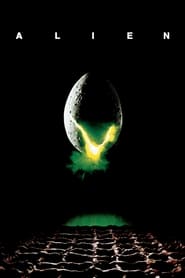
Alien (1979)
Watch the light — or rather, its absence. Derek Vanlint lights the Nostromo like a real industrial workplace: motivated, partial, honest about its shadows, so that corridors dissolve into blackness and the creature is almost never shown in full illumination. Notice, too, that the thing has no motive, no grievance, nothing to read — a villain you can argue with, but this is pure appetite, and appetite can only be outlasted. The camera drifts and probes rather than chases, and the film's genius is recombination: a haunted house, a Gothic mansion, and a spaceship fused into one dwindling trap.
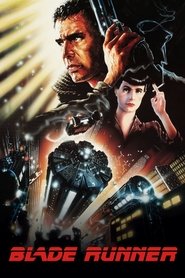
Blade Runner (1982)
Watch the photographs. Characters clutch snapshots as proof of who they are, and the film quietly asks whether a memory you can hold in your hand is worth anything at all. Jordan Cronenweth's cinematography is the other marvel: pools of radical darkness cut by sodium-colored shafts of light, venetian-blind shadows striping every interior — 1940s detective-movie lighting transplanted into a vertical city where the rich live in towers and everyone else lives in the rain below. Slow, melancholy, and morally exhausted where its era's science fiction was bright and triumphant.
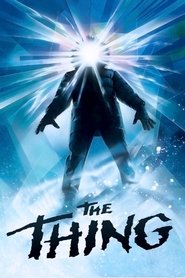
The Thing (1982)
Watch the width of the frame. Dean Cundey shoots in deep-focus widescreen that keeps multiple men sharp at once — meaning you can never be sure who to watch, which is precisely the point, because neither can they. This is a film about what happens when eyes stop working as evidence: the threat is a perfect forgery of the people standing next to you, so every glance across the room becomes a guess. Carpenter inverts the 1950s original's faith in group competence; here the group's rational mind is exactly what comes apart.
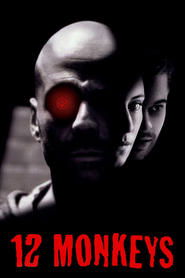
Twelve Monkeys (1995)
Watch what Gilliam does to Bruce Willis. He casts an action star and then systematically disables everything the casting promises — a large, physically capable man sent into the past not to fix anything but merely to gather information. Roger Pratt's distorting lenses and low, crowding angles make every institution feel like it's pressing inward. Notice the fragment of memory the film keeps circling back to; the whole looping structure is a machine built around one image it refuses to let you read too early.
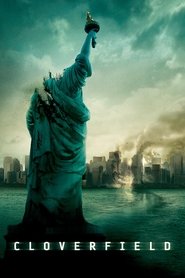
Cloverfield (2008)
Watch who's holding the camera: an amateur, handed the thing an hour earlier at a party, filming badly on purpose. Reeves takes the giant-monster movie — a genre built on armies mobilizing and cities fighting back — and amputates the fighting back, leaving only a street-level recording of history happening to people. The discipline is strict: no music, no outside perspective, the frame lurching and losing its subject exactly when you most want to see. When a famous monument comes to rest at sidewalk scale, you don't get a hero's response. You get a recording of one.
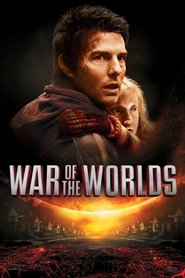
War of the Worlds (2005)
Watch the eye-line. Spielberg never once leaves his protagonist's point of view — no generals at maps, no command centers, no orienting overview of the invasion. Janusz Kamiński drains the palette to ash and overcast grey, and the film deliberately inverts Spielberg's own upturned-faces-in-wonder vocabulary into something annihilating. Notice how little the hero actually accomplishes against the threat; the film strips out the 1990s blockbuster's triumphalism and asks what a disaster movie looks like when courage isn't enough.
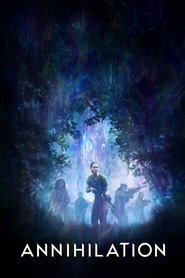
Annihilation (2018)
Watch the moments nobody explains. Twice-printed deer moving in mirrored unison; flowers growing where flowers shouldn't — the expedition can only look, and the looking is the whole event. Rob Hardy pushes the greens toward the toxic and gives the light an oily, soap-bubble refraction inside the Shimmer, so the world itself seems gently wrong. The structure descends from Tarkovsky's Stalker — a rule-governed forbidden zone whose logic warps as you go deeper — and the film saves its boldest move for a near-wordless stretch where image and sound take over from words entirely.
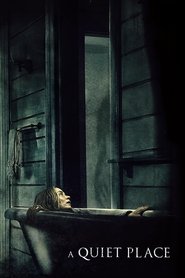
A Quiet Place (2018)
Watch the feet. Before any creature appears, the film teaches you to watch where weight comes down: sand raked smooth on a path, a bare sole testing a floorboard. Krasinski's engine isn't the monster — it's the half-second between noticing a danger and finishing the decision about what to do, stretched to feature length. Charlotte Bruus Christensen shoots the farmstead in warm, autumnal naturalism, which makes the enforced silence stranger; and the sound design borrows a trick from The Birds, making the texture and absence of sound itself the suspense instrument.
Alien: Covenant (2017)
Watch the two worlds Dariusz Wolski builds: the cool, sterile modernism of corporate spaceflight against the soft, naturalistic gloom of the planet. Then watch the film's monster-maker, an artificial being who treats creation the way a Renaissance master treats an altarpiece — his lair hung with anatomical drawings, his ambitions aesthetic rather than merely murderous. The chain of makers and made — who created whom, and who resents it — is the film's real subject, threaded through some of the most painterly imagery in the franchise.
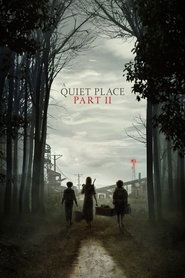
A Quiet Place Part II (2021)
Watch the opening. Krasinski lingers in the gold light of a small-town Saturday — a baseball diamond, full bleachers, a sweating soda cup — precisely so he can take it from you; the whole prologue is engineered to be removed. Polly Morgan extends the first film's visual language into wider geography while keeping its silence-grammar intact, including the audio conventions that periodically drop you into the deaf daughter's perception. Where the first film hid in the interval, this one leans into momentum — a deliberate choice worth watching for itself.
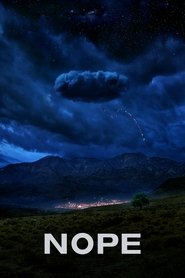
Nope (2022)
Watch the sky, and notice how much of the frame it occupies — often more than half, shot on enormous large-format film. Peele's structural joke is profound: the biggest, most detail-hungry image format in theaters, used to argue that looking harder is exactly the wrong move. Van Hoytema keeps the threat at the vanishing point or just above the top edge of the frame, felt as weather, animal panic, and sub-bass before it's ever seen — the Jaws trick of enforced absence, rebuilt for a film that's explicitly about the price of spectacle.

28 Years Later (2025)
Watch what happens when Boyle returns to his own invention and lets the engine stall. The original film was pure sprint — running infected, running edits. Here Anthony Dod Mantle's camera (an iPhone, embraced flaws and all) oscillates between smeared, violent immediacy and wide, painterly Northumberland landscapes that aren't settings for action so much as pure mood: moors, tidal flats, ruined churches reclaimed by green. Watch the sequence with the tower of cleaned bone, held with an undertaker's patience — a horror franchise pausing to ask what dignity the dead are owed.
Watched together, these films become a conversation across five decades about a single problem: what does a movie do when its people can't do anything? Some answer with darkness and withholding (Alien, Nope), some with forgery and the collapse of trust (The Thing, Covenant), some by breaking their heroes on purpose (Twelve Monkeys, War of the Worlds), some by stretching the silence before action into the action itself (A Quiet Place). You'll start noticing the craft everywhere — where the frame ends, what the light refuses to show, how long a shot is willing to simply watch. That's the reward of this set: it retrains your attention, so that by the last film you're no longer waiting for the monster. You're watching the watching.