Sightlines · a mini film course
Don't Trust What You're Shown: Twelve Films About Watching, Remembering, and Being Lied To
Every movie makes a quiet promise: what the camera shows you happened. The twelve films below are all, in one way or another, about breaking that promise — or testing how far it can bend. Some are told by narrators you shouldn't believe. Some are built out of memory, which turns out to be a far shakier material than a flashback suggests. Some make the act of looking itself the danger — cameras that circle, watch, hypnotize, or implicate you just for sitting there. Watch them together and you'll start to feel the seams: how a frame can hide something in plain sight, how a confident voiceover can be a con, how a room can become a mind.
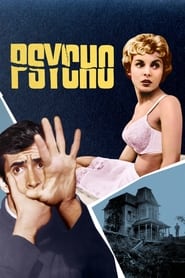
Psycho (1960)
Start here, because this is where the modern version of all this begins. Watch who is looking at whom: from the first scenes, Marion Crane is observed — by a boyfriend, a boss, a highway patrolman staring wordlessly through her car window — and Hitchcock keeps handing you her point of view until you're one of the watchers too. Shot fast and lean in black and white by a television cameraman rather than Hitchcock's usual prestige crew, it uses rapid, fragmented cutting to do things the censors would never have allowed in a single shot. There's a famous structural rupture partway through; if you can, let it hit you cold.
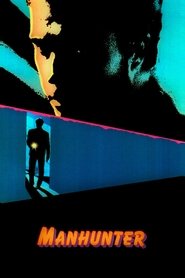
Manhunter (1986)
Michael Mann's film is a thriller in which perception is the plot: an investigator whose gift is standing where a killer stood and seeing what he saw. Notice Dante Spinotti's cold, designed palette — blues, teals, clinical whites, hard horizons, wide empty space — and how often the camera is watching someone who is himself watching: a screen, a photograph, a home movie. Most procedurals treat looking as plumbing between clues. Here it's the whole drama, and the danger.
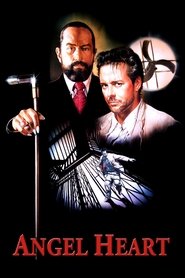
Angel Heart (1987)
A private-eye picture crossed with something older and darker: a detective hired to find a missing man, filmed through perpetual smoke and dust, cold grey New York giving way to humid, rotting Louisiana amber. Watch the ceiling fans — there's one slowly chopping the light in almost every room, and the film knows exactly why it keeps looking at them even when its hero doesn't. Notice how an investigation that follows every rule of the genre starts to feel less like solving and more like exhuming.
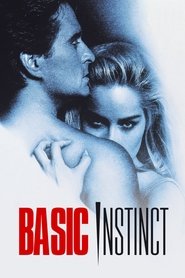
Basic Instinct (1992)
The interrogation scene is the key: five men around one woman in white, and Jan de Bont's camera gliding in slow, unhurried circles — until you realize the questioning has quietly run backward, and the interrogators are the ones being read. Verhoeven takes the classic femme fatale and upgrades her into something like an author, a novelist who may be scripting the detective pursuing her. Watch how confession, evidence, even seduction all become performances you can't peel apart from the truth.
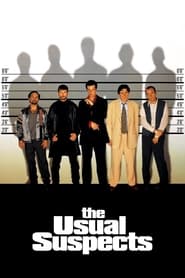
The Usual Suspects (1995)
A man sits in a deliberately drab, bureaucratic white interrogation room and tells a story — and the film does what films always do with a story: shows it to you, fully lit, fully scored, utterly convincing. The gap between that neutral room and the baroque, atmospheric flashbacks is the whole game; Newton Thomas Sigel shoots them in different registers on purpose. This descends from a sly old tradition (Hitchcock tried a version of it in 1950) of asking whether a flashback is a memory or a performance. Listen as much as you look.
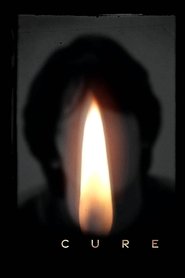
Cure (1997)
Kiyoshi Kurosawa answers the flashy serial-killer cycle of the '90s by subtraction: no grand design, no spectacle, almost no violence on screen. The camera holds wide, at a distance, in long unbroken takes, letting dread pool in ordinary grey rooms. Watch the hypnosis scenes — a flame, a drip of water, a patient circling voice — and notice that they're built from the same ingredients as cinema itself: a point of light in the dark and a watcher slowly emptied of resistance. The film is doing to you what its villain does to everyone else.
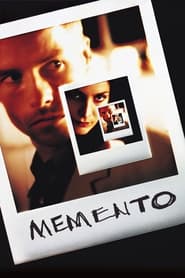
Memento (2000)
Nolan's great invention here is structural: the color scenes run in reverse order, each ending where the last began, so you're dropped into every scene with no idea how you got there — while a second strand, in noir black-and-white, runs forward to meet it. You're not watching a man who can't make new memories; you're living his condition for two hours. Watch the opening Polaroid, which un-develops before your eyes: the film's whole method in three seconds. Wally Pfister shoots it with unusual restraint and clarity, because the structure supplies all the disorientation you can handle.
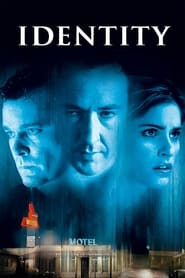
Identity (2003)
Ten strangers, one rain-lashed Nevada motel, a storm sealing every exit — the old Agatha Christie closed-circle engine, retooled. Phedon Papamichael shoots it in sodium-vapor amber and cold blue, rain silvering every surface, with identical numbered doors lined up like a multiple-choice question; the deliberate staginess is a feature, not a bug. Watch the numbered keys and keep your own count — and stay alert to the possibility that you're keeping score of something other than what you think.
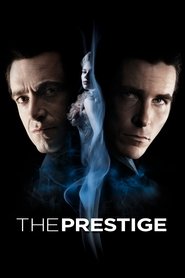
The Prestige (2006)
Two rival magicians, and a film built as two diaries — each man reading the other's notebook, each account bending the scenes you've already watched into new shapes. Pfister's wide anamorphic frames are composed like magic tricks: they contain information you've been trained not to notice. Nolan's real subject is the cost of a perfect performance — what a person must permanently give up to sustain an illusion. Watch it the way you'd watch a trick: closely, knowing that watching closely may not save you.
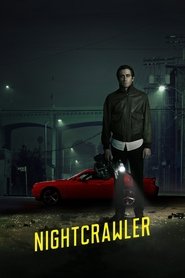
Nightcrawler (2014)
Robert Elswit shoots nocturnal Los Angeles as a glittering, depopulated grid — empty freeways, fluorescent convenience stores — and dares you to find it beautiful even as you learn what feeds on it. Watch the moment its freelance crime-scene cameraman stops merely filming what he finds and starts arranging it: the observer becoming the author of what he observes. It's a noir, a media satire in the lineage of Ace in the Hole and Network, and a dark comedy about ambition rewarded — notice how the film keeps refusing to reassure you.
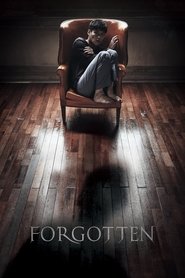
Forgotten (2017)
A young man witnesses his brother's abduction and retains one perfect, useless detail — a license plate that belongs to no car on earth. A memory with total clarity, attached to nothing: the whole film is folded into that gap. Watch the framing — doorways, window panes, stairwells — turning a family home into a set of thresholds the hero can't safely read, and notice how the camera hovers near his point of view without ever fully committing to it. Korean cinema's mature thriller craft, aimed straight at the question of whether the people who know you best are the ones best equipped to deceive you.
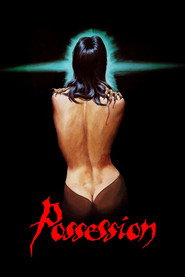
Possession (1981)
Save this one for when you're ready. Bruno Nuytten's camera behaves like an anxious participant, not an observer — wide-angle and close, circling the actors, chasing sudden movement, warping domestic rooms into pressure chambers. Żuławski directed Isabelle Adjani to the very edge of collapse, treating full-body operatic intensity as a deliberate system rather than excess; there's a scene in a Berlin underpass in which nothing "happens" in plot terms, and it may be the most overwhelming thing here. A marriage falling apart, filmed as cosmic catastrophe — Bergman's divorce drama turned inside out and set on fire.
Watched together, these films train a particular muscle: skepticism toward the image, paired — paradoxically — with deeper attention to it. You'll start noticing how a flashback earns your