Sightlines · a mini film course
Watching Through the Wrong Eyes: Crime, Vision, and the Art of Looking
There's a thread running through all these films that has nothing to do with whodunit. Each one is, at its core, a film about watching — about what it costs to look, who gets hurt by it, and whether seeing the truth ever actually helps. The detective, the hitman, the gangster, the vigilante: these genres promise us that a skilled enough pair of eyes can fix things. These films are interested in what happens when that promise quietly breaks. What you'll find, watching them together, is a shared obsession with the act of perception itself — cameras that linger on the watcher rather than the watched, light used as moral weather, editing that withholds as much as it reveals. Pay attention not just to what's happening on screen, but to how you're being shown it.
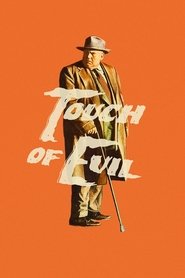
Touch of Evil (1958)
Watch the opening shot — a single, unbroken three-minute crane move through a border town — and ask yourself what it's doing. Welles doesn't cut because cutting would suggest things are separate. Everything here is already connected, already contaminated. Then notice how he photographs his own character: low angles, wide lenses, ceilings pressing down, a big man made monstrous by his own proximity to the camera. The film gives you two ways of seeing in those first minutes — the camera that tells the whole truth at once, and the cop who buries it — and then spends its running time watching them collide. Pay particular attention to how scenes are staged through movement rather than editing: actors walk toward and away from the lens to change the drama, and space itself feels like it's under pressure.
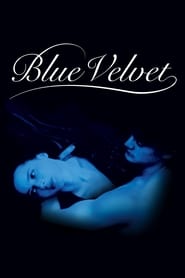
Blue Velvet (1986)
The opening two minutes are a complete instruction manual. A perfect suburban morning, roses and white fences and a man watering his lawn — and then the camera descends through the grass into a churning colony of beetles beneath the soil, the soundtrack swelling into something industrial and wrong. Lynch has shown you exactly how to watch everything that follows: there is a beautiful surface, and something is moving underneath it. When Jeffrey watches from inside a closet, notice that the film puts you in precisely the same position — you are also hiding, also watching things you probably shouldn't. The film is extraordinarily precise about the ethics of that position, and it never lets you off the hook for enjoying it.
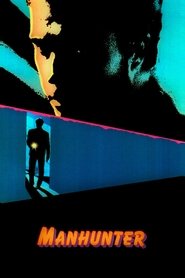
Manhunter (1986)
The key image is a man alone in a dark room, watching a murdered family's home movies, talking to them quietly as though they can hear him. Will Graham's method isn't deduction — it's something stranger and more dangerous: he tries to occupy the killer's point of view so completely that he can think the killer's thoughts. Cinematographer Dante Spinotti shoots this in a palette of cold blues, clinical whites, and hard geometric compositions — spaces that feel less like environments than like the insides of a very organized, very frightened mind. Watch how often the camera is watching a character who is himself watching something. The film doubles and redoubles the act of looking until you feel the pressure of it. Michael Mann also uses the 1980s synth score not as background texture but as a kind of emotional weather — it tells you what Graham is feeling when his face won't.
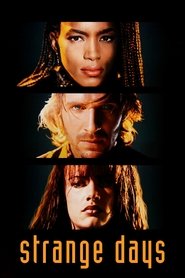
Strange Days (1995)
The film opens with a robbery filmed entirely from the robber's point of view — his hands, his breath, the rooftop scrambling — and then it ends, abruptly, because the recording ends where the man's life did. Before you know whose eyes you're wearing, you're wearing them. The device at the center of the film records the full human sensorium — sight, sound, touch, adrenaline — onto a disc you can replay inside your own skull. Pay attention to how Bigelow maintains two completely different visual styles: the grimy, neon-drenched Los Angeles of the main story, and the lurching, unbroken, sweat-soaked first-person footage of the recordings. The gap between those two ways of seeing is where all the film's moral questions live. This was years before GoPro or bodycam footage; the film invented a visual language we now take for granted.

Chinatown (1974)
Most noir happens at night — shadow as concealment, darkness as moral cover. Notice that almost everything in Chinatown happens in harsh California daylight, in a sun-bleached world where shadow offers no refuge and the brightness is actively hostile. John A. Alonzo's cinematography turns overexposure into a form of dread. Watch how carefully the film's detective machinery is constructed — the meticulous procedural accumulation of clues, the patient photography, the irrigation channels and newspaper archives — because Polanski and screenwriter Robert Towne are building it so precisely in order to do something very deliberate to it. Notice also the bandage on Jack Nicholson's nose for much of the film: a detective who can't follow his own nose. The joke is sitting right there on his face.
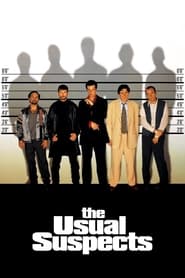
The Usual Suspects (1995)
Newton Thomas Sigel shoots the interrogation room as a deliberate blank — neutral, bureaucratic, stripped of atmosphere — so that the flashback sequences the narrator conjures feel richer, more textured, more real by comparison. That contrast is doing important work. This is a film about how cinema itself operates: we are trained to trust what we see, to believe that images shown to us as flashback have the authority of memory. Singer exploits that training methodically. Watch the peripheries of Verbal Kint's scenes — the objects in the background of the interrogation room, the details of his surroundings — with more attention than you think they deserve. The film is conducting a quiet experiment about what evidence actually is, and where the experiment is happening is partly in your own assumptions as a viewer.
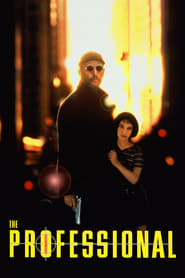
Léon: The Professional (1994)
Before Léon kills anyone in front of us, we watch him tend a houseplant. The plant has no roots, he says — like him. Cinematographer Thierry Arbogast gives the film warm ambers and golds in the domestic spaces, cooler registers for the violent ones, and an unusual willingness to let faces simply sit in close-up, holding a feeling without acting on it. Watch how often Jean Reno's face is used as a surface that registers emotion without discharging it — the close-up that holds rather than moves. The film is doing something interesting in the gap between its action sequences and its quieter passages: the same man who is absolutely efficient in one mode becomes something like a child in the other, and the film asks you to hold both versions simultaneously without resolving the tension between them.
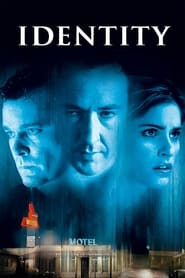
Identity (2003)
Every body at the Nevada motel turns up with a numbered room key beside it. Ten. Then nine. Then eight. You watch the countdown and think you're keeping score in a murder mystery. Phedon Papamichael shoots the motel in sodium-vapor amber and cold rain-silver, with identical numbered doors lined up like a multiple-choice question — the space is deliberately artificial, stagey, more like a diagram than a location. Pay attention to how hermetically sealed the film's two storylines are: the motel sealed by storm, the courthouse hearing sealed by legal crisis, and notice how the film manages the rhythm of information between them. The architecture of the film — what it chooses to show you in what order — is doing its own kind of arguing, separate from anything the characters say.
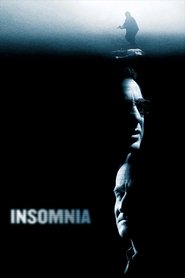
Insomnia (2002)
In Nightmute, Alaska, the sun doesn't set. Nolan and cinematographer Wally Pfister use this as a form of psychological pressure: overlit outdoor spaces that should feel open feel instead exhausting, even blinding, and the few dark scenes arrive as strange relief. Watch how the film treats the detective's ability to think — Dormer is introduced as a gifted investigator, someone for whom the procedural machinery of perception-to-deduction-to-action runs perfectly. Then notice what perpetual daylight and sleeplessness do to that machinery over time. Al Pacino plays it as a slow leak rather than a sudden break — pay attention to the accumulation of small hesitations, the eyes, the slight syrupiness in his movement — as the film methodically examines what happens to a detective when his own mind stops being a reliable instrument.
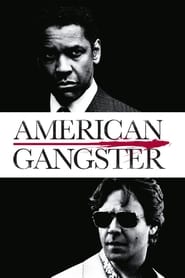
American Gangster (2007)
The film's key image is a coat — a chinchilla fur that Frank Lucas's wife buys him, that he wears to a prizefight, and that two federal agents clock from across the arena. Cinematographer Harris Savides built the whole film's visual logic around this moment: warm amber and fur-coat luxury on one side, institutional grey and ambient cold on the other. Watch how Ridley Scott uses the body — posture, wardrobe, how a person carries themselves in space — as moral argument. The Thanksgiving table, the careful suit, the coat: these aren't costume choices but statements about power and visibility. Notice also how the film holds the two storylines — Lucas building an empire, Roberts investigating it — in genuine parallel rather than subordinating one to the other. The editing rhythm between them is itself an argument about the symmetry between criminal and institutional America.

You Were Never Really Here (2017)
Fragments of memory arrive in this film without dates or explanation — a child's hand, a soldier's boots in dust, a woman's shoes — and Lynne Ramsay refuses to assemble them into the tidy backstory a thriller would normally provide. Thomas Townend's camera works in extremes: extreme close-ups of hands or surfaces that give you partial information, and wide shots that swallow figures in empty space. Notice how the film handles violence itself — often elliptically, catching the moment before or the aftermath rather than the event. This is a film that knows exactly what genre it's working in and makes very deliberate choices about what to withhold from that genre's usual satisfactions. Pay attention to Jonny Greenwood's score, which operates the way the fragmented images do: associative, non-linear, arriving from somewhere interior rather than dramatic.
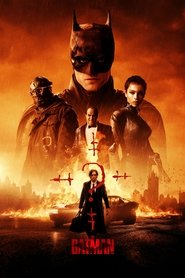
The Batman (2022)
Greig Fraser's cinematography is famous for being famously dark — faces falling into shadow, the city barely lit by amber and sodium-orange and deep blood reds, the whole film closer to a monochrome graphic novel than a superhero blockbuster. But watch what that darkness is doing beyond atmosphere: it's a film in which everyone is watching everyone, and the shadows are where the watching happens from. Notice the cipher — the small white card addressed to the Batman at a crime scene. The film is structured around decoding, and Matt Reeves constructs it so that you are doing the same work as the detective, at the same pace, with the same information. The Riddler's murders aren't just crimes; they're messages, designed to be read. Pay attention to what the film does with the address of violence — who it's meant for, and what it means that it's meant for him.
Why Watch Them Together
What emerges across these twelve films is something you don't notice in any one of them alone: a sustained argument, made across four decades and several genres, about whether looking is enough. These films love the figure of the skilled observer — the detective, the profiler, the surveillance artist, the man who can read a crime scene — and they love him precisely so they can examine what happens when perception fails to produce the clean resolution it promises. The brilliant investigator who can't sleep. The detective whose nose is literally broken. The vigilante whose violence doesn't discharge anything. The narrator whose flashbacks might be entirely fabricated.
Watching them in sequence, you start to notice the formal choices accumulating into a kind of collective argument: the underlit frame, the withheld cut, the camera that watches a watcher watching, the light that blinds rather than reveals. These filmmakers are working in genres that traditionally promise mastery — see enough, think clearly enough, and order will be restored. Their most interesting move, each time, is to keep all the machinery of that promise running at full craft while quietly, methodically, letting the promise lapse. Bring your attention. The films will meet you there.