Sightlines · a mini film course
The Cinema of Witness: Twelve Films Where Seeing Is the Story
Most movies run on a simple engine: a character sees a problem, acts on it, and the action changes things. The cut carries you from cause to effect, and you barely notice the machinery. The twelve films on your list — a war epic, a fairy tale, a heist comedy, a seven-hour Hungarian black-and-white marathon — all, in their different ways, take a wrench to that engine. In each of them, someone reaches the point where acting is no longer possible, adequate, or honest, and what's left is looking. The camera watches rather than chases. Time is allowed to stretch. Space becomes a trap, or a test, or a mirror. Watch for the moments when these films slow down, hold still, or refuse to explain — those aren't lulls. They're the point.
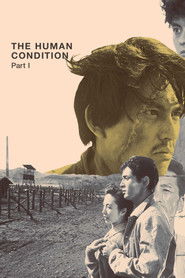
The Human Condition I: No Greater Love (1959)
Yoshio Miyajima's enormous widescreen frame is the first character you'll meet: fence lines, watchtowers, and rows of laborers organize the image into grids of confinement, and a single conscientious man is often placed dead center in a landscape far too wide for him to fill. Notice how the shape of the shots keeps arguing with the hero's hopes — the frame seems to know things he doesn't. Kobayashi builds pressure not through speeches but through composition: the whole coercive system is visible in a single image, bearing down.
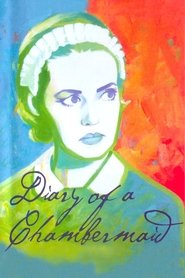
Diary of a Chambermaid (1964)
Buñuel films everything — a dinner, a fetish, a cruelty — with the same flat grey light, the same level camera, the same refusal of music telling you how to feel. That evenness is a method: he has decided that the surest way to expose what drives this respectable household is to refuse, absolutely, to be surprised by it. Watch how objects (a pair of buttoned boots, especially) carry meanings the camera declines to explain, and how the polished manor starts to feel like thin skin stretched over something feral.
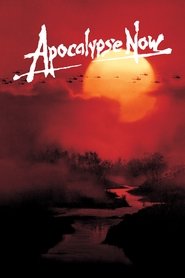
Apocalypse Now (1979)
Vittorio Storaro's photography traces a deliberate color journey — amber and orange heat at the start, draining into blue-grey murk and finally near-total darkness as the river goes on. From the opening minutes, when a ceiling fan bleeds into helicopter blades and a rock song bleeds into jungle hiss, the film tells you to stop watching for plot: this is a state of mind, delivered as image and sound. Notice how flat and hollowed-out the lead performance is — that's deliberate. He's a man things happen to, a watcher carried by the river, and the film lets you feel the time passing on the water directly.
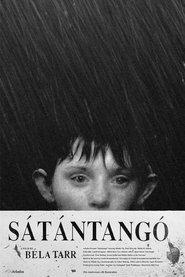
Satantango (1994)
The opening shot follows a herd of cows for several minutes, and in doing so teaches you how to watch the next seven hours: not for events, but for time itself moving through a ruined place. Individual takes run five, eight, ten minutes; the film has remarkably few cuts for its length. Let it recalibrate you — once it does, the rain, the mud, and the waiting become almost physically tangible, and you'll understand why people call this one of cinema's great endurance-and-reward experiences.
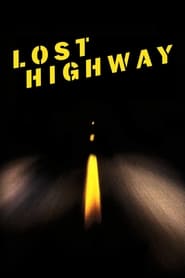
Lost Highway (1997)
Peter Deming photographs a house as a near-abstract space of shadow: characters walk into blackness and simply dematerialize, and the murk is set against bleached, sun-struck exteriors. Lynch takes the furniture of film noir — the mysterious blonde, the gangster, the surveillance — and strips out the parts that usually explain things: motive, detection, a clean line of cause and effect. Don't fight it. The film works by melting the wall between what's happening and what's imagined, and it deliberately refuses the cut that would tell you which is which.
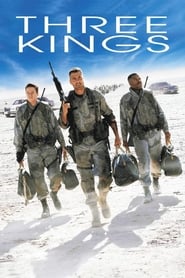
Three Kings (1999)
Newton Thomas Sigel pushes the film stock until the image vibrates — sickly greens, blown-out desert whites — and the movie itself keeps interrupting its own caper energy. Its signature move: freezing the action to make you read what the action costs, most famously a cutaway inside a human body showing what a bullet actually does. Watch how the film keeps shifting registers, from heist swagger to something you can't wisecrack your way past, and how it uses that whiplash on purpose.
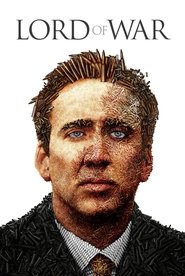
Lord of War (2005)
The famous opening follows a single bullet from the factory stamping press, along conveyors and across borders, to its final destination — a two-minute shot from the point of view of the merchandise itself, no human eye anywhere. Everything after is a charming man narrating his own rise in the breezy patter of a born salesman, and the film's game is making you notice how much you're enjoying him. Amir Mokri shoots the arms trade glossy and well-lit, seductive rather than seedy — the polish is the accusation.
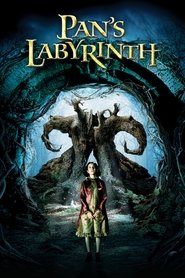
Pan's Labyrinth (2006)
Guillermo Navarro's Oscar-winning photography splits the world by color: cold steel blues for the captain's mill, warm ambers and golds for the fantasy spaces. The film's deep trick is that it runs two stories at once — a war picture and a fairy tale — and never ranks them or tells you which is true; the evidence for each is offered as equally load-bearing. Watch the image of a girl drawing a door in chalk on a wall that everyone with power over her sees as solid stone: the whole film lives inside that gesture.

You Were Never Really Here (2017)
Lynne Ramsay takes the vigilante thriller and quietly pulls its spark plugs. The camera works in extremes — close-ups of hands, eyes, surfaces that give you only fragments — and unmarked flashes of memory arrive the way a smell arrives, refusing to assemble into the tidy backstory the genre usually owes you. Notice, too, how often the violence itself is withheld or shown only through aftermath: the film cares about what violence does to the man who carries it, not the choreography.
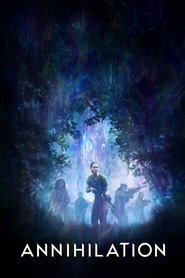
Annihilation (2018)
Rob Hardy renders the Shimmer as a soap-bubble membrane, everything inside tinted and refracted, greens pushed toward the toxic. The key scenes are ones where trained, competent women encounter something and can do nothing but look — nobody explains it, nobody can act on it, and the looking is the whole event. Let the sound design work on you, especially late in the film, where image and score fuse into a single throbbing texture and the movie hands itself over to pure sensation.
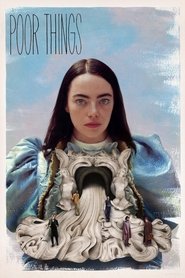
Poor Things (2023)
Robbie Ryan's fisheye and wide-angle lenses aren't decoration — they show you how the heroine sees before you know a single fact about her: rawly, hugely, the world pouring in at the corners. Then watch what happens as she learns and grows: the distortion relaxes, the framings normalize. Perception is the plot; you are literally watching a consciousness calibrate its own lens, one episode of education at a time.
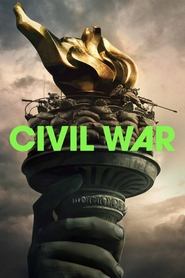
Civil War (2024)
Rob Hardy again, but in a completely different mode: handheld, searching, the camera behaving like a fifth member of a press team, sometimes caught flat-footed by violence erupting at the frame's edge. The film's signature device is the click — motion stops, one perfectly composed still photograph appears, then motion resumes as if nothing had been taken out of it. Watch your own body when it happens. The film is asking what it means to stand inside chaos and pull a single, saleable image out of it — and whether that act is moral seriousness or something more troubling.
Watched together, these films become a conversation about what a camera is for. You'll see the same discovery made twelve different ways: by a Hungarian herd of cows and a bullet on a conveyor belt, by a fisheye lens and a chalk door, by a photographer's shutter and a river drifting into darkness. Each film finds its own reason to stop chasing the story and start truly looking — at time, at cruelty, at a face, at a landscape too wide for one person. By the third or fourth, you'll feel your own attention retraining: you'll stop asking "what happens next?" and start asking the richer question these filmmakers are all secretly obsessed with — what is it like to see this? That shift is the whole course. Enjoy the watching.