Sightlines · a mini film course
Watching Without Fixing: The Italian Cinema of the Held Gaze
The films on this list share a secret in common — a quiet revolution that happened in Italy across three decades, one that has less to do with plot than with the space between seeing and doing. Again and again these films give us people who perceive their world with total clarity — a stolen bicycle, a rigged fish market, a marriage going cold, a class dissolving — and then refuse the old movie promise that seeing leads to solving. The camera watches rather than chases. Time is allowed to stretch. Landscapes, rooms, and ruins stop being backdrops and start pressing on the people inside them. Watched in sequence, these twelve films trace how that patience was invented, tested, made operatic, made dreamlike, and finally weaponized.
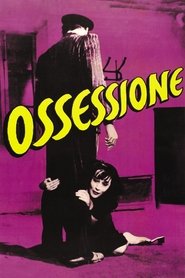
Obsession (1943) — dir. Luchino Visconti
Watch the very first shot of Gino: a body slumped among sacks in the back of a truck, delivered like freight to a roadside trattoria. Visconti — fresh from apprenticing with Jean Renoir — shoots real Po Valley locations, sun-glared walls, and a cluttered working business, but notice how the everyday surfaces seem to be only a thin crust over something older and hungrier. This is a film about appetite before it is about anything else, and you can watch the drives show through the daily routine like heat through glass.
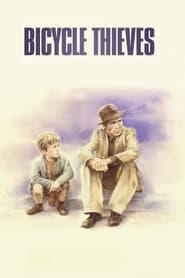
Bicycle Thieves (1948) — dir. Vittorio De Sica
Notice how plain the camera is — no tilted angles, no dramatic shadows, mostly long and mid shots that hold bodies inside the streets and crowds around them, with close-ups saved for rare moments. That plainness is the point: a single material loss, a bicycle, becomes catastrophe, and the film simply accompanies a father and son through one day of searching. Watch for the way seeing and doing come apart — a man who perceives his disaster perfectly and finds no adequate action to answer it. Almost everything modern in cinema starts here.

La Terra Trema (1949) — dir. Luchino Visconti
Begin with the women before dawn, standing in silhouette on black volcanic rocks, watching the sea for late boats — held far longer than any plot requires. G.R. Aldo's photography is among the most admired in Italian cinema: long deliberate takes, deep focus, figures balanced inside doorways and net-geometries like paintings. Watch the tension between the film's extremes — real Sicilian fishermen speaking their own dialect, and compositions of astonishing formal beauty — and how the sea works as both livelihood and indifferent force.
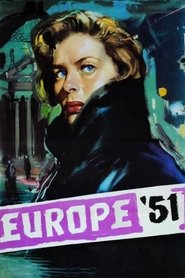
Europa '51 (1952) — dir. Roberto Rossellini
Watch Irene's hands on the assembly line — one repeated motion, held on screen while nothing gets decided. Rossellini's camera observes rather than intervenes, staying on faces longer than conventional editing would allow, and the film's great subject is attention itself: what it costs, morally and socially, to truly see another person's suffering. Notice the debt to Dreyer's The Passion of Joan of Arc — a woman's face under institutional pressure, made to carry everything.
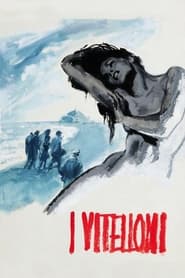
I Vitelloni (1953) — dir. Federico Fellini
Fellini keeps the neorealist toolkit — locations, ordinary provincial life — but turns it inward, toward five young men suspended in perpetual adolescence in a seaside town where the off-season wind scours the empty piazza. Watch for the episodic drift (Fellini had co-written Paisà, and its chain-of-vignettes structure is the model here) and for the melancholy under the comedy: characters who see their lives curdling and simply... don't. The famous image of a drunk man slow-dancing with a papier-mâché carnival head tells you everything about the film's tenderness toward emptiness.
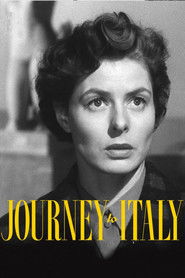
Journey to Italy (1954) — dir. Roberto Rossellini
Start with Ingrid Bergman's face at the car window, watching Italy slide past. An English couple comes south to sell an inherited villa, and the film quietly hands her a different job: to look — at museum statuary, catacombs, the steaming sulfur ground of the Solfatara, the excavations at Pompeii. Nothing she sees "advances the story," and that refusal is the invention: the landscape becomes a mirror, ruins and relics keep whispering about love, death, and the persistence of feeling. A road movie before the road movie existed.
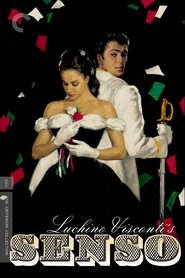
Senso (1954) — dir. Luchino Visconti
It opens inside the Venice opera house, mid-performance, as patriotic leaflets flutter down onto Austrian uniforms — opera, politics, and private passion arriving in one shower of paper. Visconti here trades documentary restraint for Technicolor, studio resources, and full-throated melodrama, and some contemporaries called it a betrayal of realism; watch instead how the gorgeousness is the argument. Everything is exquisite — the painterly reds and golds, the candlelit shadows Robert Krasker carried over from The Third Man — and everything gleams like a beautiful thing already rotting from inside.
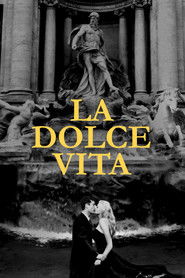
La Dolce Vita (1960) — dir. Federico Fellini
The opening: a statue of Christ dangling from a helicopter over Rome, while the man following in a second helicopter mimes for phone numbers and the rotor wash swallows every word. The holy and the trivial share the sky, and no one can hear a thing. Watch Marcello Mastroianni's performance of radical passivity — a professional watcher, a gossip journalist, whose intelligent, helplessly receptive face becomes the film's true landscape. Otello Martelli's hard, bleached widescreen photography flattens celebrities into photographic surfaces: the paparazzo's eye turned on everything.
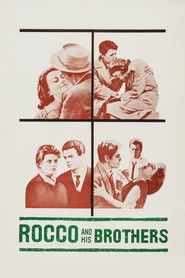
Rocco and His Brothers (1960) — dir. Luchino Visconti
A southern family steps off a train into a Milan of fog, wet pavement, and half-built apartment blocks — and Visconti grafts opera onto the documentary ground he himself helped invent. Watch Giuseppe Rotunno's photography shift registers: grainy social realism for the city, charged high-contrast shadow for the passions. And watch Alain Delon play absolute goodness as a kind of paralysis — a saint who beholds — while another kind of energy, pure ungovernable appetite, drives the family saga forward.
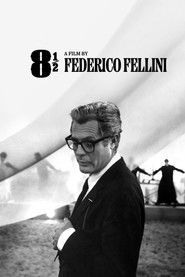
8½ (1963) — dir. Federico Fellini
The rule is established in the first two minutes: you will not be told when you have left the world for the inside of a head, or the head for the world. The seams between present, memory, and daydream are removed on purpose — Gianni Di Venanzo shoots them all in the same continuous silver, no misty dissolves, no change of grain, and editor Leo Catozzo cuts from spa to childhood with the same matter-of-fact join he'd use between two rooms of a house. Watch how quickly you stop asking "is this real?" and start asking better questions.
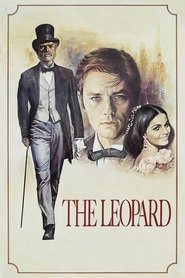
The Leopard (1963) — dir. Luchino Visconti
Watch for the moment, deep in the famous ball sequence, when the Prince steps away from the dancing, finds an empty room, and looks at himself in a mirror — already a portrait while the party roars next door. Rotunno's photography is explicitly organized around nineteenth-century Italian painting, and the film's great subject is a man who understands the death of his own class more completely than anyone alive and lifts not one finger. The seer of Italian cinema, this time wearing a duke's coat. Trust the extended duration; Visconti holds shots past comfort because the holding is the meaning.

Salò, or the 120 Days of Sodom (1976) — dir. Pier Paolo Pasolini
Approach with care — this is the list's most extreme and most demanding film, a reckoning with fascism structured on Dante's circles of hell rather than on any story arc. Watch how Tonino Delli Colli's cinematography refuses drama: cool, even, measured medium and wide shots, a rationalist villa lit like an official document. The horror is in the composed distance itself — appetite given chairs to sit in, atrocity observed through opera glasses. It is the dark terminus of everything this list has been tracing: what happens when watching becomes complicity.
Watched together, these films teach a single lesson in twelve variations: that cinema found some of its deepest power the moment it stopped insisting that characters fix their worlds. From De Sica's plain streets to Visconti's rotting gold, from Rossellini's held faces to Fellini's seamless dreams, you'll watch the same gesture pass from hand to hand — the camera settling in, refusing to cut away, trusting that a person looking at something too large to answer is not the absence of drama but its purest form. Give these films your patience, and notice how quickly patience becomes the most active thing in the room.