Sightlines · a mini film course
We think of crime films as machines of action — someone sees a problem, moves on it, and the world answers back. Heists get planned, killers get chased, cases get cracked. But the twelve films in this set share a stranger, richer obsession: the moment when seeing and doing come apart. Again and again, these movies put a capable person in the middle of a criminal world and then quietly take the steering wheel away — the camera watches rather than chases, faces hold instead of react, and knowledge arrives without the power to act on it. Some of these films make you the watcher too, handing you clues, borrowed eyes, or shuffled timelines and asking you to do the assembling. Watched together, they form a secret history of the crime picture as a cinema of witness — where the most electric thing on screen is often a person standing still at the edge of events, looking.
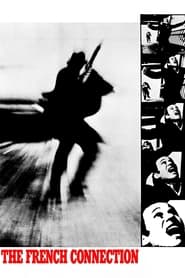
The French Connection (1971)
Start here, with the genre's engine running at full roar — and notice how much of it is waiting. Friedkin shoots surveillance the way it actually feels: cold sidewalks, bad coffee, telephoto lenses peering across streets, a detective standing on the freezing side of a restaurant window while his quarry dines in warmth. Roizman's grainy, urban-winter photography — real streets, available light, a restless handheld camera — makes the pursuit feel snatched from life rather than staged. Watch how each small act (a tail, a frisk, a hunch) lights up one more inch of a hidden picture, and how the film never explains what a shot means when it can simply let you stand there and see it.
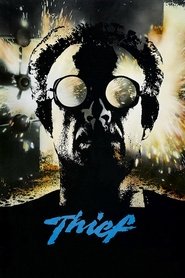
Thief (1981)
Mann films a safecracker the way you'd film a master craftsman: real tools, real heat, real duration, a fountain of sparks against steel with only a Tangerine Dream pulse keeping time. The film lives at night and in the rain — wet streets returning neon light, deep blacks against saturated color — a nocturnal grammar Mann would refine for decades. Watch for how the great near-wordless job sequences (inherited from Rififi and The Killing) build suspense out of skill and patience rather than confusion — and then ask yourself why a film this in love with competence keeps insisting that competence might not be enough.
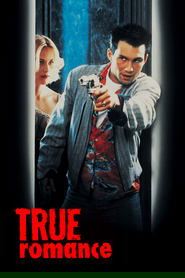
True Romance (1993)
Watch what Clarence's apartment tells you before he says a word: comic books, movie posters, action figures — an autobiography written in merchandise. This is a man who built himself out of other people's pictures, a direct descendant of Godard's Bogart-worshipping hero in Breathless, and Tony Scott shoots his inner life dead literal — when Elvis appears in a bathroom mirror to offer counsel, there's no dreamy dissolve, no wink. Kimball's photography runs to bruised blues and molten ambers, saturated nearly to abstraction, image as pure sensation. Watch how the film holds extreme violence and extreme tenderness in the same lush frame and dares you to choose between them.
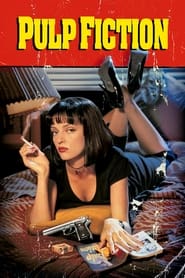
Pulp Fiction (1994)
The famous trick here isn't violence or dialogue — it's what Tarantino does to before and after. The chapters arrive out of order, so time stops being a string you follow and becomes a set of rooms you can enter in any sequence; a character can be gone in one chapter and walk through a door in the next, and you accept it the way you accept a song coming back on the radio. Notice how restrained the actual camerawork is — long takes, low angles, patient medium shots that let conversation breathe without editorial pushing. The shuffle only works because each individual scene is played so straight.
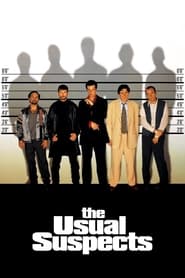
The Usual Suspects (1995)
A man sits in a stripped-down, bureaucratic white room and talks, and the film does what films always do with talk: it shows you the story, fully lit, fully scored, fully convincing. Watch the deliberate contrast Sigel builds between that drab interrogation room and the rich, shadowy world the narration conjures. This film's whole game is about how much authority we automatically grant a flashback — a question it inherits from Double Indemnity's confession structure and Rashomon's competing testimonies. Pay attention to what you're taking on faith, and to small physical details in the performances. That's all that should be said.
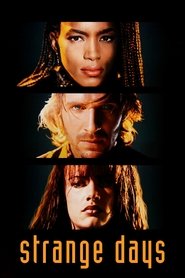
Strange Days (1995)
Bigelow opens by putting you inside someone else's eyes — not a point-of-view shot as garnish, but whole sequences worn like a body. The film runs two distinct kinds of looking: the grimy, neon-soaked "real world" of near-future Los Angeles, and the seamless first-person recordings traded like contraband — stolen sensation sold by the clip. Watch how the film makes you feel the difference in your own nervous system, and how it worries, decades before bodycams and VR, about what it costs to rent another person's experience. Its lineage runs from Peeping Tom's camera-as-weapon to Lady in the Lake's unbroken subjective eye — but nobody had built the rig this convincingly before.
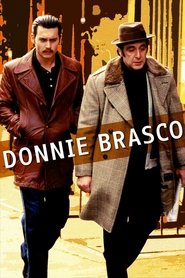
Donnie Brasco (1997)
Watch Johnny Depp's face in the long-held close-ups: he's always slightly behind his eyes, listening, laughing on cue, while some fraction of him watches the room and watches himself work it. This is a film about a man who perceives everything and can act on almost nothing — every move as the agent would blow the cover; every move as Donnie would betray the agent — so what's left is endurance, and Newell's camera, which rarely performs, simply stays with him. Sova's under-discussed photography lights the world like late autumn, grays and washed-out amber, refusing every gangster-movie gloss. The most demythologized mob film of its decade, made not through irony but through intimacy.
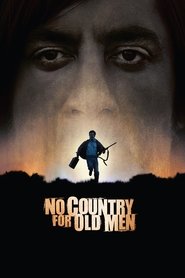
No Country for Old Men (2007)
The most celebrated scene is a man flipping a coin onto a gas-station counter — nothing moves but the talk and the fluorescent hum, and the tension has nowhere to go. Watch how Deakins treats the Texas landscape as a participant: long lenses compressing figures against featureless desert, emphasizing distance and exposure. Watch, too, what the film does with sound — the rustle, the drone, the room tone doing the work a score usually does, a grammar it inherits from The Conversation. This is a chase picture that honors every mechanic of the chase and then asks what happens when the machinery stops answering our expectations. Notice what the film chooses not to show you, and when.
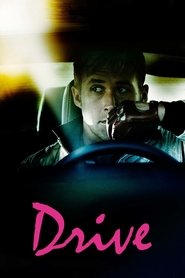
Drive (2011)
Two registers in deliberate tension: Sigel's camera at surveillance-level nearness to Gosling's face, held past comfort, past where a normal film would cut — and vast wide shots of Los Angeles as indifferent space. The Driver has no name, no past, no stated want; the film inhabits the myth of the cool, taciturn loner so completely that its costs become visible. Watch the face: it doesn't react, it simply holds — a surface offered instead of a psychology — and then watch how tenderness and violence arrive in the same unbroken breath, with no transition between them. That missing transition is the film's whole argument.
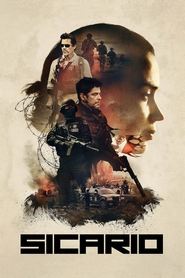
Sicario (2015)
Watch where Villeneuve keeps placing Emily Blunt's Kate Macer: in a doorway as things kick off, in the back seat of a convoy that won't say where it's going, at the edge of a briefing where the real decisions happen elsewhere. The film's entire argument is encoded in that blocking — a competent, clear-eyed agent positioned as the person things happen near, denied the access the genre promised her (a mechanism borrowed straight from Chinatown). Deakins shoots the border landscape geologically rather than picturesquely, wide frames dwarfing human figures without romanticizing the space — the Western's vistas with the myth drained out.

You Were Never Really Here (2017)
Images flare up without dates or places to land — a hand at a grate, shoes, feet in dust — and you keep waiting for them to assemble into the explanatory backstory a thriller owes you. They never do; they arrive the way a smell arrives. Ramsay knows the vigilante picture down to its grain — she shoots on 35mm so the image carries Taxi Driver's bruised texture — but watch how she keeps the genre's shape while withholding its release: extreme close-ups of hands and surfaces (a debt to Bresson), violence rendered through aftermath rather than spectacle, a camera that refuses the neutral observing position the genre usually supplies.
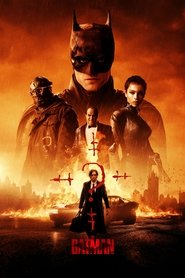
The Batman (2022)
Everyone here is being watched, and the watching is the plot — the film opens with patient looking through rain-streaked glass, and its hero, when he steps from the dark, is only the most patient watcher of all. Then a killer starts leaving ciphers addressed to the detective, which means addressed to you: Batman decodes, and we decode over his shoulder. Fraser's photography is famously underlit by blockbuster standards — near-monochrome darkness cut with sodium orange and blood red, faces falling into shadow — a direct inheritance from Gordon Willis's radically underexposed work on The Godfather, crossed with the cipher-driven procedural bones of Zodiac and Se7en. Watch a superhero film built on reading rather than punching.
Why watch these together? Because they teach each other. The French Connection and Thief show you the crime film's engine at its most beautiful — process, pursuit, craft — so that you can feel exactly what Sicario, No Country, Donnie Brasco, and You Were Never Really Here are doing when they let that engine idle and make watching itself the drama. The Usual Suspects, True Romance, and Pulp Fiction hand the assembly work to you — testing how much you'll trust a narrator, a myth, a scrambled clock. And Strange Days, Drive, and The Batman close the loop by making the act of looking the explicit subject: eyes for rent, a face that won't confess, a detective who is frankly us. Across fifty years, these films keep circling the same electric discovery — that a person standing at a threshold, seeing clearly and unable to look away, can be the most gripping thing a camera has ever found. Watch for the watchers. They're everywhere in this set, and one of them is you.