Sightlines · a mini film course
When the Circuit Breaks: Crime Films That Watch Instead of Chase
There's a particular kind of thriller that promises you the usual machinery — the chase, the clue, the confrontation — and then quietly does something stranger. The films below all live inside the crime genre's furniture: detectives, killers, drug wars, femmes fatales, heists gone wrong. But each one uses that furniture to ask a harder question about seeing. Characters perceive clearly and cannot act, or act decisively and cannot change anything, or discover that what they've been looking at was never quite what they thought. The camera watches where a lesser film would chase. Space becomes a trap. Time folds back on itself. These are films that trust the image to carry meaning without spelling it out — and watching them together, you start to feel the family resemblance in their bones.
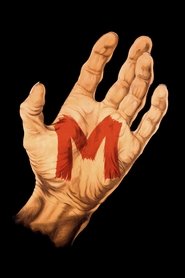
M (1931)
Before any of the others, there is this: a child's ball rolling to a stop in the grass, a balloon snagged in telephone wires, a stairwell a mother's voice can't fill. Fritz Lang never shows you the murder. He shows you what's left and lets the empty frame do the work. Watch how this teaches you, from the very first minutes, to be an active viewer — to supply the center from the edges, to assemble meaning from what's withheld rather than what's shown. Then notice how Lang deploys a single musical phrase: a few bars of Grieg that signal the killer's compulsion before his face arrives. Once you've learned the rule, the sound alone is enough to make your skin crawl. The film invented this grammar. Every thriller that followed is in its debt.
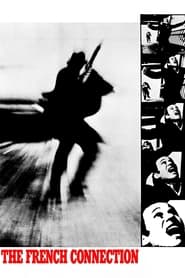
The French Connection (1971)
The cold is in the frame — literally. Watch the early sequence where Doyle stands on a Brooklyn sidewalk in December, stamping his feet, chewing cold pizza, while across the street through a restaurant window his quarry turns a fine meal over a white tablecloth. Friedkin doesn't explain it. He just puts you on the cold side of the glass and leaves you there. That image tells you everything about how this film is built: observation over explanation, the camera as a freezing, patient, handheld eye. Cinematographer Owen Roizman shoots New York in its actual winter grays and fluorescent greens, deliberately refusing beauty. Notice how the surveillance sequences work — the telephoto lens compressing distance, turning the city into a series of surfaces to be read. The procedure is the point.
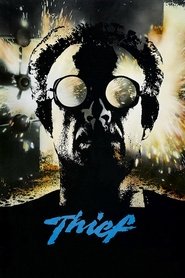
Thief (1981)
Start with the sparks. Michael Mann shoots a man crouched over a vault with a burning bar in his hands, a white fountain of fire against hardened steel, and he shoots it the way you'd film a master craftsman — every step legible, the duration real, the skill on full display. Donald Thorin's cinematography gives you wet streets returning neon light, deep blacks against saturated reds and blues, a city that is pure surface and pure atmosphere. Notice how Mann uses this nocturnal gloss not to glamorize but to isolate: Frank moves through a gorgeous world he cannot hold onto. The film is exceptionally patient about showing you exactly how the job gets done — and equally patient about showing you that competence, however perfect, is no kind of protection.
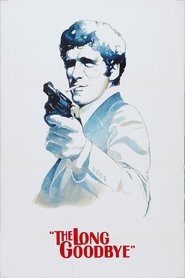
The Long Goodbye (1973)
Altman begins a murder mystery with a man trying to buy a specific brand of cat food. This is not an accident. Watch what the camera does in response: it drifts, repositions, catches the margins of scenes, zooms in on things nobody asked it to look at. Vilmos Zsigmond and Altman agreed the lens should behave like a curious but passive witness — always slightly late, always slightly elsewhere. Elliott Gould's Marlowe moves through this Los Angeles with enormous, anachronistic care, applying a 1940s code to a 1973 city that has stopped keeping score. Pay attention to how the film keeps letting him be right in his observations and helpless in his conclusions. Investigation and effectiveness have come uncoupled, and the camera's own wandering is the visual proof.
Chinatown is on your list via implication — but let's turn to the films that inherit its legacy:
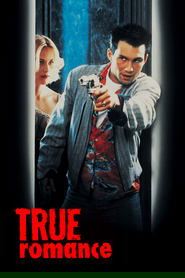
True Romance (1993)
Val Kilmer's Elvis appears in a bathroom mirror to give a young man advice, and Tony Scott shoots it exactly the way he shoots everything else: lit like a perfume ad, completely literal, no wavy-screen signal that we've left reality. That unembarrassed commitment is the key to the whole film. Clarence Worley has assembled himself entirely from movies, comic books, and pop mythology — his apartment is an autobiography written in merchandise. Watch how Scott's cinematographer Jeff Kimball saturates the palette into bruised blues and molten ambers, image as sensation rather than record. The film asks whether a self built from borrowed pictures can be real — and then, with remarkable sincerity, argues that it can. The violence is sudden and extreme; the tenderness is equally genuine. Scott never winks at either.
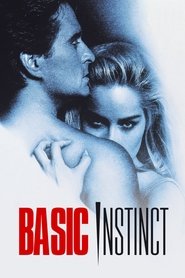
Basic Instinct (1992)
The interrogation scene is the whole film in miniature: five men ranged around one woman in white, the camera circling her in long, unhurried glides as if she were the still point and the apparatus of the law were the thing in motion. Watch how Jan de Bont's camera moves — smooth, gliding, complicit — against the cool pale blues and bleached coastal light of Catherine Tramell's world. Verhoeven constructs a thriller in which every piece of evidence, every confession, every act of intimacy might be a performance authored by the woman being investigated. The film refuses to confirm or deny. Notice how that refusal isn't a cheat or an evasion — it's the film's actual subject. The question of what's real and what's been staged is not the mystery to solve; it is the experience.
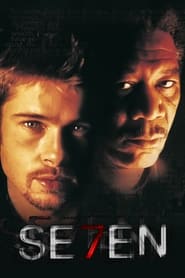
Se7en (1995)
John Doe leaves a word at every crime scene. Somerset's response is to go to the library. A detective story usually wants you to watch a chase; this one wants you to read alongside its detective, to do the interpretive work of connecting each elaborately staged scene to a tradition, a text, an argument. Darius Khondji's cinematography is systematic in its darkness — light sources are always motivated (a bare bulb, a flashlight, rain-slicked streetlight), and the camera positions itself to maximize shadow. The city has no name, no geography you can fix. Watch how this placelessness functions: it makes the moral environment feel total, inescapable, a condition rather than a location. The film teaches you how to read its murders as a single authored text — and then it asks what you do with that knowledge.
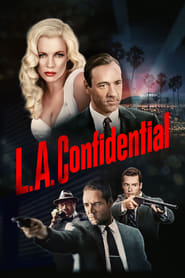
L.A. Confidential (1997)
Dante Spinotti's cinematography gives Los Angeles the warm amber tones of its own mythology — venetian-blind shadows, lacquered interiors, a light that looks like it was borrowed from the studio portraiture of the 1940s. Hanson uses this deliberately: there's a character here who has been surgically constructed to resemble a movie star, and the film lights her with the full reverence of a genuine studio portrait. Notice that the film never sneers at the forgery. It gives the fake the same loving camera as the real thing — and then asks you to sit with what that means. Three detectives, each with a different relationship to the institution they serve, move through a city of manufactured surfaces. Pay attention to how differently they look at things, because their ways of seeing are the actual dramatic engine.
Sicario (2015)
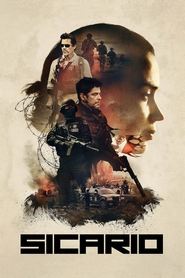
Watch where Denis Villeneuve keeps putting Emily Blunt. In a doorway as the shooting starts. In the back seat of a convoy whose destination she hasn't been told. At the edge of briefings where the actual decisions are being made somewhere else. Roger Deakins frames the desert landscape in geological scale — wide compositions that dwarf human figures against vast, indifferent terrain, drawing on the Western's visual tradition while stripping away the Western's heroic promise. Notice how this blocking and this landscape work together: the film's whole argument is encoded in where the camera places its protagonist relative to the action. She can see everything. She can change nothing. The thriller's usual promise — that a competent person who perceives clearly will be able to act effectively — is what the film spends two hours quietly dismantling.
Lost Highway (1997)
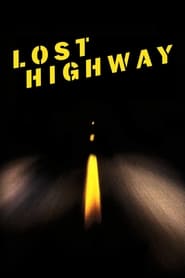
A man stands inside his house and presses his own intercom. A voice tells him "Dick Laurent is dead." He looks out. Nobody is there. Hold onto that image. Peter Deming photographs the Madison house as near-abstract space — rooms defined by what you cannot see, characters who walk into blackness and dematerialize. Lynch opposes this engulfing shadow against bleached, sun-struck California exteriors. Watch how the film refuses to separate what is happening from what might be imagined, remembered, or dreamed: two women who may be one woman, an identity that slides without explanation, a timeline folded back on itself. There is no authoritative outside view. The film does not place you above the action, clarifying it. It places you inside a loop, and it trusts you to feel the shape of the loop without mapping it.
No Country for Old Men (2007)
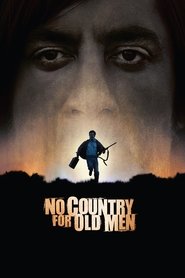
Roger Deakins again — and again the landscape as participant rather than backdrop. Long lenses compress figures against featureless West Texas desert, emphasizing exposure and distance. The film's most celebrated sequence, a conversation in a gas station, is almost entirely still: a man who doesn't know he's in danger, a killer asking him to call a coin toss, fluorescent light. Nothing moves except the talk and the tension. Watch how the Coens use sound — ambient room tone, wind, the specific texture of silence — as a primary instrument, often in the absence of music. And watch for what the film deliberately does not show you. Major events happen between scenes, reported secondhand, arrived at after the fact. The procedural promise — that the lines of pursuit will converge and resolve — is honored in every mechanical detail and broken in the deepest structural sense.
Memento (2000)
Wally Pfister shoots a Polaroid going pale — detail draining out of a picture of a dead man until Leonard Shelby is holding a blank square. It's footage reversed, a practical trick. It's also the whole film in three seconds. Nolan's formal invention is to build the structure of the movie around Leonard's actual condition: the color sequences run backward, each scene ending where the previous one began, dropping you in without memory of how you arrived. A second strand, in black-and-white, runs forward. They meet at a hinge. The cinematography stays deliberately clear and legible — Pfister makes the right choice to keep the images readable when the order of those images is doing all the disorienting work. Watch what the film does to your confidence in what you know, and when you knew it. The tattoos and the Polaroids aren't just character detail. They are the film's argument about what a self is made of.
Why These Together
Each of these films inherited a genre — the procedural, the heist, the detective story, the chase — and then did something unexpected with the tools. They found ways to use form itself as meaning: a camera that drifts rather than pursues, a timeline that runs backward, a frame that withholds the center and shows you only the edges. Watching them in sequence, you start to feel how each filmmaker found a different answer to the same underlying question: what happens when looking clearly at something is no longer enough? The crime genre is, at its root, a machine for converting perception into action — you see, you deduce, you act, order is restored. These films love that machine. They also, each in their own way, take it apart very carefully, piece by piece, and leave you with the pieces in your hands, wondering what you were so sure you had seen.