Sightlines · a mini film course
When the Circuit Breaks: Crime, Perception, and the Limits of Action
There's a particular kind of thriller that hands you all the machinery of suspense — the ticking clock, the competent hero, the clear objective — and then, without announcement, lets it quietly seize up. The character still moves. The camera still watches. But something has come loose between seeing and doing, between what a person knows and what they can change. The films below all live in that gap. They are crime pictures, mostly; noir pictures, mostly; films full of guns and money and people with plans. But each one is secretly interested in something stranger: what happens to a person — and to an audience — when the normal promise of genre goes unkept. Watch them in a row and you'll start to notice the same gesture recurring, in different costumes, across five decades of American cinema.
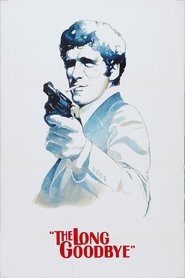
The Long Goodbye (1973)
Start here, because Altman announces the problem most cheerfully. The film gives its opening minutes not to a murder or a body, but to a man trying to buy a specific brand of cat food. He can't find it. He tries to pass off a substitute. The cat isn't fooled. This — a loyal, careful person moving through a world that has stopped rewarding loyalty or care — is the whole film in miniature. Watch Altman's camera: it never quite focuses on what a thriller camera should focus on. It drifts, lingers on the edges of rooms, catches faces that aren't important, pulls back when it should push in. It has its own wandering attention, and that restlessness is a kind of argument. Elliott Gould's Philip Marlowe does everything a great detective should do. Notice how little it matters.
Chinatown (1974) — wait, this one isn't on the list — let's continue with what we have
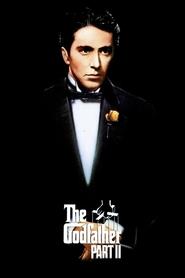
The Godfather Part II (1974)
Coppola's film runs two stories at once — a young Vito Corleone arriving in New York at the turn of the century, and his son Michael, decades later, consolidating a criminal empire — and the genius is in how differently these two timelines feel. Watch cinematographer Gordon Willis at work: the past is warm, amber, a world of motivated lamplight and domestic interiors that seem to breathe; the present grows colder and more shadowed as it goes, the architecture getting larger and the human figures smaller within it. Pay attention to where characters stand in the frame. Power, in this film, is measured by how much empty space surrounds a man. And listen for what the film refuses to give you: the clean resolution, the action that settles things. It earns its silences.
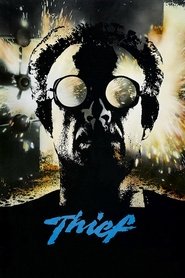
Thief (1981)
Michael Mann's first feature is the purest expression of what you might call the genre's central fantasy: the total professional, the man who is simply superb at what he does. Watch the safecracking sequence — real tools, real duration, real heat from the thermal lance — and notice that Mann shoots it the way a documentary would shoot a master craftsman at work. Every step is legible. Nothing is fudged for drama. This respect for procedure is the film's great gift and its great trap, because the film also believes, very quietly, that being superb at something is not the same as being free. James Caan's Frank talks about autonomy constantly. Watch how the film surrounds him with people who are deciding his life without his knowledge.
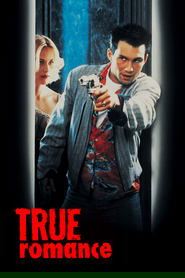
True Romance (1993)
Tony Scott's film — working from Quentin Tarantino's script — opens with a man talking to Elvis in a bathroom mirror. Not a dream sequence. Not a flashback. Elvis is just there, and Clarence Worley takes the advice, and the film moves on. Scott shoots this with the same saturated, bruised amber and neon blue he gives everything else, completely unembarrassed. That tone — conviction without irony, sensation without apology — is the key to watching True Romance. Clarence has built his entire self out of other people's movies: the apartment is an archaeology of it, every surface covered in comic books and action figures and the evidence of a man who learned who to be from the screen rather than from living. Watch how Scott treats the violence when it comes. It doesn't puncture the romance. It sits inside it, which is either the film's most disreputable quality or its most honest one.
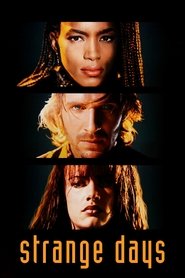
Strange Days (1995)
Kathryn Bigelow's film opens inside someone else's eyes. A robbery, a chase, a leap across rooftops — and then the recording ends, because the man whose eyeline you borrowed has just hit the ground. Bigelow built actual camera rigs to shoot these sequences, snapped tight to an operator's head, and the effect is not quite like anything else in American cinema: you are not watching a character, you are running the same nervous system as one. The film's central invention, SQUID — a device that records the full sensory experience of a moment and lets someone else play it back inside their own skull — is science fiction that was, at the time, genuinely ahead of its moment. Think about GoPro footage, body cameras, VR. Bigelow had already built it and asked the hard question: if you can feel exactly what another person felt, does that make you responsible for what they did?
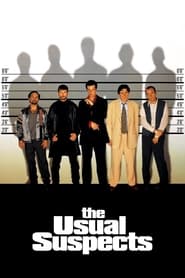
The Usual Suspects (1995)
Bryan Singer's film works a formal trick that sounds simple and is, in practice, almost vertiginous: it shows you events in vivid, fully-scored, fully-lit flashback — the grammar of memory that cinema audiences have been trained to trust — while those events may not have happened at all. Newton Thomas Sigel shoots the interrogation room where Kevin Spacey's Verbal Kint narrates as a deliberately drained, neutral space; the baroque, atmospheric flashbacks that Verbal conjures have ten times the visual richness. Notice that disparity. The film is teaching you, in real time, to trust the thing that is less trustworthy. Watch where Singer puts the camera during Kint's monologues, and watch what Kint's eyes are doing while he talks.
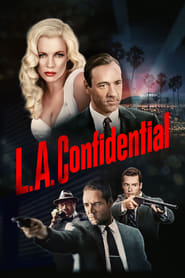
L.A. Confidential (1997)
Dante Spinotti lights this film like a love letter to 1940s Hollywood portraiture — warm amber, venetian-blind shadows, the lacquered glow of surfaces that are trying very hard to look like the real thing. That lighting is not just beautiful; it's the argument. The Los Angeles of L.A. Confidential is a city of manufactured appearances: a vice ring that retails women surgically altered to resemble movie stars; a television show that launders the LAPD's public image; a tabloid press that trades in licensed scandal. Watch how Hanson and Spinotti photograph the fake alongside the genuine with exactly the same reverence. The film keeps refusing to let you know which is which — and it's suspicious of anyone, including its three detectives, who thinks the difference is simple. Each cop believes he's the one who sees clearly. Follow what each of them has to stop seeing in order to maintain that belief.
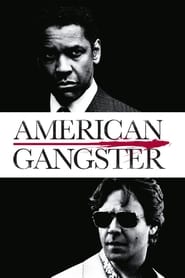
American Gangster (2007)
Ridley Scott's film organizes itself around a wardrobe. Frank Lucas builds a drug empire on the principle of invisibility — grey suits, modest prices, product that moves because it's simply better than the competition, language that belongs to a business school rather than a crime syndicate. Watch cinematographer Harris Savides construct Frank's world in warm amber and fur-coat luxury against the institutional grey and ambient cold of Russell Crowe's dogged, honest detective. The film is making a careful, analytical argument about capitalism and the drug trade — that they share not just vocabulary but structure — and Savides's chromatic split is how the film's thinking made visible. The Thanksgiving dinner scene is worth particular attention: watch how Scott photographs an ordinary family gathering as though it were perfectly, routinely ordinary, and notice what that ordinariness costs.
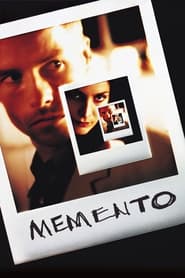
Memento (2000)
Christopher Nolan runs the color sequences of his film backward — each scene ends where the previous one began, so you arrive in every situation with no memory of how you got there. A second strand, in black-and-white, runs forward through time. They meet in the middle. This isn't a gimmick; it's the most precise dramatization of its subject's condition that cinema has managed. Leonard Shelby cannot make new memories. Nolan's film, structurally, makes sure you share the deficit rather than observe it from a comfortable distance. Watch how Wally Pfister's cinematography stays deliberately, almost stubbornly legible throughout — clear faces, even light, nothing expressionistically murky — because the disorientation is meant to come from sequence, not from image. The film trusts its architecture. Watch how you build your own sense of what has happened, and then ask yourself, afterward, what that was built from.
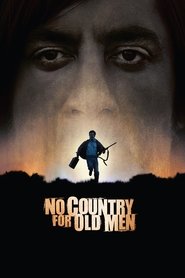
No Country for Old Men (2007)
The Coen Brothers' film is meticulous about sound. Roger Deakins's compositions draw the eye to the wide, featureless Texas landscape — long lenses press figures flat against desert and scrub, distance becomes exposure — but the sound design is where the film does its deepest work. Notice the absence of a conventional score: what you hear is wind, the specific acoustics of particular rooms, footsteps, the mechanical click of a certain weapon. Anton Chigurh is coded not as an explainable villain but as something closer to weather: patient, impersonal, indifferent to the categories — luck, justice, skill — that the other characters use to navigate the world. Watch the coin-toss scene at the gas station. Nothing moves except the conversation and the fluorescent light, and the tension has nowhere to go. That quality — dread that cannot be discharged by action — is the film's whole texture.
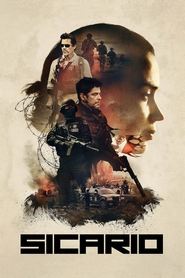
Sicario (2015)
Roger Deakins photographs the border landscape as geological fact: the desert is simply there, vast and indifferent, dwarfing the military convoys and surveillance aircraft that move across it without romanticizing or mythologizing the space. Pay close attention to where director Denis Villeneuve places Emily Blunt's Kate Macer in each scene. She's in a doorway when the shooting starts. In the back seat of a convoy that won't tell her where it's going. At the edge of the room where the real decisions are being made. Thrillers usually put the audience's surrogate in the center of the action. Villeneuve keeps putting her at the threshold — present enough to witness, excluded enough to be unable to act. Jóhann Jóhannsson's score behaves similarly: low, subterranean frequencies that suggest threat without locating it. The dread has no target.

You Were Never Really Here (2017)
Lynne Ramsay's film opens with fragments that won't stay in place — a child's hand, a pair of shoes, light through water — images that keep surfacing without context, without date, without resolution. A conventional thriller would eventually arrange these into a backstory, the wound that explains the man. Ramsay declines. Joe's violence is not dramatized as catharsis or spectacle; it happens at the edge of the frame, in mirrors, through closed-circuit monitors, in the aftermath rather than the act. Thomas Townend's camera operates in extremes: deep inside a texture of cloth or skin or concrete, or very far away, watching a figure move through space with the detachment of a security camera. Pay attention to how Jonny Greenwood's score behaves — when it erupts, when it goes quiet, what it replaces. This is a film about a man for whom the machinery of action and release has simply stopped working, and Ramsay has built the film so you feel that stoppage in your body.
Why Watch These Together
What these films share is a fascination with the cost of awareness. Each of them puts a capable, often brilliant person — a detective, a thief, a soldier-for-hire, a drug lord, a cop — into a situation that demands action, and then withholds the satisfaction of action meaning anything. The world of each film is too large, too institutional, too corrupt, or too simply strange to be solved by a person acting well. Violence occurs. Plans are executed. And yet the screen keeps returning to a face that is watching, waiting, unable to resolve what it sees into something it can change.
That is a very particular kind of cinema, and it is also, if you are willing to sit with the discomfort it creates, some of the most honest cinema being made. The thrill of the conventional genre picture is the thrill of competence — watching someone who knows what to do, doing it. These films have learned to generate an equal and opposite thrill: the terrible clarity of someone who sees exactly what is happening and cannot do a thing about it. Watch any one of them and you'll notice the mechanism. Watch them in sequence, across five decades, and you'll see something bigger — a conversation that American crime cinema has been conducting with itself, quietly and persistently, about the limits of what a person can know, and what knowing is actually worth.