Sightlines · a mini film course
Watchers in the Dark: Neo-Noir and the Detective Who Cannot Act
There is a particular kind of thriller that refuses to reward its detective. The case doesn't close cleanly, the guilty aren't neatly caught, and the investigator — however skilled, however dogged — keeps finding themselves at the edge of a room where the real decisions are being made without them. The films below all belong to this family. They inherit the trappings of noir — rain-slick streets, amber light, femme fatales, corrupt institutions — but they use those trappings to ask a harder question: what happens when seeing something clearly is not the same as being able to do anything about it? Across these films, that question gets answered through light, through camera movement, through the blocking of bodies in doorways, and through the slow, uncomfortable discovery that the genre's old promises — perceive, act, resolve — may have been lies from the start.

Sicario (2015)
Watch where Emily Blunt is standing. Cinematographer Roger Deakins frames her repeatedly at thresholds — doorways, the back seat of a convoy, the edge of a briefing — in a desert landscape so wide and geological that human figures look like punctuation marks rather than protagonists. What to notice is the relationship between the vastness outside and the smallness of any individual within it: Deakins refuses to make the border beautiful in the way Westerns did, and that refusal is a moral argument. The thriller genre promises that a competent investigator will act and matter. Pay attention to how often Kate perceives everything correctly and changes nothing. The film's great formal trick is smuggling the helplessness of art cinema into a Lionsgate genre picture without ever breaking the genre's surface tension.
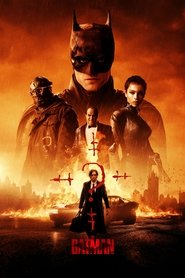
The Batman (2022)
Greig Fraser shoots this as though sunlight has been permanently cancelled — faces dissolving into shadow, amber and blood-red neon doing what daylight refuses to, blockbuster action staged at the threshold of visibility. What to watch is how the film turns investigation into a reading exercise: the Riddler constructs his murders as messages addressed to the detective, and Batman (and you) decode them in real time, one cipher at a time. This makes the audience a participant in the investigation rather than a spectator of it, which is why the film feels so unlike other films carrying the same cape. Notice also how the camera lingers on watchers — Batman in his gargoyle perch, cops peering through rain-blurred glass — before it ever shows us the watched. The watching is the story.
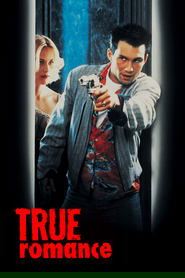
True Romance (1993)
Tony Scott shoots this in bruised blues and molten ambers, saturated past naturalism into something closer to a music video or a very expensive fever dream, and he is completely unembarrassed about it. What to notice is how that visual style serves the film's central argument: Clarence Worley has built his entire identity out of other people's images — comic books, kung-fu films, Elvis — and Scott renders the world the way Clarence has decided it looks, lit like a fantasy that has somehow become real. Pay attention to how the violence arrives: not as gritty consequence but as a sudden rupture through the romantic-comedy texture, the way a car backfiring in a quiet scene makes you realize how tightly you'd been holding your breath. The film is descended directly from À bout de souffle, where Michel Poiccard stood in front of a Bogart poster and tried to become one. Clarence is Michel's American cousin, further gone.
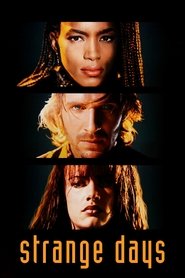
Strange Days (1995)
The decisive formal choice is the split between two kinds of image. When Kathryn Bigelow is showing you the SQUID recordings — experiences played back directly from someone else's nervous system — she uses a handheld camera mounted inches from the actor's face, shooting through custom rigs to produce footage that shakes and lurches with the immediacy of borrowed sensation. When she shows you Lenny Nero's world, the camera is at a professional remove: grimy, neon-drenched, observational. Watch the seam between those two modes, because the whole film lives there. The SQUID clips implicate you — you're wearing them, not watching them — and Bigelow was building this ethical trap years before GoPro and bodycam footage made first-person vision a routine feature of the news. The question she's asking is whether to watch recorded suffering is itself a kind of harm.
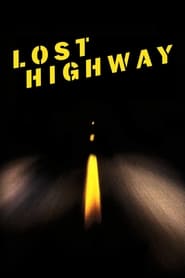
Lost Highway (1997)
Peter Deming photographs the Madison house as near-abstract darkness: rooms defined by what you cannot see, characters who walk into shadow and simply stop existing. Against this, the sunlit California exteriors are bleached and featureless, offering no comfort. What Lynch is constructing with this opposition is a world where the normal rules of screen geography — here is inside, here is outside, here is now, here is memory — quietly stop applying. Notice how the two halves of the film rhyme: objects, lines of dialogue, spatial arrangements that recur in slightly wrong configurations, like a song played in a different key. The film does not explain this. It is not withholding the explanation; there is no explanation to withhold. What you are watching is a story shaped like a loop rather than a line, and Lynch wants you to feel the shape before you understand it — if you ever do.
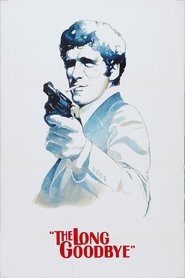
The Long Goodbye (1973)
Start with the cat food. Altman opens a murder mystery with several minutes of Philip Marlowe trying to buy one specific brand, failing, and attempting to fool the cat with a substitute. No other detective picture squanders its first reel this way, and it is the whole film folded small. Marlowe — played by Elliott Gould as a rumpled, muttering anachronism — moves through a 1973 Malibu that has stopped operating by his rules, and Vilmos Zsigmond's camera behaves accordingly: it drifts, repositions, zooms in on peripheral details, pans across rooms on its own curiosity rather than following the edit's usual logic of information delivery. The camera is not helping Marlowe. It is watching him the way you'd watch someone confidently give directions in a city they left thirty years ago. Notice how often it catches the margins of a scene — what's happening behind him, around him — as if the film itself has given up on his centrality.
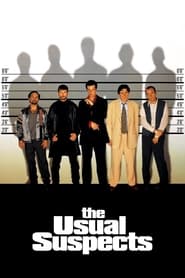
The Usual Suspects (1995)
Newton Thomas Sigel's palette is deliberately unglamorous: institutional gray, fluorescent white, the desaturated smoky half-light of urban interiors. The interrogation room where Verbal Kint tells his story is stripped of atmosphere on purpose — a blank white box — so that the baroque, shadowy, fully scored flashback sequences he narrates feel like another movie bleeding through. Watch how much visual authority those flashbacks carry: they look like memory ought to look, which is to say they look like cinema. The film is doing something quietly radical with that contrast. We have been trained by decades of filmmaking to trust the flashback, to treat the visualized past as evidence. Singer keeps every convention of that grammar — the editing, the photography, the music — and voids the contract underneath. Notice how comfortable you feel watching those sequences. That comfort is the trap.
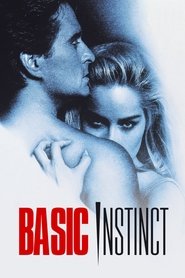
Basic Instinct (1992)
Jan de Bont shoots Catherine Tramell's world in cool blues and affluent whites — the bleached Pacific Coast light of her beach house, the pale geometry of her wardrobe — while the San Francisco noir interiors run darker and murkier. The camera moves constantly, with gliding, spiraling tracks that circle her the way a suspicion circles a fact it cannot pin down. What to watch is the direction of attention in any scene she's in: the film repeatedly sets up the geometry of interrogation — investigators, detectives, psychiatrists all ranged around her — and then quietly lets her run the room. Notice who is reading whom. Verhoeven keeps the surface of a slick studio thriller fully intact while systematically reversing its logic from underneath: the detective genre promises that the investigator will establish what happened, and Basic Instinct spends two hours asking whether that promise can survive contact with someone who may be authoring events as they occur.
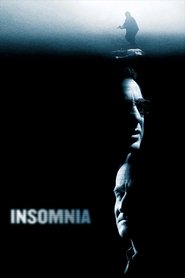
Insomnia (2002)
Wally Pfister shoots Alaska in perpetual, merciless daylight — whites and grays that exhaust rather than illuminate, overlit exteriors that function the opposite of noir shadow. Where classic detective films use darkness to hide what the investigator must find, Insomnia uses relentless light to prevent concealment. There is nowhere to hide anything, including guilt. Watch how Nolan uses that light expressionistically: Dormer's inability to sleep is never explained through psychology or backstory alone; it's written into the landscape, the blazing sky at two in the morning, the towel jammed against the gap in the curtain that still lets daylight through. Al Pacino plays the deterioration as a slow leak — small hesitations accumulating, the eyes reddening, movement going just slightly syrupy — and the landscape collaborates with his performance in a way no indoor, nighttime noir could manage.
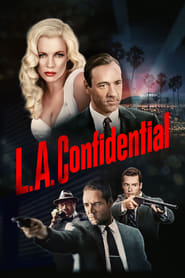
L.A. Confidential (1997)
Dante Spinotti and Curtis Hanson build 1950s Los Angeles in warm amber and gold — venetian-blind light falling across lacquered bar interiors, the dusty sprawl of mid-century residential streets. It is a gorgeous reconstruction of a period that was already half myth when it happened, and the film knows this. Notice how deliberately Hanson lights Lynn Bracken: full glamour-portrait reverence, Veronica Lake's hair falling the right way, the whole apparatus of golden-age Hollywood portraiture applied to a woman who is herself a manufactured copy of a star. The film offers you the forgery with the same visual language it uses for everything else, and then refuses to distinguish between them — which is itself an argument about what Los Angeles has always sold. Three detectives with three different relationships to the truth, and a city that has been performing sincerity so long it has forgotten the original.
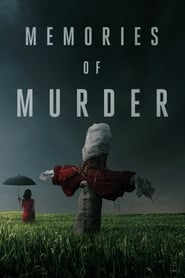
Memories of Murder (2003)
Kim Hyung-goo's camera drifts wide and slow, granting the Korean rice-paddy landscape the same visual weight as the figures moving through it — which means the dead girl in the irrigation ditch at the start gets no special cinematic emphasis, no isolating close-up, no urgent underscore. The landscape simply absorbs her the way it absorbs everything else. This is a deliberate refusal of the serial-killer procedural's grammar, which normally makes the body the hot center of the frame. Watch how Bong handles evidence throughout: clues are found, developed, argued over, and then quietly fail to mean what they were supposed to mean. The film accumulates investigative effort the way a field accumulates weather — it all passes through, and the ground remains. Notice too how the comedy and the horror share the same tonal register, sometimes the same shot, so that you are never quite sure whether a given scene is about to become funny or devastating.
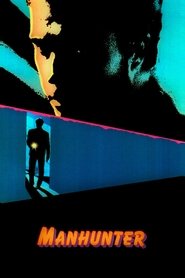
Manhunter (1986)
Dante Spinotti gives Mann a palette of cold blues, clinical teals, and hard white surfaces — glass, tile, the flat geometry of modernist architecture — with warmer, more unsettling accents arriving when Graham gets closer to the killer's perspective. The compositions favor symmetry and wide negative space: figures placed at the edge of the frame, surrounded by designed emptiness, as if interiority has been pushed out of the body and into the room. Watch how Mann films Graham watching things — home movies, crime-scene photographs, the geometry of a dead family's house. The act of looking is the drama, and the camera watches Graham watch, so you feel the doubling: a detective perceiving a killer perceiving victims, and the film observing all of it. Synth music by Tangerine Dream runs underneath scenes that in another film would be silent, lending even quiet moments a faint, persistent dread.
Watching these films together, a pattern emerges that no single one of them makes fully legible on its own. They all inherit noir's furniture — the corrupt institution, the dangerous woman, the unsolvable case, the city that has stopped keeping its promises — but they use that furniture to ask what happens to the detective when the genre's motor stalls. The competent investigator is there in every film: Kate Macer, Will Dormer, Philip Marlowe, the two Korean detectives. They are all perceptive, often brilliant. None of them can convert that perception into the clean resolution the thriller used to guarantee. What fills the space that action used to occupy is looking: sustained, formal, beautifully lit looking that the camera shares with the characters and with us. These are films that reward the viewer who is willing to watch rather than just wait — to notice what the light is doing, where the camera places itself, whose back is to the door — because that is precisely what the films are asking of their own investigators, with results that range from ambiguous to devastating.