Sightlines · a mini film course
When Seeing Outruns Doing: Twelve Thrillers About the Limits of Action
Every thriller makes a promise: the hero sees the problem, the hero acts, the world changes. The twelve films on your list all quietly break that promise — and the breaking is the point. In each one, someone looks hard at a corrupt city, a rigged institution, a catastrophe already in motion, and discovers that looking is most of what's available to them. These filmmakers don't compensate with noise. They slow down, they hold shots longer than comfort allows, they park their protagonists in doorways and back seats and behind panes of glass, and they let the camera watch rather than chase. Viewed together — here in rough chronological order — they form a sixty-year conversation about what a movie can do when its hero can't do much at all.
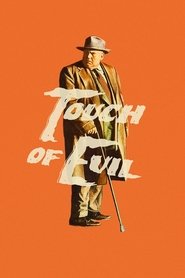
Touch of Evil (1958)
Watch the very first minutes: a car with a bomb in its trunk pulls away, and the camera lifts off the ground and threads three unbroken minutes of border-town traffic, neon, and drifting music before it lets you go. Welles and cinematographer Russell Metty barely use conventional back-and-forth cutting; instead, actors move toward and away from a wide-angle lens, so emphasis comes from proximity, not editing. Notice how the low angles press ceilings down on Hank Quinlan until the man seems monstrous by geometry alone. This is often called the last great classic noir — every element of the genre pushed to gorgeous excess.
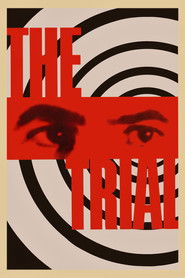
The Trial (1962)
Welles lost his set money and found, one night, the abandoned Gare d'Orsay in Paris — and shot his Kafka adaptation inside its vast, dead spaces. Watch how sheer volume becomes the villain: extreme wide lenses and deep focus make ceilings loom, corridors stretch to vanishing points, and Josef K. shrink to a speck among a thousand identical desks. The horror here isn't a person; it's architecture. Space itself becomes the trap, inherited straight from the distorted sets of German silent cinema.
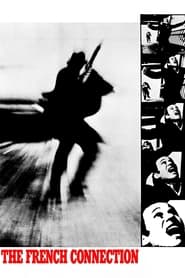
The French Connection (1971)
Feel the cold. Owen Roizman shoots New York in winter greys and fluorescent greens, often through telephoto lenses that make surveillance feel like eavesdropping. The film's best moments are wordless: Doyle on a freezing sidewalk with bad coffee, watching his elegant French quarry dine behind restaurant glass — no dialogue explains the gulf between them, the framing does it all. This is detective work as thread-pulling: each small act (a tail, a wiretap, a hunch) lights up one more inch of a network too big to see whole.
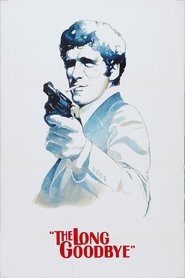
The Long Goodbye (1973)
Altman opens a murder mystery with ten minutes of a man trying to fool his cat with the wrong brand of cat food — and that errand is the whole film in miniature. Watch Zsigmond's camera: it never sits still, always drifting, zooming, reframing, like a curious bystander with its own attention span, catching margins the story doesn't require. Elliott Gould's Marlowe investigates constantly and belongs to a Los Angeles that has quietly stopped keeping score. It's a loving demolition of the private-eye picture, written by the same woman who co-wrote The Big Sleep.
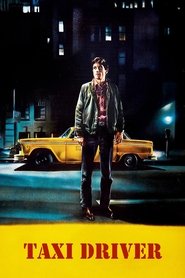
Taxi Driver (1976)
Almost everything this film knows, it knows from inside the cab: fogged windshields, neon smeared across wet glass, pedestrians caught and lost in headlight beams. Michael Chapman's camera rides close enough to Travis's point of view to infect you with it, then steps outside — across a diner, down from above — to let you judge what you've been feeling. Notice how much of the film is driving, circulating, watching, with perception that never quite converts into anything. It borrows the shape of The Searchers — the obsessive man on a rescue mission — and hollows out its motor.
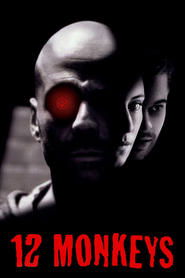
Twelve Monkeys (1995)
Gilliam takes Bruce Willis, arriving with all his action-hero authority, and spends the film disabling it: Cole's mission isn't to fix the catastrophe, only to gather information about it — heroism reduced to note-taking. Watch how Roger Pratt's photography maps mental states: cold desaturated blues for the future, low angles and wide lenses that make the psychiatric hospital lean in on you. And watch the fragment of memory the film keeps circling back to — its looping structure is inherited from Chris Marker's La Jetée, and the whole design is built around a single image you'll be taught to see slowly.
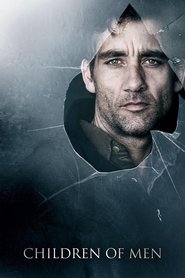
Children of Men (2006)
Cuarón's gamble is to take the cut away exactly where a thriller leans on it hardest. In the famous sustained shots, Lubezki's camera stays at arm's length from the actors, refusing the merciful edit that would clean up the frame — at one point blood spatters the lens and simply stays there, and you keep watching the world through it. Time is allowed to stretch until you feel it as duration, not plot. It's science fiction shot like documentary war footage, and that collision is the whole experience.
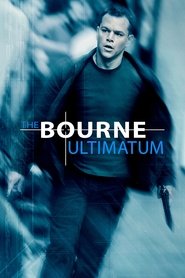
The Bourne Ultimatum (2007)
Come for the chases, stay for the looking. The film's most gripping sequence — Waterloo Station — is built entirely from stacked layers of sight: a man watched on CCTV, watchers watched by their target, a reporter who can hear but cannot see, and not a shot fired. Oliver Wood's restless handheld camera never settles, drifting and reframing even in dialogue scenes, as though the film itself were under surveillance. Notice how often the score drops out and earpiece chatter takes over: the drama is conducted through eyes.
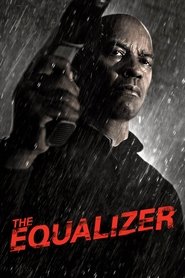
The Equalizer (2014)
Hold onto the first hour, which is the strange, patient heart of the film: the same diner every night, the napkin folded just so, the tea steeped the exact right number of minutes, a man who has subtracted himself from the world and arranged the remainder down to the teaspoon. Fuqua's camera keeps finding Denzel Washington behind glass — diner windows, reflections — studying a street he won't step into. That ritual stillness comes straight from Melville's Le Samouraï, and the film's meaning lives in whether, and how, the stillness holds.
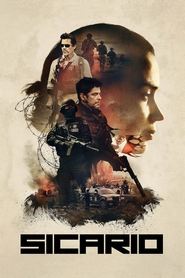
Sicario (2015)
Watch where Villeneuve keeps putting Kate Macer: in a doorway, in the back seat of a convoy that won't say where it's going, at the edge of a briefing where the real decisions are made elsewhere. The film's entire argument about complicity — how institutions recruit people into things by withholding the full picture — is encoded in that blocking. Roger Deakins shoots the border desert like geology, wide frames that dwarf human figures without romanticizing the land: a Western's landscape, stripped of the Western's myth.

You Were Never Really Here (2017)
On paper it's a vigilante picture; in practice Ramsay keeps the genre's shape and quietly pulls its spark plugs. Watch how violence is handled — often held offscreen or rendered through aftermath and objects, a technique inherited from Bresson, who also taught her that hands in extreme close-up can say more than faces. Fragments of image keep flaring up without a date or a place, and they refuse to assemble into the tidy explanatory backstory a thriller owes you. That refusal is the film's first lesson in how it wants to be watched.
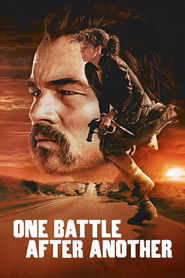
One Battle After Another (2025)
Anderson's washed-up radical — sixteen years off the grid, too stoned to stay vigilant, too paranoid to relax — is asked to become a man of action, and he is the person on earth least equipped for it. Watch how the film plays that gap for comedy rather than despair: the same collapse the other films on this list treat as tragedy becomes farce here. Its visual DNA runs back to Zsigmond's 1970s Los Angeles — long lenses, plate glass, a city flattened into surveillance footage of itself — closing a loop with The Long Goodbye half a century on.
Watched together, these films teach you a way of paying attention. You'll start noticing where directors put their protagonists — thresholds, back seats, behind glass — and how the camera's behavior (drifting, holding, refusing to cut, refusing to look away) carries the argument that dialogue never states. You'll see the same gestures echo across decades: Welles's oppressive architecture reappearing in Villeneuve's convoy interiors, Bresson's hands in Ramsay's close-ups, Friedkin's surveillance lenses in Greengrass's station concourse, Altman's stoned Los Angeles in Anderson's. The through-line isn't a genre or a nation — it's a shared suspicion that the most honest thing a thriller can do is admit how little its hero controls, and then make the act of watching itself the drama. Bring your patience. These films reward the viewer who sits on the cold side of the glass and looks.