Sightlines · a mini film course
The Space Between Seeing and Doing
Every one of these films is, on paper, an action picture — spies, soldiers, snipers, bombs. But watch closely and you'll notice they're all secretly obsessed with the opposite of action: the held breath, the stalled hand, the character who can see everything and change almost nothing. Some of these films pry open the gap between spotting danger and answering it, and let suspense pour into that gap. Others turn their protagonists into watchers — people at thresholds, on rooftops, behind lenses — to whom things happen near. And a few are proud, expert machines of cause-and-effect, included here so you can feel exactly what the others are refusing. Together they're a course in one question: what does a movie do when acting stops working?
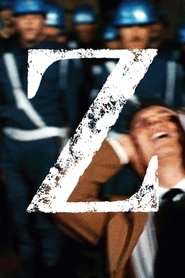
Z (1969)
Costa-Gavras films a political killing from ground level — in the legs, the panic, the bad angles — deliberately denying you the clean overhead shot that would explain what happened. That's the whole design: officials will soon claim nobody could possibly say what they saw, so the camerawork is staged to feel like the cover-up. Watch how Raoul Coutard's restless handheld camera (inherited straight from the French New Wave) turns confusion itself into an accusation, and how the film replays the same violent moment through different witnesses, like an investigation conducted by editing.
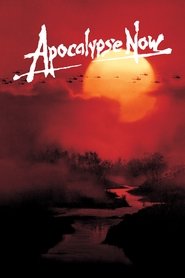
Apocalypse Now (1979)
The opening tells you everything: a ceiling fan blurs into helicopter blades, jungle burns behind both, and you're instructed to stop watching for a plot and start watching for a state of mind. Notice Vittorio Storaro's color journey — amber Saigon rot draining into blue-grey river murk and finally near-total darkness — and notice how flat and hollowed-out Martin Sheen's performance is, on purpose. His character mostly watches while the river does the moving; the film lets time stretch and asks you to float in it.
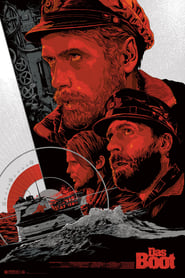
Das Boot (1981)
The submarine film as held breath: a sonar ping crawls along the hull, a hand freezes on a valve, and the only available move is no move at all. Petersen built the most expensive German film of its day around men who perceive everything — the gauge, the groan of pressure on steel — and can do almost nothing about it. Listen as much as you look; sound carries the terror, and Jost Vacano's sickly instrument-panel light makes the boat feel like a lived-in machine rather than a set.
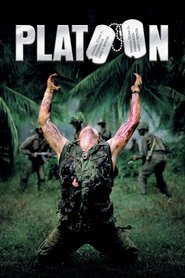
Platoon (1986)
Stone plants the camera in the mud with the infantry — partial sightlines, geography dissolving into flares and muzzle-flash — so that you know only what the grunts know. Stone called his young narrator "a partly passive vessel," and that's the key: watch for the moments when he can see with terrible clarity and cannot act on any of it. This is the film that pulled Vietnam cinema out of myth and into the boot-level experience.
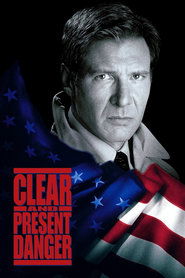
Clear and Present Danger (1994)
Here's the counterweight: a film that runs the cause-and-effect engine flawlessly and never lets it slip. Its boldest move is making information itself the battlefield — the tensest sequence is two men typing at each other, a file being copied while it's deleted out from under him, no gun in the frame. Watch McAlpine's two visual worlds: cool, shadowed Washington offices against hot, saturated Colombia, corruption rendered as lighting.
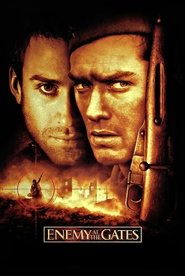
Enemy at the Gates (2001)
A sniper duel is a staring contest with rifles: two men lying motionless for hours across dead ground, where whoever moves first dies. The film takes the patient, powerless watcher and puts a weapon in his hands — waiting becomes the action. Notice Robert Fraisse's frozen steel-blue palette punctured by fire, and the film's other subject running underneath: how a hero is manufactured, deliberately, as propaganda.
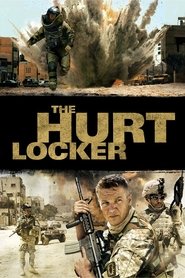
The Hurt Locker (2008)
The film announces its idea in an epigraph — war as a drug — and then proves it behaviorally, never explaining its bomb tech, just watching him crave the work. Barry Ackroyd's long lenses compress space until you can't gauge depth or threat from position alone; every figure in the middle distance is a question. Watch for one quiet scene in a supermarket aisle, back home, that turns the entire movie inside out.
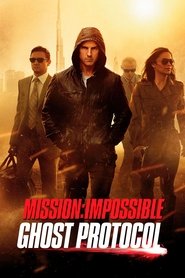
Mission: Impossible – Ghost Protocol (2011)
The great comic version of our theme: every gadget fails at the worst possible moment, and the split-second between seeing the danger and answering it — usually edited out of existence in action films — is pried open and made to sweat. Brad Bird imports his animation instincts (clear geography, legible bodies, escalating mechanical complications) and hires Robert Elswit to hold the performer and the hazard in the same wide frame. Blue is glue. Watch the glove.
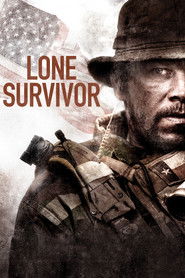
Lone Survivor (2013)
Berg organizes his combat not around strategy but around what gravity and gunfire do to four bodies over one afternoon — men going off cliffs, hitting rock, and the camera tumbling with them so you take each impact behind your own ribs. The staging keeps the SEALs silhouetted on ridgelines, options visibly narrowing, the mountain itself an antagonist. Notice how your spatial knowledge is restricted to roughly what they can see.
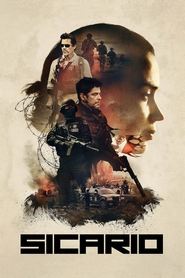
Sicario (2015)
Watch where Villeneuve keeps placing Emily Blunt: in doorways, in back seats, at the edges of briefings where the real plan is decided somewhere she is not. She's a capable agent who perceives clearly and can change nothing — the film's entire argument about complicity is encoded in that blocking. Roger Deakins shoots the border like geology, wide frames dwarfing human figures, a Western landscape with the myth stripped out.
13 Hours: The Secret Soldiers of Benghazi (2016)
The strangest entry, because Michael Bay — cinema's great maestro of see-it, shoot-it, solve-it — makes a siege film that keeps returning to men lying prone in the dark, weapons down, listening to fire whose direction won't resolve. Dion Beebe brings the grainy, ambient-light night photography he developed for Michael Mann, and the film's real subject is the gulf between the men on the ground and the institutions calculating risk far away.
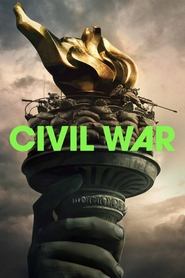
Civil War (2024)
Garland builds his film on a single device: mid-firefight, motion stops, one perfectly composed still appears, a shutter clicks — and then motion resumes, as if nothing had been taken out of it. Something had. Watch your own body when it happens; the film is asking what it costs to turn suffering into an image, and whether the person behind the lens is a witness or an addict. An outsider's eye — a British filmmaker — imagining American catastrophe with unnerving detachment.
Watched together, these films teach you to feel the machinery of the genre itself. Clear and Present Danger and Ghost Protocol show you the engine running clean — perceive, act, resolve — so that when Sicario or Das Boot quietly cuts the wire between seeing and doing, you'll feel the loss physically, as dread. You'll start noticing where directors put their watchers: in doorways, on rooftops, behind riflescopes and camera lenses, in the air above a clearing. And you'll notice that the most modern move these thrillers make isn't a bigger explosion — it's the moment the film trusts you to sit inside the stalled second before anything can be done, and simply look.