Sightlines · a mini film course
The Watchers: Crime Cinema and the Art of Standing Still
Every film on this list is, on paper, a crime picture — heists, mobs, murders, revenge. But what actually binds them is stranger and more beautiful: each one is fascinated by the moment when a capable person can't act — or won't, or shouldn't, or acts and discovers it changed nothing. These are films about watchers: the agent kept outside the briefing, the undercover man who must not move, the driver whose face holds everything back, the old gangster who can only remember. Across seventy years of crime cinema, from Warner Bros. shadow-work to neon-soaked Los Angeles, these directors keep discovering that the most electric thing you can put on screen is a person looking at a situation they cannot fix. Watch the faces. Watch the doorways. Watch how long the camera is willing to wait.
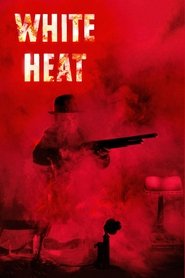
White Heat (1949)
Notice how the film speaks two visual languages at once: daylight police procedure shot with documentary crispness, and prison interiors and hideouts drowned in shadow, faces half-swallowed by darkness. Cagney's Cody Jarrett looks like a classic gangster — but watch for the scenes where he isn't doing anything, where compulsion and grief simply move through him while everyone else in the room can only stare. There's a famous prison mess-hall scene built entirely on watching; hold onto it. It's the key to what this film is underneath the genre costume.
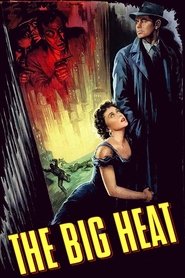
The Big Heat (1953)
Fritz Lang, the great émigré, frames nearly everything through thresholds — doors, windows, archways — placing people at the exact boundary between safety and exposure. Watch how the bright, warm spaces of the opening give way to progressively narrower, darker rooms. And notice Lang's patience: he trusts you to understand the worst before the camera confirms it, letting you do the arithmetic yourself. The villain here isn't one man but a whole environment — a syndicate that functions as the city's actual government.
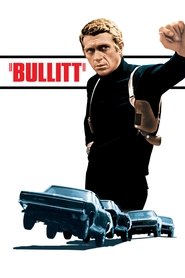
Bullitt (1968)
Yes, the car chase is legendary — but watch what surrounds it. Long stretches of this film are just a competent man working: waiting in a corridor, reading a hotel room, buying frozen dinners at two in the morning. Most thrillers treat that as filler; Yates treats it as the point. Watch for one tiny gesture before the chase — McQueen silently buckling his seatbelt. No music, no dialogue. A man who has already seen what's coming, simply preparing to meet it.
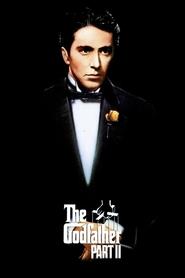
The Godfather Part II (1974)
Coppola braids two eras — a father's rise, a son's reign — so each timeline quietly comments on the other. Watch Gordon Willis's light do the storytelling: harsh Mediterranean sun for the Sicilian past, then shadow and enclosure creeping in as if the buildings themselves were closing over. Borrowed from Visconti is a trick worth spotting: powerful men framed small against vast architecture. And notice how often the film ends a movement not on an act but on a held, waiting image — a face, a room, silence.
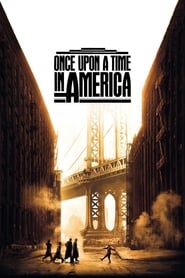
Once Upon a Time in America (1984)
Leone tells time through light: the childhood and Prohibition years glow amber and honeyed — sunlight through dust — while the later scenes cool and grey. De Niro plays the lead as, in one critic's phrase, "a study in passivity": a man who mostly looks — through a peephole, into a locker, across a banquet table. That passivity isn't a flaw; it's the engine. Leone built his set pieces around Morricone's pre-written score, so let the music set your clock. This film lets time stretch like almost nothing else in American movies.
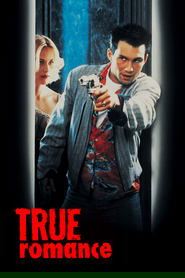
True Romance (1993)
The wild card of the set: a love story wearing a crime film's clothes. Clarence is a man assembled from other people's movies — his apartment is an autobiography written in comic books and posters — and Tony Scott shoots his pop-culture inner life dead literal, no dreamy dissolves, lit like a perfume ad in bruised blues and molten ambers. Watch how the film holds extreme violence and extreme tenderness in the same frame, and how its romantic-comedy warmth keeps breaking through the noir. The lineage runs from Godard's Breathless: the kid who builds a self out of the screen.
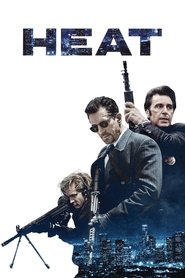
Heat (1995)
Mann's Los Angeles isn't noir's corrupt paradise — it's freeways, glass towers, container terminals, a cold horizontal sprawl in deep blues and grey-greens. Watch how warm domestic interiors register as fragile against it. The film's most famous scene is a cop and a thief simply sitting across a coffee shop table, room noise low, no music — and in a 170-minute action film, it's the one stretch where no action is possible. That stillness is the film's secret heart: two masters of their craft who can only, for four minutes, look at each other.
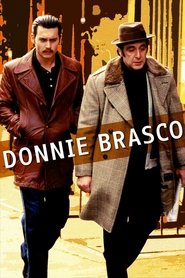
Donnie Brasco (1997)
Watch Johnny Depp's face in the long-held close-ups: he's always slightly behind his eyes, watching the room and watching himself work the room. An undercover man who perceives everything and can act on almost none of it — to move one way blows his cover, to move the other betrays himself. Newell's camera "rarely performs"; it just watches a man whose whole job is watching. Peter Sova lights the city like late autumn, perpetually on the edge of dark — no gangster glamour anywhere.
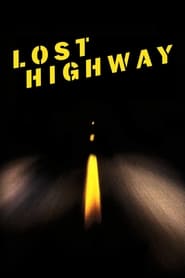
Lost Highway (1997)
Lynch's rooms are defined by what can't be seen — characters walk into blackness and dematerialize — set against bleached, sun-struck exteriors. This is a neo-noir with the explanations surgically removed: the femme fatale, the gangster, the surveillance are all here, but motive and detection are gone. Don't fight the film's refusal to separate what's real from what's dreamed or remembered; that refusal is the film. Its ancestors are Vertigo, Persona, and Last Year at Marienbad — watch it as a loop, not a line.
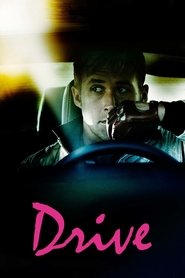
Drive (2011)
Sigel shoots Gosling's face at surveillance-camera nearness and holds — past comfort, past where a normal film would cut. Nothing discharges; the face registers and registers and doesn't act. That withheld face is the whole design: a man with no name, no past, no stated want, all surface on purpose. Watch how the film refuses any transition between tenderness and violence — the two arrive in the same unbroken breath, and the missing seam between them is the point.
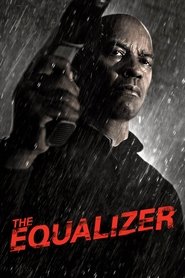
The Equalizer (2014)
For nearly its whole first act, this is a film about a man who has subtracted himself from the world: the same diner, the same table, the napkin folded, the tea steeped exactly right. Watch how often the camera finds Washington behind glass — framed in windows, caught in reflections — studying a street he won't step into. It's the patient stillness of Le Samouraï imported into an American action picture, and the film's daring is how long it lets that stillness carry everything.
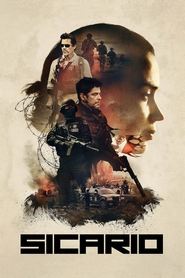
Sicario (2015)
Watch where Villeneuve keeps putting Emily Blunt: in a doorway as things start, in the back seat of a convoy that won't say where it's going, at the edge of the briefing where the real plan is decided elsewhere. Her position in the frame is the film's argument. Deakins photographs the border as geology, not scenery — vast frames that dwarf human figures, the Western's landscapes stripped of the Western's myth. This is a thriller that keeps converting action into something you can only watch — which, by now, you'll recognize as the theme of this whole course.
Watched together, these twelve films become a conversation across decades about the same discovery: that action is cheap and watching is expensive. Lang's thresholds become Villeneuve's doorways; Melville's ascetic loner (hovering behind Heat, Drive, and The Equalizer alike) keeps returning with a new face; the braided timelines of Coppola get radicalized by Leone. You'll start noticing how each film decides when to cut away from a face — and how the greatest ones refuse to. By the end, a held close-up or a figure standing at the edge of a room will feel as charged as any gunfight. That's the education these films offer: they teach you to watch the watchers.