Sightlines · a mini film course
The Watchers: Crime Cinema and the Art of Standing Still
Every one of these films is, on paper, an action picture — cops, gangsters, hitmen, vengeance. But watch them closely and you'll find something stranger going on. Again and again, these directors take the genre's engine — a character sees a problem, acts, and the world changes — and quietly tamper with it. Sometimes they slow it down until a face in a dark room becomes the whole movie. Sometimes they run it so fast it becomes delirious. Sometimes they lock their protagonist out of the action entirely, or shuffle the order of events until "before" and "after" stop meaning what you thought. The through-line here is the watcher: the character (and the camera) that observes rather than chases, and the filmmaker who trusts that stillness, patience, and looking can generate more dread — and more meaning — than any shootout. This is a course in how crime films think.
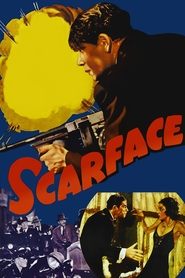
Scarface (1932) — dir. Howard Hawks
Watch where the X falls. Hawks and cinematographer Lee Garmes seed a small cross into the frame — in rafters, signage, shadows — as a quiet death-stamp throughout the picture, and once you spot the pattern you feel that nobody in this Chicago is choosing anything; they're being marked. Notice too how Paul Muni plays Tony Camonte not as a calculating businessman but as pure appetite — grinning, grabbing, a child intoxicated by his own power. The film's sculptural pools of hard light against deep black anticipate film noir a full decade early.
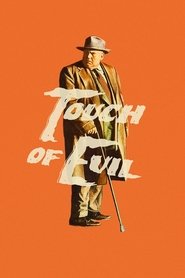
Touch of Evil (1958) — dir. Orson Welles
The famous opening: a car with a bomb in its trunk pulls away, and the camera rises over rooftops and threads three unbroken minutes of traffic, neon, and music before the blast. No cut. Feel how that single breathing shot binds strangers, streets, and off-screen life into one connected town. Then notice the opposite register: Welles shooting himself from floor level with wide lenses, ceilings pressing down, faces rendered monstrous by proximity. The film lives in the gap between a camera that can't stop telling the truth and a cop who can't stop forging it.
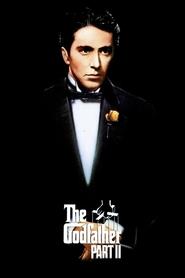
The Godfather Part II (1974) — dir. Francis Ford Coppola
Watch Gordon Willis's light do the storytelling: harsh Mediterranean sun for the Sicilian past, shadows and enclosure creeping into the New York tenements, and darkness deepening around Michael as the film goes on. The great structural gamble is the braid of two eras — Vito's rise cross-cut against Michael's reign — so each timeline silently comments on the other. And notice how often the film refuses the consoling cut: it holds on a man enduring rather than acting, framed small against grand architecture, a Visconti-style prince dwarfed by his own palace.
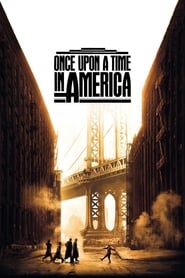
Once Upon a Time in America (1984) — dir. Sergio Leone
Leone distinguishes his time periods through light itself — the past shot in warm, honeyed amber, sunlight through dust — and lets Morricone's pre-written score dictate the rhythm of scenes rather than the other way around. Watch De Niro's Noodles in the 1968 sequences: he barely acts at all. He looks — through peepholes, across rooms, at ghosts. That passivity isn't a flaw; it's the film's engine. This is a gangster epic built like memory: nonlinear, elegiac, curling back on itself like smoke.
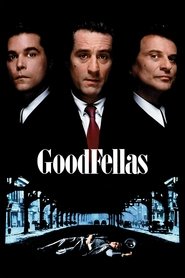
GoodFellas (1990) — dir. Martin Scorsese
The counter-argument to everything else on this list: instead of slowing the crime film down, Scorsese speeds it up to a delirium. Michael Ballhaus's roving camera — most famously the three-minute Steadicam glide through the Copacabana's service entrance — makes seduction physical: you're being swept in alongside Henry. Watch for the freeze-frames, borrowed from Truffaut, that arrest Henry mid-motion so his voice can take possession of the image, and the jump cuts, borrowed from Godard, that prize rhythm over smoothness. The style is the moral argument.
King of New York (1990) — dir. Abel Ferrara
Bojan Bazelli shoots New York as a city of perpetual night — cold blues, smeary neon, wet reflective streets, darkness that keeps swallowing Walken's face until only the eyes remain. And that face is the film: Frank White barely does anything. He watches, lets others fill the silence, speaks barely above the hum of the room. Notice how the performance holds menace and sorrow suspended without discharging them — which is exactly why the sudden eruptions land like a circuit blowing.
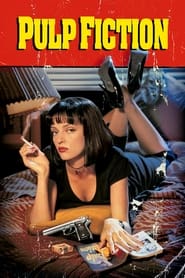
Pulp Fiction (1994) — dir. Quentin Tarantino
The great trick here is temporal: three chapters and a bookend, deliberately out of order, so that "earlier" and "later" become rooms you can enter in any sequence rather than links in a chain. Notice how easily you accept it — a character can walk through a scene carrying a fate you already witnessed, and it plays as music, not confusion. Notice too the restraint of Andrzej Sekula's camera: long takes, drifting frames, medium shots that let the talk breathe. For all its reputation for flash, the film's real innovation is trusting conversation and shuffled time over spectacle.
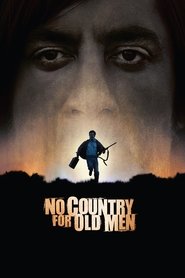
No Country for Old Men (2007) — dir. Joel Coen
The most celebrated scene is a coin toss on a gas-station counter: nothing moves but the talk and the fluorescent light, and the tension has nowhere to go. Watch the way the owner watches — that paralysis is the whole film. Roger Deakins works by strategic restraint here: long lenses compress figures against featureless desert, making the landscape a participant, exposure itself a threat. Listen to the sound design too — descended from The Conversation, it makes the rustle, the drone, the ambient room tone do the work a score would normally do.
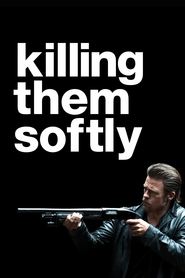
Killing Them Softly (2012) — dir. Andrew Dominik
Greig Fraser's palette is desaturated and bilious — wet asphalt, sodium light, institutional greens — and the compositions trap men in cramped two-shots across tables, because talk is this underworld's real transaction. Then watch what Dominik does when violence finally arrives: he slows it down, sets it to a pop standard, and renders it with a clarity so beautiful it makes you a little sick. That queasy seduction is deliberate — the film quotes the operatic movie-violence tradition precisely so you feel the obscenity of being moved by it.
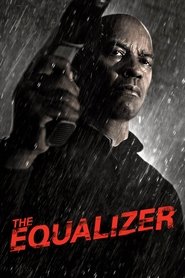
The Equalizer (2014) — dir. Antoine Fuqua
For most of its first hour, this action film refuses to throw the switch. Watch McCall's nightly liturgy at the diner — the folded napkin, the squared book, the timed tea — and how the camera keeps finding him behind glass, framed in windows, studying a street he won't step into. Denzel Washington makes stillness carry the meaning; the camera stays static or drifts slowly, becoming kinetic only when violence erupts. It's the ronin film and the lone-gunman Western hiding inside a studio thriller, and its patience is the point.
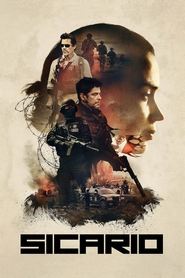
Sicario (2015) — dir. Denis Villeneuve
Watch where Villeneuve keeps putting Kate Macer: in a doorway as shooting starts, in the back seat of a convoy that won't say where it's going, at the edge of the briefing where the real plan is decided. Emily Blunt spends the film standing at thresholds — a competent, clear-eyed agent who is systematically denied the room where things are decided, an inheritance from Chinatown. Roger Deakins shoots the border landscape geologically rather than picturesquely — wide desert frames that dwarf human figures, the Western's vistas stripped of the Western's myth.
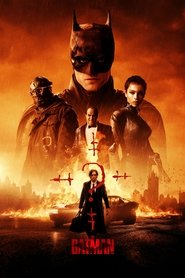
The Batman (2022) — dir. Matt Reeves
The first thing Reeves teaches you is that everyone here is being watched, and the watching is the plot. Greig Fraser (carrying his palette forward from Killing Them Softly) underlights the film radically by blockbuster standards — near-monochrome darkness cut with sodium orange and blood red, faces top-lit with eyes lost in shadow, straight from Gordon Willis's Godfather playbook. Watch how the film builds itself on decoding: a killer who leaves ciphers addressed to the detective, and a detective who reads them over the audience's shoulder — a serial-killer procedural wearing a cape.
Why watch these together? Because in sequence, they reveal a secret conversation running through ninety years of crime cinema. Hawks marks his doomed men with an X; Welles binds a whole town in one unbroken breath; Leone and Coppola build epics out of looking backward; Scorsese answers by making motion itself the drug. Then the modern films — the Coens, Dominik, Fuqua, Villeneuve, Reeves — inherit all of it and keep asking the same question: what happens when the person at the center of a thriller can't act, or won't, or acts and finds it changes nothing? You'll start noticing thresholds, faces held too long, violence displayed rather than delivered, time bent out of line. These films train your eye. Watch them close together, and each one teaches you how to see the next.