Sightlines · a mini film course
The Watchers and the Watched: Crime Cinema When the Camera Slows Down
Every film on this list is, on paper, a crime picture — cops, killers, cartels, mobs. But what binds them together is something stranger and more rewarding: in each one, the filmmakers deliberately loosen the usual machinery of the genre. The hero doesn't simply see a problem and fix it. Instead, these films linger — on a face that gives nothing back, on a doorway a character can't get past, on a ritual repeated every night, on a stretch of time the story refuses to hurry through. Watching them as a set, you start to notice how much of crime cinema's power comes not from the violence but from the waiting, the watching, and the spaces where action stalls. Here's what to look for.
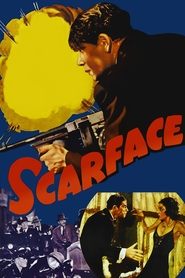
Scarface (1932)
Start at the beginning of the tradition, and keep your eyes on the corners of the frame: Hawks and cinematographer Lee Garmes hide an "X" somewhere in the composition — rafters, signage, chalk marks — whenever death is near. You don't need to spot every one; the pattern works on you subliminally, making this Chicago feel like a world where people are marked rather than choosing. Notice too how Paul Muni plays Tony Camonte not as a calculating businessman but as pure appetite — grinning, grabbing, a child intoxicated by his own power. Garmes's pools of hard light against deep blacks anticipate the whole look of film noir a decade early.
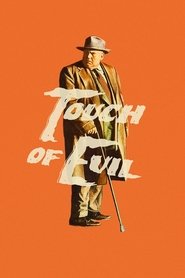
Touch of Evil (1958)
The famous opening is a single unbroken crane shot lasting over three minutes — a car with a bomb in its trunk, a strolling couple, music bleeding from doorway to doorway, an entire border town held together in one breathing motion. Then compare it with how Welles shoots himself as Quinlan: from floor level, wide lenses, ceilings pressing down, a man made monstrous by the camera itself. The whole film lives in the tension between those two visual ideas. Notice how rarely Welles cuts in the conventional way — actors move toward and away from the lens, and proximity, not editing, controls the drama.
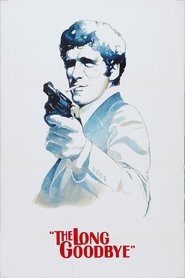
The Long Goodbye (1973)
Altman opens a murder mystery with ten minutes about cat food, and that's the key to everything. Watch the camera: it never sits still, always drifting, zooming, panning slightly past where a normal detective picture would look — an alert but distracted witness with its own curiosity. Elliott Gould's Marlowe investigates constantly, but the film quietly refuses to let his effort add up the way the genre promises. It's the classic private-eye picture rebuilt as a portrait of a man whose code no longer fits his city.
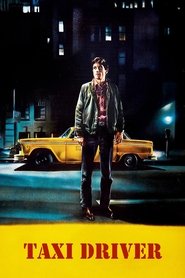
Taxi Driver (1976)
Almost everything this film knows, it knows from inside the cab — windshields fogged and streaked, neon smeared across wet glass, pedestrians caught and lost in headlights. Notice how Michael Chapman's camera rides close enough to Travis's point of view to infect you with it, then steps back — across a diner, up above a room — to let you judge what you've been feeling. Travis sees everything and can act on almost nothing; the driving itself becomes the film's rhythm, a loop rather than a journey. Listen also for the diary voiceover, a device Schrader borrowed from Bresson.
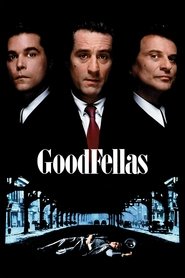
GoodFellas (1990)
The first thing this film does is freeze its own motion so a voice can take possession of it — hold onto that gesture, because Scorsese uses the freeze-frame throughout as punctuation, arresting Henry mid-life. Then feel the opposite pull: the famous Copacabana Steadicam shot, three unbroken minutes gliding through a service entrance and a kitchen into a nightclub, pure seduction rendered as camera movement. This is the gangster film run at delirious speed — a world that reorganizes itself around Henry's desires — and the exhilaration is precisely the point the film wants you to examine.
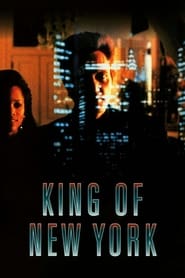
King of New York (1990)
Watch Christopher Walken's face, because the film does almost nothing else. Frank White barely acts; he watches, lets others fill the silence, speaks barely above the hum of the room. Bojan Bazelli lights him so the darkness keeps swallowing him — cold blues, smeary neons, wet reflective streets — and what survives is one held expression of courtly melancholy. The stillness is a lid on something, which is exactly why the eruptions land like a circuit blowing. This is the gangster picture as nocturne.
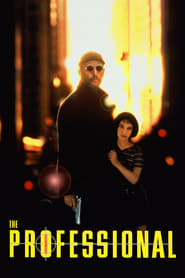
Léon: The Professional (1994)
A hit man drinks milk, does sit-ups in the dark, and waters a houseplant he calls his only friend. Before Besson shows Léon killing anyone, he shows him tending things — and the whole film lives in that gap. Notice the split rhythm: the jobs are pure procedure, inherited from Melville's silent, code-bound assassins; but between them, Thierry Arbogast's warm ambers and golds hold on Jean Reno's face, blank behind round glasses, expressing one steady note of arrested innocence. Watch how the palette cools whenever institutions or violence enter the frame.
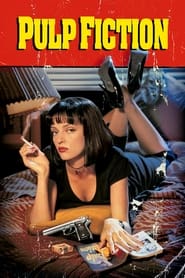
Pulp Fiction (1994)
Tarantino took the one thing movies always promised to keep straight — the order of before and after — and shuffled it, and audiences loved him for it. Watch how the three out-of-sequence chapters turn "earlier" and "later" into rooms you can enter in any order, and how casually you accept the results. Notice too how restrained Andrzej Sekula's camera actually is: long takes, static or slowly drifting frames, medium shots that let conversations about hamburgers and foot massages breathe at full length between acts of lethal force. The film insists on holding both registers together.
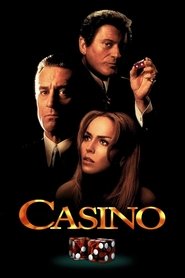
Casino (1995)
The film opens with its hero engulfed in flame, set to Bach — and then a calm voice begins to explain. Scorsese switches off the "what happens next" engine on purpose and builds something stranger in its place: an anatomy of a fallen empire narrated from the wreckage. Watch Robert Richardson's photography of excess — the casino floor bathed in amber and gold, pool scenes overlit to harshness, Ginger arriving in a swirl of warm backlight that marks her as desire and danger at once. Notice the long gliding takes as Ace surveils his floor: a man watching a kingdom.
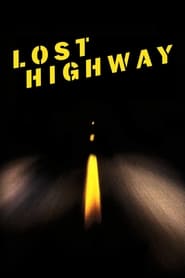
Lost Highway (1997)
A man stands inside his own front door and hears a message through the intercom that shouldn't be possible. Lynch builds the film as a loop with no seam, and refuses every cut that would tell you what's real and what's dreamed — including whether Patricia Arquette, brunette then blonde, is playing two women or one woman imagined twice. Watch how Peter Deming photographs the Madison house as engulfing darkness: rooms defined by what can't be seen, people walking into blackness and dematerializing. Don't try to solve it; try to feel where the join is.
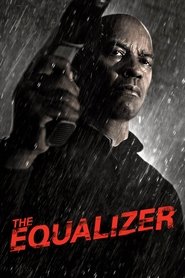
The Equalizer (2014)
For most of an hour, this is a film about a man's rituals: the same diner, the same table, the napkin folded, the book squared to the edge, the tea steeped exactly right. Fuqua and cinematographer Mauro Fiore hold Washington in patient, static compositions and keep finding him behind glass — framed in windows, isolated in reflections, studying a street he won't step into. The book in his hands is the tell: he's reading the world before he acts on it. Notice how the camera only becomes kinetic when the stillness finally breaks.
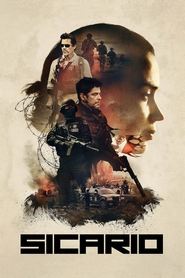
Sicario (2015)
Watch where Villeneuve puts Emily Blunt's Kate Macer: in a doorway as shooting starts, in the back seat of a convoy that won't say where it's going, at the edge of a briefing where the real decisions happen elsewhere. She's a capable agent framed, again and again, as the person things happen near — and the film's whole argument is encoded in that blocking. Roger Deakins shoots the border landscape as geology rather than scenery, wide desert frames that dwarf the human figures without romanticizing the space. Feel how the big set pieces keep converting action into something you can only watch.
Seen together, these twelve films trace a hidden conversation across eighty years of crime cinema — from Hawks's death-marked Chicago to Villeneuve's desert borderlands. The genre's surface promise is always action: someone sees a wrong and does something about it. But the richest films in the tradition keep interrupting that promise — with a face that won't move, a camera that drifts where it shouldn't, a timeline that folds back on itself, a hero held at the threshold. Watch for the moments when these films stop — when the camera watches rather than chases — because that's where each director is showing you their hand. By the end of this run, you'll find yourself noticing stillness everywhere, and understanding why it's often the most violent thing in the frame.