Sightlines · a mini film course
The Suspense of Seeing: Twelve Thrillers About Watching, Knowing, and the Gap Before Action
Most thrillers promise that seeing leads to doing: the hero spots the danger, acts, and the world answers. The twelve films below all tamper with that promise in some way — and that tampering is where their electricity lives. In some, the camera watches rather than chases, and characters are left standing at the edge of events they can witness but not change. In others, we the audience are handed knowledge the characters lack, and made to sweat with it. In still others, the image itself becomes suspect — a memory, a story, a surface that may be lying to us. Watch these films as a set and you start to notice how much of suspense is really about perception: who gets to see, who is being seen, and how long a film can hold the moment between noticing and acting before something breaks.
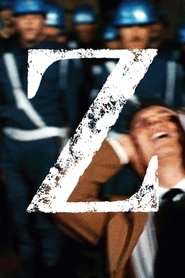
Z (1969)
Watch the assassination sequence: the camera plunges into the crowd at ground level, cutting between disoriented angles that deliberately refuse the clean overhead view. That confusion is the whole political argument — the image withholds the overview the same way the officials will withhold the truth. Costa-Gavras made this with the handheld, available-light energy of the French New Wave, and it proved a political thriller could grip a mass audience without softening its anger.
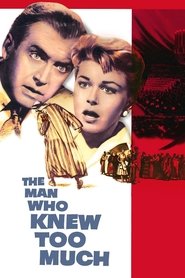
The Man Who Knew Too Much (1956)
The Royal Albert Hall sequence is a masterclass in what happens when the audience knows and the characters can't act. You learn there will be a cymbal crash; the music becomes a clock, and Hitchcock makes you suffer nearly every bar in something close to real time. Notice how often the film's real subject is a marriage under pressure — who gets to know things, who gets to act on them — hiding inside the espionage machinery.
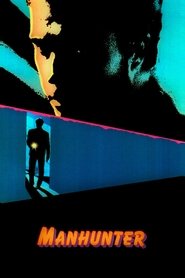
Manhunter (1986)
Michael Mann builds this film so the camera is forever watching a watcher: Will Graham's method isn't deduction but occupation — he narrates a killer's reasoning aloud, in the present tense, as though renting the man's eyes. Watch Dante Spinotti's cold, designed palette of blues, teals, and clinical whites, and the way symmetrical, empty compositions make empathy feel dangerous, like a boundary dissolving. This is the film that quietly invented the modern profiler thriller before The Silence of the Lambs made it famous.
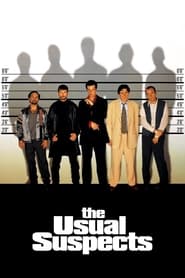
The Usual Suspects (1995)
A man narrates in a deliberately drab, bureaucratic interrogation room, and the film shows us his story fully lit, fully scored, fully convincing — standard flashback grammar. Ask yourself, all the way through, what a flashback actually proves. The film descends from Double Indemnity's confession-to-an-authority structure and Rashomon's competing testimonies, and its deepest question is how we read identity — what visual and behavioral cues we trust, and why.
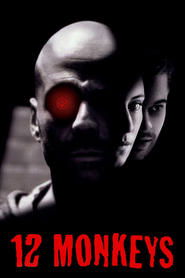
Twelve Monkeys (1995)
Gilliam takes Bruce Willis, an actor carrying the physical authority of an action hero, and spends the film disabling it: Cole can see everything and change almost nothing — his mission is not to fix but merely to witness and report. Watch the recurring scrap of memory the film keeps circling back to, and how Roger Pratt's distorting lenses and low institutional angles make every space feel like it's pressing inward. The architecture comes from Chris Marker's La Jetée, and the looping structure rewards close attention to repeated images.

Dark City (1998)
The signature image: a city that rebuilds itself at midnight while its citizens sleep standing up, towers screwing out of the pavement with no one awake to witness. Proyas photographs it in near-total night, hard-sourced light carving figures out of darkness — 1940s noir pushed toward the grotesque, with the painted shadows of German silent cinema in its DNA. Watch for how the film uses one word — a sunlit place everyone remembers and no one can find — as the single crack in a sealed world.
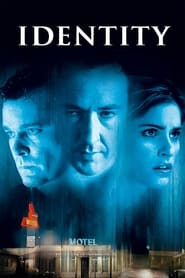
Identity (2003)
Ten strangers, one rain-lashed Nevada motel, and a numbered key found with each body — the countdown structure comes straight from Agatha Christie, the stalk-and-dread grammar from the slasher. Watch Phedon Papamichael's palette of sodium-amber, cold blue, and silver rain, and notice how deliberately stagey and sealed-off the motel feels. That slight artificiality isn't a flaw; keep an eye on it, and on what the keys are really counting.
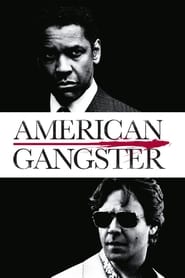
American Gangster (2007)
Read the whole film through the wardrobe: a grey suit built for invisibility, then a chinchilla coat worn to a prizefight — and watch how Scott's camera finds the men doing the watching before the wearer knows he's been seen. Harris Savides shoots the two worlds in opposition: the amber warmth of self-made luxury against institutional grey and street-level cold. Scott, a British outsider fluent in American mythology, treats the drug trade as a business story — branding, pricing, market share — and lets the analysis do the moralizing.
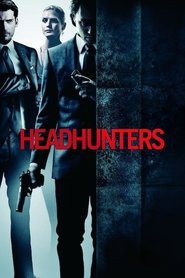
Headhunters (2011)
This one runs the classic machine at full throttle — a Hitchcock-schooled trap picture in the lineage of The 39 Steps and North by Northwest, where innocuous early details return as lethal mechanisms. Watch how cleanly the first act plants what the later acts detonate, and how the camera refuses to flinch even when its meticulous, image-obsessed protagonist is reduced to an animal holding its breath. The pleasure is mechanical in the best sense: every gear meshes, and the violence is horrifying and absurdly funny at once.
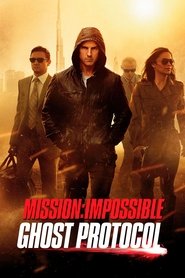
Mission: Impossible – Ghost Protocol (2011)
Brad Bird hired Robert Elswit — Paul Thomas Anderson's cinematographer — to shoot a stunt picture, and the result is wide, clean framings that hold the performer and the hazard in the same shot. Watch the running gag of gadgets failing at the worst moment: every glitch pries open the split second between seeing danger and answering it, and suspense pours into that stutter. It's action cinema built on the legible, escalating set-piece logic Bird perfected in animation, and it insists you always know where every body is in space.
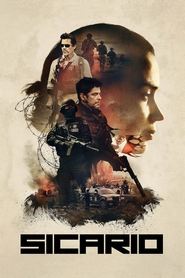
Sicario (2015)
Watch where Villeneuve keeps placing Kate Macer: in a doorway as shooting starts, in the back of a convoy that won't say where it's going, at the edge of a briefing where the real plan is decided elsewhere. She is a capable agent who sees clearly and can change almost nothing — and the film smuggles that stall into the machinery of a studio thriller. Roger Deakins shoots the border landscape as geology rather than postcard, wide frames that dwarf human figures without romanticizing the space, echoing the Western while refusing its myth.
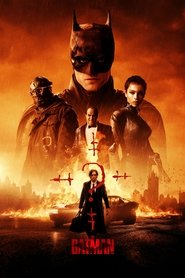
The Batman (2022)
Everyone in this Gotham is being watched, and the watching is the plot — the hero is simply the most patient watcher of all. A killer addresses ciphers directly to the detective, so we decode over his shoulder; the film folds us in as a knowing third party. Greig Fraser underlights it radically by blockbuster standards — faces falling into shadow, light motivated by visible sources, in the tradition of The Godfather's darkness — and the procedural bones come from Zodiac and Se7en rather than from comic books.
Watched together, these films become a course in how suspense actually works. You'll see the same materials passed hand to hand across decades: Hitchcock's trick of giving the audience the dangerous knowledge, noir's shadows and unreliable storytellers, the procedural's faith in patient looking — and, running underneath all of it, one question turned twelve ways. Sometimes seeing leads to action and the machine sings (Headhunters, Ghost Protocol). Sometimes seeing leads nowhere, and the film makes you feel the weight of witnessing without power (Sicario, Twelve Monkeys, Z). Sometimes what you see cannot be trusted at all (The Usual Suspects, Dark City, Identity). Pay attention to where each film puts its camera — chasing or watching, above the chaos or down inside it — and to what it lets you know before its characters do. That's where each of these thrillers hides its real argument, and it's a habit of attention you'll carry into everything you watch afterward.