Sightlines · a mini film course
Watchers, Strikers, Seers: Crime Cinema and the Space Between Seeing and Doing
There's a question running through all of these films, from Howard Hawks's 1932 Chicago to Matt Reeves's rain-soaked Gotham: what happens when a person perceives everything clearly and can change almost nothing? The thriller, the gangster picture, the noir — these are genres built on the promise of effective action. You wrong a man, he comes for you. A detective sees a crime, she solves it. These films love that promise, and then they complicate it, delay it, hollow it out, or reverse it entirely. What connects them isn't a shared setting or period but a shared restlessness about the gap between seeing and doing — and a remarkable range of visual and structural strategies for making that gap felt. Watch these together, and you'll start to notice the same formal moves appearing across decades and continents: the figure held in a doorway, the editing that smuggles the past into the present, the stillness that accumulates until it means something.
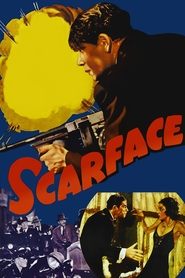
Scarface (1932) — dir. Howard Hawks
Before you watch anything else, watch where the letter X appears. Hawks and cinematographer Lee Garmes plant it quietly — in the rafters, on a wall, in a neon sign — just before a character is killed. It's a death-stamp seeded through the whole picture, and it tells you something crucial: nobody here is really choosing their fate, they're being marked. Watch Paul Muni's performance with that in mind. Tony Camonte doesn't deliberate or strategize the way later movie gangsters do — he grabs, impulsively, with a child's intoxicated grin. The appetite and the punishment arrive together, and the film's staccato rhythm of conquest and slaughter feels less like a plot than a force of nature running itself out.
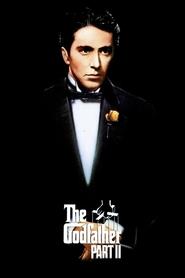
The Godfather Part II (1974) — dir. Francis Ford Coppola
Gordon Willis's cinematography here does something technically audacious: it gets darker as the film progresses, as if the image itself is being swallowed. Watch how light works differently in the two timelines — the young Vito sequences are lit with a warm, immigrant-tenement amber; Michael's present-day world grows progressively colder and more shadowed. Coppola braids past and future without conventional flashback signalling, so the two Corleones become a kind of mirror commentary on each other. Notice also the architecture: Willis and Coppola keep placing Michael in enormous, palace-scale rooms that dwarf him — a visual grammar borrowed from Visconti's Italian epics — so that the more power he accumulates, the smaller and more isolated he appears within it.
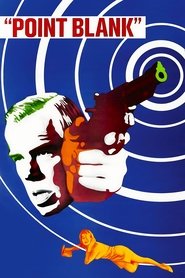
Point Blank (1967) — dir. John Boorman
Listen for the footsteps before you look at anything else. The film opens on the sound of Walker's stride — hard, metronomic, echoing down an empty corridor — and Boorman cuts that rhythm against images from another time and place, so that the present and the remembered past share the same percussion. This is the central technique: flashbacks that don't announce themselves, that bleed into the present mid-scene without a dissolve or any conventional signal. Philip Lathrop's photography makes Los Angeles look like a brutalist abstraction — glass, concrete, empty channels, hard symmetrical geometry — and Walker moves through it like a very small hard object bouncing through a machine. Watch how the film makes revenge feel less like a plan than a dream being dreamed.
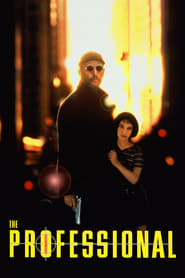
Léon: The Professional (1994) — dir. Luc Besson
Before Léon kills anyone on screen, watch how Besson films him tending things — the plant, the morning routine, the glass of milk. Thierry Arbogast's warm amber palette in the apartment interiors creates an unlikely feeling of sanctuary inside a hit man's life. Then notice what Jean Reno does, or rather doesn't do, with his face: behind those round black glasses there's a studied, extraordinary blankness, a surface that registers feeling without discharging it into expression. Besson learned his grammar from Jean-Pierre Melville's solitary assassin pictures — the long, near-wordless sequences built from ritual and method — but he introduces an emotional current that Melville deliberately refused. The film's tension is partly formal: between the genre's requirement that this man act, and the film's insistence on lingering in his face.
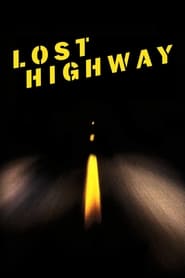
Lost Highway (1997) — dir. David Lynch
Peter Deming photographs the Madison house as near-pure darkness — rooms defined by what you cannot see, figures walking into blackness and dissolving. Against this Lynch cuts the bleached, solar-flare exteriors of desert California, so the film feels like two incompatible worlds forced into the same reel. What to watch for structurally: the film is built as a loop, not a line. Don't look for cause and effect; look instead for rhymes and recurrences — the same actress playing two women, the same phrases appearing in different contexts, the same spatial geometry recurring in different circumstances. Lynch learned from Alain Resnais and from Bergman's Persona how to let two identities bleed into one another, and he's after something that conventional narrative never attempts: the feeling of a mind that cannot face itself, externalised as film form.
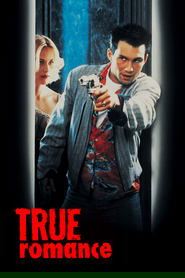
True Romance (1993) — dir. Tony Scott
Cinematographer Jeffrey Kimball shoots this in a palette of bruised blues and molten amber saturated almost to abstraction — it looks like a perfume ad that somehow contains real violence, and that tonal collision is exactly the point. Watch for the way Scott treats Clarence's pop-cultural fantasy life as literally true: there's no soft dissolve or wavy-screen signal when the interior world intrudes on the real one; it simply arrives, lit the same way, treated with the same camera seriousness. Scott and writer Tarantino are working from Godard's À bout de souffle — a young man who assembles his identity from movie posters and American iconography — but they push the wager further: the borrowed self actually holds, and the film asks whether a love built entirely from cultural images can be as real as any other kind. Watch the faces of the supporting cast for the film's other great pleasure: a murderers' row of character actors each given one unforgettable scene.
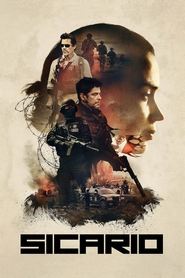
Sicario (2015) — dir. Denis Villeneuve
Roger Deakins photographs the border landscape in a way he describes as geological rather than picturesque — the desert dwarfs human figures without romanticising them, stripping the Western landscape of its mythic grandeur and leaving something more honest and menacing. But watch equally carefully where Villeneuve puts Emily Blunt within the frame. She is almost never at the centre of the decisions being made; she's in doorways, in back seats, at the edge of briefings where the real plan is being discussed somewhere she isn't. The film's whole argument is encoded in that blocking. Notice too how Deakins handles the night-vision sequence in the tunnels: a green-grey world of near-abstraction where violence becomes both procedurally visible and morally invisible simultaneously.
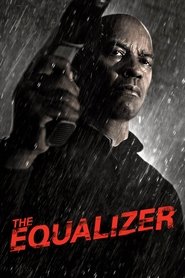
The Equalizer (2014) — dir. Antoine Fuqua
The film's first act is unusually, almost defiantly slow for its genre, and that slowness is intentional. Cinematographer Mauro Fiore keeps finding McCall behind glass — framed in the diner window, isolated in reflective surfaces — a man observing the world through a pane he won't step through. Watch how Fuqua uses McCall's rituals: the folded napkin, the timed tea, the books read cover to cover. This is a film that understands stillness as its own kind of information, and Denzel Washington — drawing on the ascetic, pre-violence calm that Jean-Pierre Melville perfected in Le Samouraï — makes the restraint feel less like passivity than like extraordinary compression. The film's violence, when it finally comes, is filmed with a clinical patience that mirrors McCall's own.
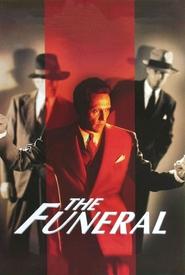
The Funeral (1996) — dir. Abel Ferrara
Ken Kelsch's chiaroscuro here is among the most painterly in 1990s American cinema — faces emerging from deep brown-black shadow, lit as if by a few candles rather than a film crew, the palette of a Dutch master applied to a 1930s gangster picture. Notice that the body is already in the front room when the film begins: Ferrara refuses the genre's conventional forward motion (the crime, the response, the reckoning) and starts instead in the aftermath, with the camera repeatedly returning to the open coffin as a still point around which the living arrange themselves. The film's non-linear editing — present-day wake interrupted by fragments of the past without clean signposting — creates the feeling of a family that cannot stop turning its grief over like a stone, looking for something underneath it that isn't there.
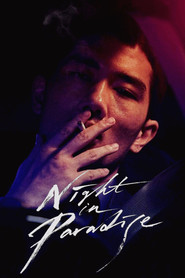
Night in Paradise (2020) — dir. Park Hoon-jung
Kim Young-ho's cinematography is the first thing to surrender to: wide, becalmed frames of Jeju's volcanic coast, the camera held at a contemplative distance so that the sea and stone register as both beautiful and entirely indifferent to the human trouble in the foreground. This is an unusual visual register for a Korean gangster thriller, and it's doing specific work — making the landscape feel like a measure of everything the characters cannot escape or resolve. Watch how Park structures violence: it arrives without stylistic flourish, without the operatic slow-motion that the genre often uses to aestheticize bloodshed. The action is dispatched almost flatly, and the film's emotional weight falls in the spaces between — two people sitting at the edge of the water, the camera in no hurry at all.
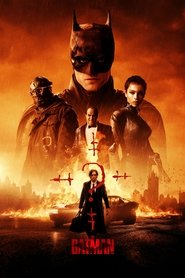
The Batman (2022) — dir. Matt Reeves
Greig Fraser's cinematography is the most radical lighting choice in a major blockbuster in years: the film is genuinely, stubbornly dark, faces falling into shadow in ways that studio films almost never permit. The palette runs to near-monochrome punctuated by sodium-orange streetlight and blood red, and Fraser draws directly on Gordon Willis's legendary Godfather work — extreme underexposure, light motivated by visible practical sources, eyes lost in shadow. Notice how Reeves structures the investigation: this is less a superhero film than a serial-killer procedural in the tradition of Zodiac, built on ciphers and documents and obsessive close reading rather than on action set-pieces. Watch how Reeves positions the audience: the Riddler writes to Batman, and we decode over Batman's shoulder, which makes the experience unusually intimate and implicating for its scale.
Why Watch These Together
What you'll find, watching across this group, is a shared suspicion of the genre promise — that action resolves, that vengeance restores, that the competent person at the centre of the story can change the situation she perceives. Again and again these films put their protagonists at a threshold, a window, a back seat: present for the event, excluded from the decision. Again and again they reach for the same formal tools to express that condition — the darkness that withholds as much as it reveals, the editing that refuses to keep past and present in their proper lanes, the held face that registers everything and can do nothing. From Hawks's X-marks to Lynch's Möbius loop, from Boorman's metronomic footsteps to Ferrara's open coffin, these are films that trust the viewer to sit in the gap between seeing and acting, and to find it — if not comfortable — then at least true.