Sightlines · a mini film course
Revenge in Slow Motion: Crime Films That Watch Instead of Chase
Every film on this list carries a gun, a grudge, or both — and every one of them, in its own way, refuses to fire on cue. The crime picture usually runs on a simple engine: a wrong is done, someone acts, the world changes. These twelve films keep switching that engine off. They give us avengers who stand at windows, hitmen who water houseplants, investigators kept at the edge of the room, memories that flood in without warning. Again and again the camera watches rather than chases; time is allowed to stretch; the deed, when it comes, is held up like an object to be looked at rather than a problem being solved. Watch these together and you'll start to see how much of a thriller's meaning lives not in what characters do, but in what they can only witness.
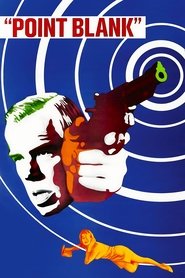
Point Blank (1967)
Start with the sound: footsteps, hard and metronomic, ringing down an airport corridor while the film cuts between them and somewhere else entirely. Boorman took a pulp revenge novel and shot it with the grammar of European modernism — flashbacks that arrive with no dissolve, no warning, bleeding into scenes mid-stride, so present and memory become impossible to tell apart. Notice too how Lathrop's cold, geometric compositions dwarf Lee Marvin against brutalist concrete and glass: a hard little man up against an organization that has gone entirely abstract.
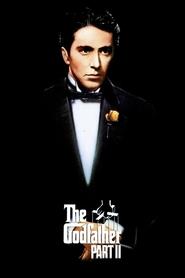
The Godfather Part II (1974)
Coppola braids two timelines — a father's rise, a son's reign — and the meaning lives in the braid itself, in what each era says silently about the other. Watch Gordon Willis's light do the arguing: harsh Mediterranean documentary clarity in the Sicilian past, then shadows and enclosure creeping in as if the rooms themselves were closing. Notice how often the film ends a scene not on an act but on a face simply enduring — the camera waiting with a man for whom winning has stopped changing anything.
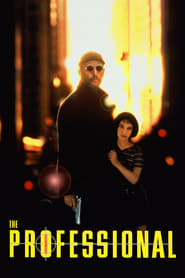
Léon: The Professional (1994)
A hit man drinks milk, does sit-ups in the dark, and tends a houseplant he calls his only friend "because it has no roots — like me." Besson inherits the disciplined, monastic professional from Melville's Le Samouraï, then keeps interrupting the procedure to just hold on Jean Reno's face — an unmoving surface behind round black glasses, expressing one steady note of arrested innocence. Watch Arbogast's palette split the world: warm ambers and golds in the refuges, cooler light in the institutional and violent spaces.
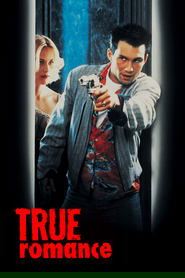
True Romance (1993)
Val Kilmer's Elvis appears in a bathroom mirror to offer advice, and Tony Scott shoots it dead literal — no wavy dissolve, no signal that we've left reality. That's the key: Clarence is a man assembled entirely out of pop culture (his apartment is an autobiography written in comic books and posters), and the film's wager is that a borrowed self, lived hard enough, can become real. Watch Kimball's bruised blues and molten ambers, saturated to the edge of abstraction — image as pure sensation, the perfect skin for a love story between two people who learned to feel from the movies.
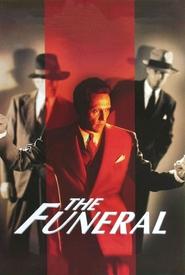
The Funeral (1996)
Ferrara opens where a gangster picture is supposed to end: a coffin in the front room, candles burning down, the living arranging themselves around a still point. The wake keeps getting interrupted by the past, and Kelsch's deep candlelit shadows make every face emerge from darkness like a period painting. Watch how the film keeps the machinery of a revenge plot while quietly draining its power — these men argue about free will like theologians, even as the film's structure suggests they're bound to repeat what they were born into.
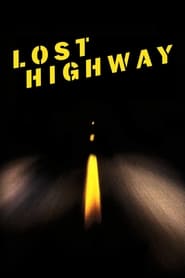
Lost Highway (1997)
Lynch takes the neo-noir kit — femme fatale, gangster, murder, surveillance, doomed Los Angeles — and strips out motive, explanation, and detection. Deming photographs the Madison house as engulfing darkness: characters walk into blackness and simply dematerialize. Don't try to sort what's real from what's dreamed; the film deliberately refuses the cut that would tell you, and that refusal is the point. Give yourself to it the way you'd give yourself to a nightmare that knows more about you than you do.
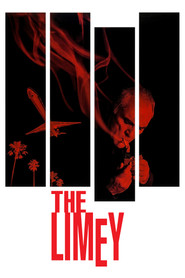
The Limey (1999)
There's a face here that doesn't belong to the film: grainy, golden footage of a young Terence Stamp, lifted whole from a 1967 Ken Loach picture and dropped in as the older man's remembered past. Soderbergh never labels it a flashback — it just surfaces, the way memory actually surfaces, so past and present share the same frame. Watch how Lachman's sunstruck, unglamorous Los Angeles grounds the film even as the editing fractures it: a revenge story powered less by rage than by grief for irrecoverable time.
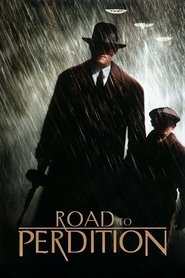
Road to Perdition (2002)
Watch what Mendes and Conrad Hall keep doing to the gangster film's central promise: they keep pulling the deed out of the chain — stilling it, silencing it, turning violence into something composed and looked at rather than something done. Hall's near-monochrome palette of slates and winter blues equates the Depression landscape with moral exhaustion, and his old signature — rain running down glass, its shadow crossing a face like tears — returns here decades after he invented it. Underneath is a father-son inheritance story descended, remarkably, from a Japanese manga about a wandering assassin and his child.
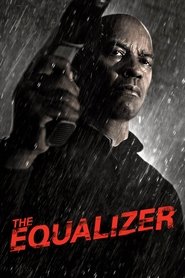
The Equalizer (2014)
For most of an hour, this is a film about a man and his rituals: the same diner, the same table, the napkin folded to a clean rectangle, the tea steeped the exact right number of minutes. Fuqua and Fiore hold Washington in patient, static compositions, and the camera keeps finding him behind glass — framed in windows, caught in reflections, studying a street he will not step into. That refusal to throw the action switch is the whole first act, and it makes everything that follows land differently. Notice the lineage: this is Le Samouraï's monkish professional transplanted to working-class Boston.

Sicario (2015)
Watch where Villeneuve keeps putting Emily Blunt: in a doorway as things erupt, in the back seat of a convoy that won't say where it's going, at the edge of a briefing where the real plan is decided elsewhere. She's a superbly competent agent who is perpetually the person things happen near, and the film's entire argument is encoded in that blocking. Deakins shoots the border landscape geologically rather than romantically — vast frames that dwarf human figures, the Western's iconography with the myth stripped out.
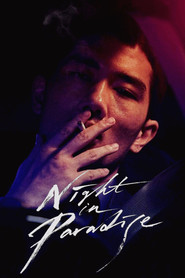
Night in Paradise (2020)
The image the film keeps returning to: a man at the edge of Jeju's volcanic coast, the sea grey, enormous, and entirely indifferent to his grief. He doesn't act in that frame — he looks — and for a revenge thriller, that's a strange and telling center of gravity. Kim Young-ho holds the camera at a painterly, contemplative distance, letting the landscape become an emotional field, while the film quietly interrogates whether the "paradise" of the title can shelter anyone for long.

The Batman (2022)
The first thing Reeves teaches you is that everyone in Gotham is being watched, and that the watching is the plot — his Batman is simply the most patient watcher of all. Then a small white card arrives, addressed to him, with a cipher inside: a killer who writes to the detective, so that we end up decoding over the hero's shoulder. Fraser's cinematography is famously underlit for a blockbuster — faces falling into shadow, light motivated by visible sources — a direct inheritance from Gordon Willis's Godfather darkness, wrapped around a rain-soaked serial-killer procedural in the Zodiac and Se7en mold.
Watched together, these films teach you a single, quietly radical lesson: the crime picture is at its most powerful not when it delivers action, but when it withholds it. Notice the doorways and windows, the reflections and rituals, the flashbacks that arrive unannounced, the faces held long past comfort. From Boorman's fractured 1967 experiment to Reeves's underlit Gotham, you'll watch a genre built on doing learn, over and over, the deeper drama of seeing — and you'll find that your own attention, patient and slightly unsettled, has become part of every film's design.