Sightlines · a mini film course
The Camera Knows Something You Don't: A Short Course in Paranoia on Film
Every film in this set is about the gap between seeing and doing. A man witnesses a murder and cannot report it. An agent perceives everything and can change nothing. A hero reads a room in one glance and knows the violence before it arrives. These are thrillers about institutions — agencies, corporations, presidencies — that see everything from above, and individuals who see only fragments from below. What binds them isn't just conspiracy plots; it's how the camera itself takes sides. Sometimes it plunges into chaos with the panicked. Sometimes it hovers overhead, cold as a satellite. Sometimes it simply watches from a shadow and refuses to explain. In each case, the filmmaking is the argument: how a shot is framed, lit, or degraded tells you who holds power in that world. Watch these together and you'll start to feel the difference in your body — between a frame that lets a character act, and a frame that turns them into a witness.
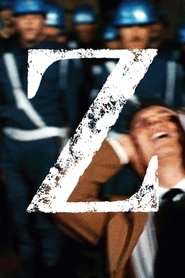
Z (1969)
The founding document of the modern political thriller — the film nearly everything else on this list learned from. Watch the assassination sequence: Raoul Coutard's handheld camera (schooled in the fast, available-light style of the French New Wave) drops to ground level and cuts between disoriented angles that deliberately refuse to give you the clean overview. That's the point: the state will insist nobody could say what they saw, so the camerawork is engineered to feel like the cover-up. Notice also how the same violent event gets re-staged from different witnesses' vantage points, so the investigation becomes an act of assembling truth from contested fragments.
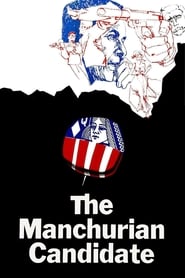
The Manchurian Candidate (1962)
Contains one of the most audacious sequences in American cinema: a slow, continuous 360-degree pan around what appears to be a ladies' garden-club meeting, and with each pass the room's population quietly changes while the blocking stays identical. Two realities occupy one space, and you're given no vantage point from which to sort them. Watch too for the deep-focus photography inherited from Citizen Kane — foreground and background both razor-sharp, so power always lurks legibly at the edge of the frame — and the canted, monumental angles borrowed from The Third Man.
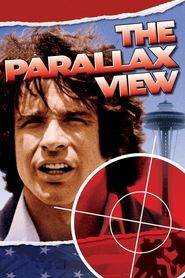
The Parallax View (1974)
Gordon Willis shoots people at extreme distance, from overhead, from angles that hide their faces — a systematic denial of the intimacy Hollywood usually promises. Buildings dwarf bodies; institutions become architecture. The centerpiece is a five-minute montage sequence — words like LOVE, MOTHER, HOME cut against images that betray them — designed as a psychological test for a character, but Pakula aims it straight at you. You're watching a corporation weaponize editing itself. The bleakest and boldest film here.
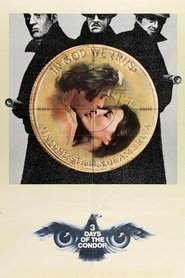
Three Days of the Condor (1975)
A junior CIA analyst — a reader, whose whole job is noticing anomalies — steps out for lunch and returns to a rearranged world. Watch how New York becomes a labyrinth: brownstone staircases, phone booths, narrow sightlines, every space a container. Pollack borrows Hitchcock's wrong-man-on-the-run structure but grounds it in bureaucratic dread learned from Z: conspiracy built from paperwork and procedure rather than setpieces. Notice how the film keeps offering the hero the standard thriller handholds — and how each one comes away in his hand.
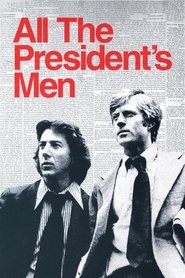
All the President's Men (1976)
Pakula and Willis (nicknamed "the Prince of Darkness") build the film on a dual register: newsrooms drenched in merciless greenish fluorescent light — the light of verification, of facts checked twice — against parking garages where faces drop into pools of black and sources are voices and cigarette embers. Watch how much of the film is made of approach and refusal: phone calls that go nowhere, doors opened a crack. No confrontations, no chases — just two reporters knocking on doors, and each small act disclosing a hidden situation one piece at a time. The suspense of knowledge itself.
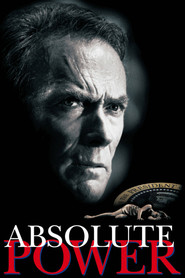
Absolute Power (1997)
Eastwood's deliberate old-fashioned classicism is the point here. The opening robbery is shot as pure quiet professionalism — naturalistic light, restrained camera, a capable body meeting the world — and then the film springs its trap: a one-way mirror, borrowed straight from Rear Window's grammar of the watcher paralyzed by watching. Notice the structural irony Eastwood builds the whole film on: a lifelong thief becomes the story's figure of moral clarity, while the presidency becomes the crime scene. Watch how Jack Green's lighting lets figures emerge from and recede into shadow, in the tradition of Klute.
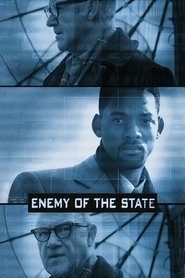
Enemy of the State (1998)
Tony Scott's great formal idea: mix the image formats and let the grain be the argument. Clean, saturated 35mm for how the hero sees — embodied, partial, panicked — intercut with satellite feeds, traffic cams, and thermal scopes: degraded, overhead, belonging to no human eye at all. Nobody is holding that camera; it floats in orbit. Watch how the film updates the 1970s surveillance thriller (it descends directly from The Conversation and The Parallax View) for an age when the watching apparatus has detached itself from any watcher.
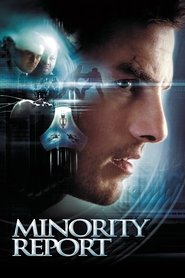
Minority Report (2002)
Kamiński overexposed the film and ran it through a bleach-bypass process, draining the color into cold blues and steely grays — a future that looks like a memory. Watch the signature image: a detective standing at a wall of glass, conducting fragments of a crime that hasn't happened yet — sweeping, pinching, reassembling flashes that arrive out of order. Detection becomes reading: the hero can do everything to the image except act on it. A genuine hybrid of noir and science fiction, and the moral question — can you punish a deed before it's done — runs through every frame.
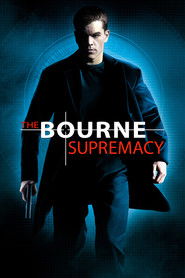
The Bourne Supremacy (2004)
This is where handheld camerawork stops being a flourish and becomes a thesis. Oliver Wood's long lenses smear crowds into colored static and isolate a single scanning face; focus drifts and resettles; the frame chases the action rather than composing it. Watch the early market scene: nothing is happening yet, but the camera makes you read the space the way Bourne does — exits, sightlines, the car parked a beat too long. You're never given the God's-eye view, because he never gets one either. Greengrass imported this you-are-there style wholesale from his documentary-realist roots.
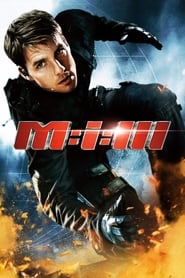
Mission: Impossible III (2006)
Abrams's first feature, and the embryo of his whole visual grammar: Dan Mindel's operator-driven handheld staying tight on faces, long lenses that compress and isolate, flared high-contrast light. Watch the cold open — the film starts on its own worst moment, torn out of sequence, then flashes back to build the life you now know is under threat. Two hours of dread, engineered by structure alone. Notice too how the franchise's mask-and-disguise machinery doubles as the film's real subject: a man who impersonates for a living, unable to be honestly present in his own marriage.
The Winter Soldier (2014)
Proof that the 1970s paranoia thriller could be transplanted whole into a superhero film — down to the casting of Robert Redford, the hunted everyman of Condor, now on the other side of the desk. Trent Opaloch's cooler documentary palette and reactive handheld fighting (the camera flinching at blows rather than anticipating them) ground the spectacle in Beltway-thriller grit. Watch the elevator scene: before a single punch, the hero reads the room — a hand drifting toward a holster, a bead of sweat — and the film shows you that perception, not power, is his real gift.
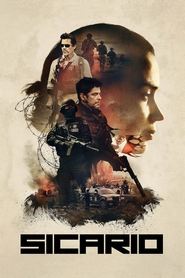
Sicario (2015)
Roger Deakins shoots the borderland like geology: vast frames that dwarf human figures without romanticizing the space — the Western's landscape stripped of its myth. But the film's real argument is in the blocking. Watch where Villeneuve keeps placing his protagonist: in doorways, in back seats, at the edges of briefings where the real plan is decided elsewhere. She is competent, she perceives clearly, and the film systematically converts her from actor into witness. It borrows Chinatown's cruelest device — the investigator locked out of the rooms where her case is actually decided — and makes you feel the exclusion in every composition.
Why watch these together? Because they form a fifty-year conversation, and the echoes are the reward. Z invents the grammar; the 1970s films deepen it into dread; the modern films smuggle it into blockbusters. You'll see the same devices mutate across decades: Z's vérité chaos becoming Greengrass's chasing camera; the Manchurian Candidate's reality-swapping montage becoming the Parallax test reel; Condor's hunted analyst becoming Redford's own late-career reversal in The Winter Soldier. And you'll start noticing the deepest through-line of all: in each film, the decisive question is never "who will win the fight?" but "who is allowed to see — and what can seeing accomplish?" Some of these heroes act on the world; some can only watch it. The filmmaking always tells you which, before the story does. Pay attention to where the camera stands, whose eye it borrows, and what it withholds. That's where the truth of each of these films lives.